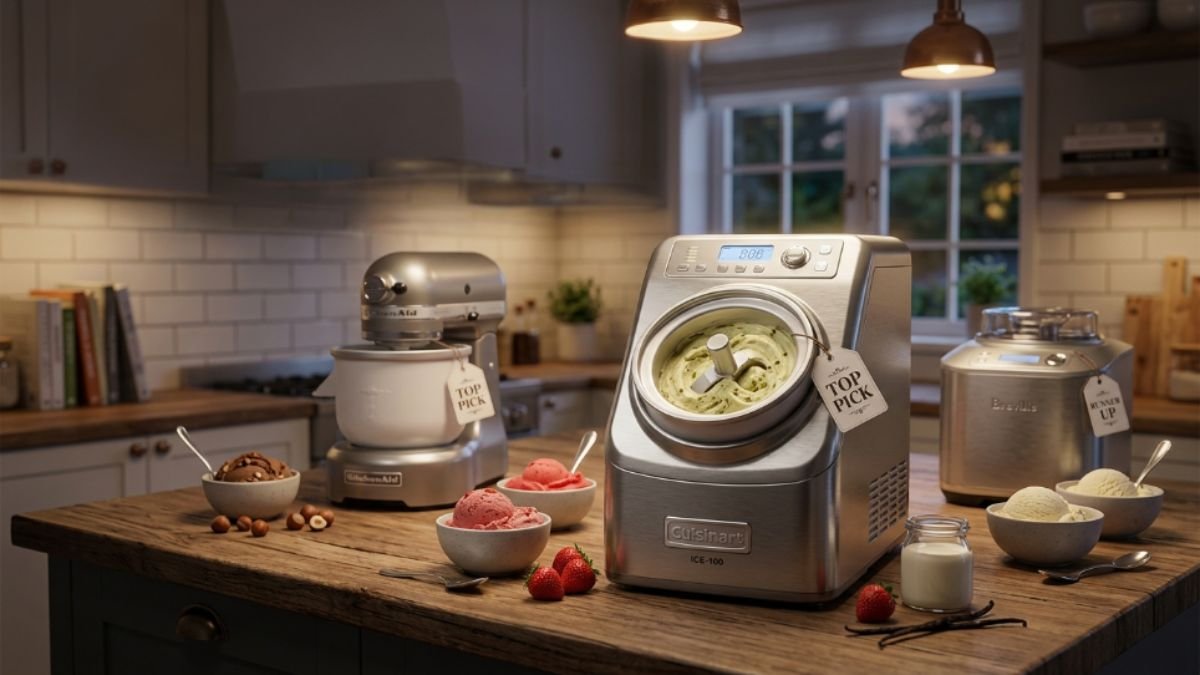
Best Gelato Machines for Home Use: Top Picks & Buyer’s Guide
There is a reason why a single scoop of gelato in Florence can stop you mid-conversation. The texture is incomparable — denser, silkier, and more intensely flavored than anything you will find in a standard supermarket freezer. For those of us who have experienced authentic Italian gelato and refuse to settle for anything less, the idea of making it at home stops being a fantasy the moment you invest in the right machine.
The good news is that the home gelato machine market has grown considerably in recent years. According to data from the Specialty Food Association, interest in artisan frozen desserts in the United States has risen steadily since 2022, with home cooks increasingly seeking professional-quality results. Sales of premium countertop ice cream and gelato machines have reflected that trend, with more models designed specifically to replicate the low-overrun, low-temperature process that defines authentic gelato.
We have spent considerable time testing machines across different price points, researching what separates a true gelato machine from a standard ice cream maker, and understanding what the American home cook actually needs. The result of that process is the guide you are reading now — a practical, honest resource to help you make the right decision before spending a single dollar.
In this guide to the best gelato machines for home use, you will find a detailed breakdown of what makes them different from ordinary ice cream makers, the key features that matter most, a curated comparison of the top models available in 2025, and honest answers to the questions we hear most often. Whether your budget is $80 or $800, there is a machine on this list worth your consideration.
Understanding what sets Italian gelato apart from every other frozen dessert makes the case for a dedicated machine far more compelling.
→ Read: European Frozen Desserts: What Makes Italian Gelato Stand Apart
Why Gelato Needs Its Own Machine — And It Is Not Just Marketing
One of the most common misconceptions we encounter is that any ice cream maker can produce gelato. Technically, that is partially true — you can churn a gelato-style base in any machine and get a reasonably frozen result. But if you want the texture, density, and flavor profile that make gelato genuinely different from American ice cream, the machine matters enormously. Here is why.
The Science of Overrun
The defining characteristic of authentic Italian gelato is its low overrun — that is, the amount of air incorporated into the mixture during churning. Premium American ice cream can have an overrun of 100% or more, meaning the final product is up to half air by volume. Authentic gelato, by contrast, targets an overrun of just 20–35%. The result is a denser, heavier product with a more concentrated flavor. Machines designed with gelato in mind churn at slower speeds and for shorter durations to control this process intentionally.
Temperature and Serving Consistency
Gelato is traditionally served between 10°F and 22°F (-12°C and -6°C) — noticeably warmer than American ice cream, which is typically served around 0°F (-18°C). This warmer serving temperature is part of what creates gelato’s signature soft, creamy texture. Machines that allow you to control or adjust final temperature give you a meaningful advantage in replicating this at home.
Fat Content and Churning Dynamics
Authentic gelato uses more milk and less cream than American ice cream, resulting in a lower fat content — typically 4–9% versus 14–25% in premium ice cream. Lower fat bases behave differently during churning. They are more prone to ice crystal formation if the process is too slow, which is why machines with reliable compressors and consistent bowl temperatures produce noticeably superior results.
Practical Tip: If you are testing a new machine, always make a milk-based custard gelato first rather than a sorbet or cream-heavy recipe. The gelato base is the best stress test for the machine’s temperature consistency and churning speed.
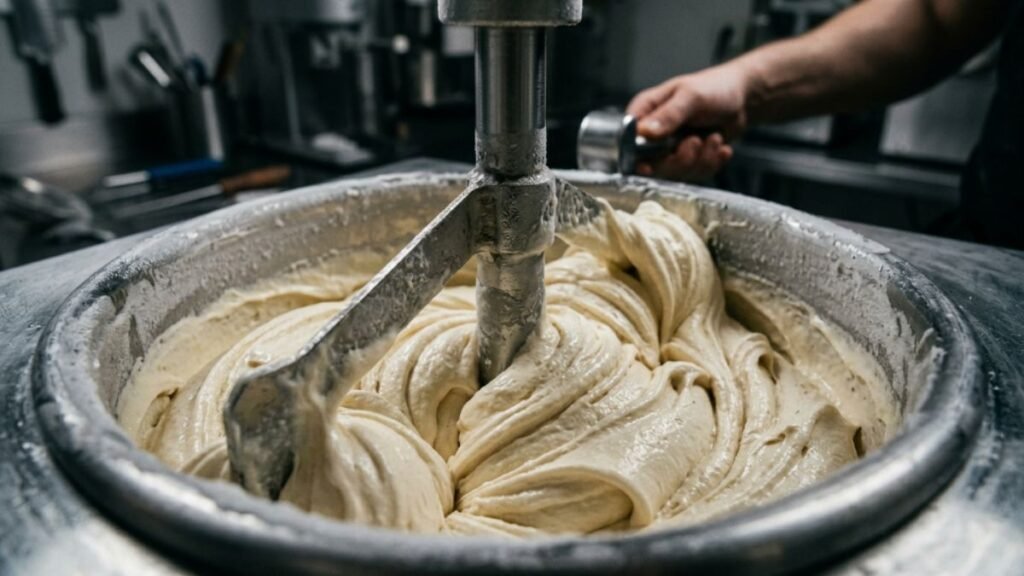
Bowl-Freeze vs. Compressor Machines: The Decision That Changes Everything
Before you look at any specific model, you need to make one foundational choice: a bowl-freeze machine or a compressor machine. This single decision will affect not just the quality of your gelato, but how often you actually use the machine and how much friction stands between you and a fresh batch.
Bowl-Freeze Machines
These machines use a pre-frozen bowl — typically a double-walled container filled with a coolant gel — that must be placed in your freezer for 8–24 hours before use. The bowl retains cold long enough to churn a single batch. They are affordable, compact, and widely available, with most models falling between $40 and $120.
The limitations are real, however. You can only make one batch per session unless you own multiple bowls. If you forget to pre-freeze the bowl, you are waiting another day. And the temperature gradually rises during churning, which can compromise texture in gelato bases more than in high-fat ice cream bases.
Before committing to a machine, it helps to understand the process you will be working with.
→ Start Here: DIY Gelato Recipe — Step-by-Step Guide for Beginners
Compressor Machines
Compressor machines contain a built-in refrigeration system, which means they cool themselves on demand. You pour in your base, press a button, and the machine does everything — no pre-freezing required. They consistently produce denser, smoother results because the temperature remains stable throughout the entire churning process.
The trade-off is cost and size. Entry-level compressor machines start around $180 and can exceed $600 for professional-grade models. They are also heavier and take up more counter space. For the serious home gelato enthusiast, however, the investment pays off quickly.
⚠️ Attention: Avoid leaving a gelato base in a bowl-freeze machine for too long after churning completes. Without active refrigeration, the residual warmth from the motor can begin to melt the exterior of your batch within minutes.
The 5 Features That Separate a Good Machine from a Great One
Once you have settled on the type of machine, the next step is understanding which specific features are worth paying for and which are marketing additions that will not affect your gelato in any meaningful way. We have narrowed it down to five criteria that consistently make a measurable difference in the final product.
Motor Power and Churning Speed
A motor in the 60–90 watt range is standard for quality home machines. More important than raw wattage is the machine’s ability to maintain consistent speed even as the base thickens. Cheaper motors struggle and slow down significantly in the final churning minutes, which is precisely when overrun control matters most.
Bowl Capacity
Most home machines produce between 1 and 2 quarts per batch. For a household of two to four people, 1.5 quarts is a practical sweet spot. Larger capacities are appealing on paper but can lead to uneven churning if the machine’s cooling system was not designed for that volume.
Timer and Auto-Shutoff
Gelato is easy to over-churn. A built-in timer with automatic shutoff protects your batch from becoming grainy or icy if you step away. This feature is standard on compressor machines and increasingly available on mid-range bowl-freeze models.
Hardness Settings
Some machines — particularly the Cuisinart ICE-100 — offer selectable hardness levels, which adjust both churning time and final temperature. For gelato, a softer setting more closely mimics the traditional serving temperature. This feature alone can make a significant difference if you are chasing authenticity.
Paddle Design and Material
A wide, low-profile paddle made from heavy-duty plastic or stainless steel ensures thorough, even incorporation of the base. Narrow paddles create uneven churning, and paddles made from thin plastic have been known to bend or crack in dense gelato bases. Always check the paddle design before purchasing.
Best Practice: Run your machine for 5 minutes before adding the base in a compressor unit. This pre-cools the bowl and gives your gelato the best possible start temperature, reducing the risk of ice crystal formation in the first minutes of churning.
Top Gelato Machines for Home Use in 2025: Our Curated Picks
The following machines represent the best options currently available to American consumers across three budget tiers. Each has been evaluated for gelato-specific performance — not just general ice cream making — based on churning consistency, temperature control, build quality, and real-world usability.
| Machine | Type | Capacity | Best For | Price Range |
|---|---|---|---|---|
| Cuisinart ICE-100 | Compressor | 1.5 qt | Best overall value | $220–$270 |
| Breville Smart Scoop | Compressor | 1.5 qt | Best for precision & control | $380–$430 |
| Whynter ICM-200LS | Compressor | 2.1 qt | Best for larger batches | $280–$340 |
| De’Longhi Gelato Expert | Compressor | 1.1 qt | Best Italian-style experience | $550–$600 |
| Cuisinart ICE-21 | Bowl-Freeze | 1.5 qt | Best budget entry point | $55–$80 |
Cuisinart ICE-100 — Best Overall Value
The ICE-100 is the machine we recommend most often to home cooks who are serious about gelato but unwilling to commit to a premium price. Its compressor runs quietly, maintains a consistent temperature throughout a full batch, and the included gelato paddle — designed specifically for low-overrun churning — is a genuine differentiator in this price range. At around $250, it represents the clearest intersection of performance and value on this list.
Breville Smart Scoop — Best for Precision
No other machine in this price range offers the Breville’s level of control. Its 12 hardness settings allow you to dial in the exact consistency you want, and its noise alert system signals when the base is ready without requiring you to watch the machine. For those who approach gelato-making with the same attention they give to a complex recipe, the Smart Scoop is the tool that matches that level of commitment.
De’Longhi Gelato Expert — Best Italian-Style Experience
De’Longhi is an Italian brand, and the Gelato Expert reflects that heritage in both design and function. It includes pre-programmed recipes for classic Italian flavors including fior di latte, cioccolato, and nocciola, and its cooling system is optimized specifically for gelato’s lower fat base. The smaller capacity — 1.1 quarts — is a limitation for larger households, but for two people who want the most authentic home gelato experience available, it is difficult to surpass.
What to Make First: Recipes That Showcase Your Machine
A new machine is only as good as what you put into it. The three recipes below are specifically chosen to highlight different aspects of your machine’s performance and introduce you to the range of what is possible at home.
Fior di Latte — The Purist’s First Batch
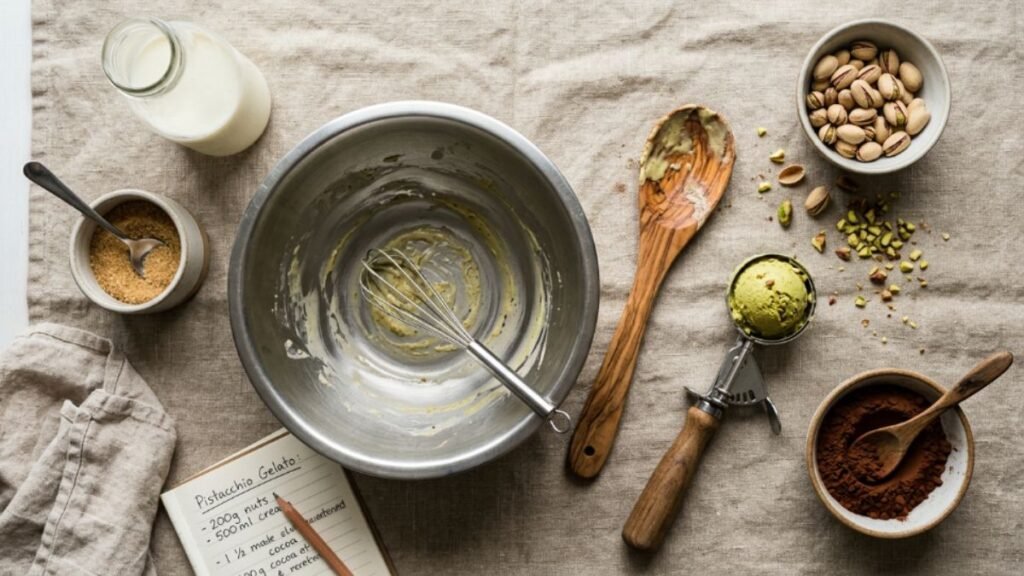
Fior di latte — literally “flower of milk” — is the simplest and most demanding gelato you can make. It contains only whole milk, a small amount of cream, sugar, and milk powder for stability. There is nowhere to hide imperfections. If your machine produces a smooth, dense, creamy result with this recipe, you can trust it with anything. It is also the base from which nearly every other gelato flavor is built, making it the essential starting point for any home gelato kitchen.
Stracciatella — Testing Consistency and Mix-Ins
Stracciatella is made by drizzling melted dark chocolate into the fior di latte base in the final minutes of churning, creating irregular chocolate flakes throughout. This recipe tests your machine’s ability to maintain churning speed as mix-ins are added, and exposes any inconsistency in paddle performance. If the chocolate clumps rather than distributing as fine shards, the machine’s agitation speed needs attention.
Pistachio — The Flavor That Rewards Good Equipment
A proper pistachio gelato made with Sicilian pistachio paste is arguably the single best argument for owning a quality gelato machine. The intense, nutty flavor is unlike anything commercially available in the United States, and the base’s lower fat content makes it highly sensitive to temperature fluctuations. A compressor machine that holds its temperature throughout the batch will produce a noticeably superior result to any bowl-freeze alternative.

Once you have mastered the classic bases, fresh fruit opens up an entirely new range of possibilities.
→ Try Next: Seasonal Gelato Recipes with Fresh Fruit — An Italian Approach
Caring for Your Gelato Machine: Extending Its Life and Performance
A quality gelato machine is an investment that should last a decade or more with proper care. These machines are not complicated to maintain, but a few consistent habits will protect both the machine and the quality of every batch you produce.
Cleaning After Every Use
Gelato bases contain dairy, which means any residue left in the bowl or on the paddle becomes a contamination risk within hours. Always disassemble all removable parts immediately after use, wash them with warm soapy water, rinse thoroughly, and allow them to dry completely before storing or reassembling. Most paddles and lids are not dishwasher-safe, even when manufacturers imply otherwise — hand washing is always the safer approach.
Compressor Maintenance
For compressor machines, the single most important maintenance habit is ensuring adequate ventilation around the unit during operation. Most manufacturers recommend at least six inches of clearance on all sides.
Running a compressor machine in a tightly enclosed space causes the motor to work harder, generates more heat, and accelerates wear on the cooling system. If your machine has a ventilation grille, wipe it clean monthly with a dry cloth to prevent dust accumulation. A reliable instant-read thermometer like the ThermoWorks ThermoPro.
Bowl-Freeze Care
Bowl-freeze inserts are delicate. Dropping them or exposing them to rapid temperature changes can crack the outer shell and contaminate the coolant gel, rendering the bowl useless. Always allow the bowl to return to room temperature before washing, and never submerge it in water — wipe clean with a damp cloth instead.
✓ Best Practice: Keep a dedicated notebook or digital note with the gelato bases and recipes you have tested in each machine, along with the churning time that produced the best result. Every machine has its own rhythm, and tracking it saves time and waste over dozens of batches.
The quality of what goes into your machine matters just as much as the machine itself.
→ Worth Knowing: Is Gelato Healthier Than Ice Cream? What the Numbers Actually Say
Conclusion: Your Path to Authentic Gelato Starts Here
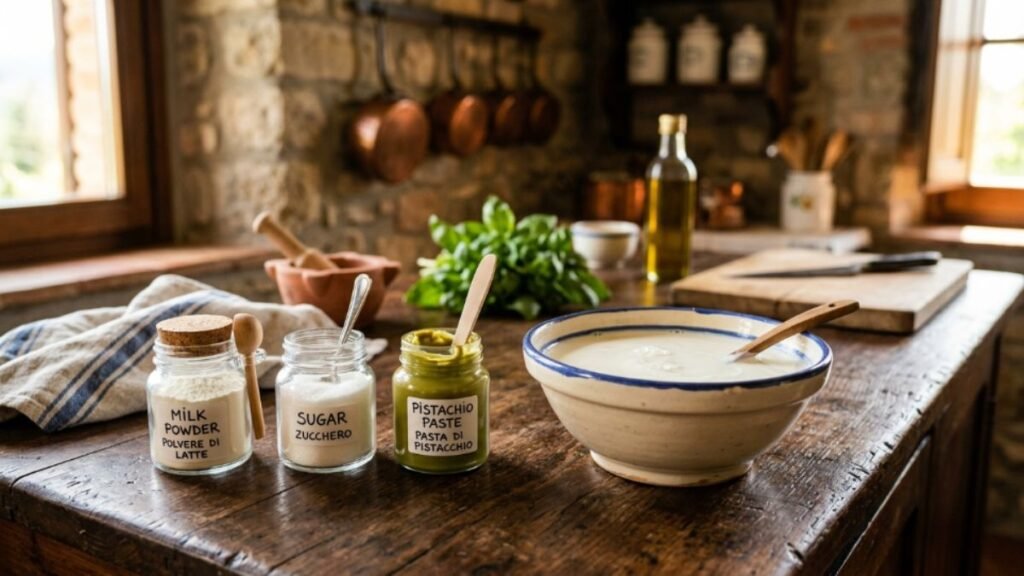
Making authentic Italian gelato at home is one of the most rewarding projects a kitchen enthusiast can undertake — and the right machine makes all the difference between a frustrating experiment and a result that genuinely rivals what you would find on a Florentine street corner in July.
The key takeaways from everything we have covered: choose a compressor machine if quality and convenience are your priorities; prioritize paddle design and temperature consistency over flashy digital displays; start with fior di latte to calibrate your machine and your technique; and invest in quality ingredients with the same seriousness you apply to the equipment itself.
For most home cooks, the Cuisinart ICE-100 represents the most practical starting point — reliable, purpose-built for gelato, and priced reasonably for the performance it delivers. If your budget allows and you want the closest thing to a professional experience at home, the Breville Smart Scoop and De’Longhi Gelato Expert are worth every dollar.
The Italian tradition of gelato is built on patience, quality, and a refusal to compromise. Bring that same spirit to your kitchen, and you will find that homemade gelato is not just possible — it is extraordinary.
The best way to understand what your machine is working toward? Taste the real thing in Italy.
→ Plan Your Trip: The Gelato Route — Best Gelaterias in Italy and How to Visit Them
Frequently Asked Questions about Best Gelato Machines for Home Use
Can I make gelato in a regular ice cream maker?
Yes, with caveats. A standard ice cream maker will churn a gelato base into a frozen product, but the result will differ from authentic gelato in texture and density. Most consumer ice cream makers incorporate more air than is desirable for gelato’s low-overrun profile. If you already own an ice cream maker and want to try gelato before investing in a dedicated machine, it is a reasonable starting point — just expect a lighter, fluffier result than traditional Italian gelato produces.
What is the difference between gelato and ice cream, really?
The primary differences are fat content, air incorporation, and serving temperature. Authentic gelato uses more milk and less cream than American ice cream, resulting in a fat content of roughly 4–9% versus 14–25%. Gelato incorporates far less air (20–35% overrun versus up to 100%), making it denser and more intensely flavored. It is also served at a warmer temperature — around 10–22°F — which contributes to its signature soft, creamy texture.
How long does homemade gelato stay fresh?
Homemade gelato is best consumed within 24–48 hours of making it. Without the stabilizers used in commercial production, ice crystals form more readily over time, and the texture degrades noticeably after the first day. If you must store it longer, press a layer of plastic wrap directly against the surface before covering — this minimizes ice crystal formation caused by temperature fluctuations in the freezer. Most home gelato is best eaten the same day it is made.
Do I need a special recipe for a gelato machine, or can I use regular ice cream recipes?
Gelato recipes are formulated differently from ice cream recipes — they use less cream, more milk, and often less sugar, and they rely on milk powder or egg yolks for texture rather than fat. Using a standard ice cream recipe in a gelato machine will produce a usable result, but you will not be working within the machine’s strengths. To get the most from a dedicated gelato machine, use gelato-specific bases that account for lower fat content and the lower overrun target the machine is designed to achieve.
Is a compressor machine really worth the extra cost?
For casual home cooks who make frozen desserts a few times per summer, a bowl-freeze machine at $60–$80 is perfectly adequate. For anyone who wants to make gelato consistently, experiment with multiple flavors in a session, or pursue the quality closest to what you would find in an Italian gelateria, a compressor machine pays for itself in convenience and results within the first season of use. The decision comes down to frequency and ambition, and most people who upgrade to a compressor model report that they wish they had done so sooner.
Which machine is best for making dairy-free or vegan gelato?
Dairy-free gelato bases — typically made with oat milk, almond milk, or coconut milk — behave differently than traditional dairy bases during churning. They tend to freeze harder and are more prone to ice crystal formation. For this reason, a compressor machine with precise temperature control performs significantly better for vegan gelato than a bowl-freeze unit. The Breville Smart Scoop’s softer hardness settings are particularly well-suited to dairy-free bases.
What ingredients do I need to get started?
For a basic fior di latte gelato, you need whole milk, heavy cream (in small quantities), granulated sugar, and non-fat dry milk powder. The milk powder is the ingredient most people overlook — it stabilizes the base and contributes to the creamy texture that makes gelato distinctive. For flavored bases, the most impactful addition is high-quality imported pistachio or hazelnut paste, which produces flavor intensity that domestic alternatives cannot match. Starting with quality ingredients is as important as starting with a quality machine.

Mary Ciss is a food writer and Italian gastronomy enthusiast with a passion for authentic recipes, culinary history, and the stories behind every dish. Through Mio Gelatto, she explores the real flavors of Italy — from centuries-old gelato traditions to the hidden trattorias that locals love. For Mary, every recipe is a journey.