
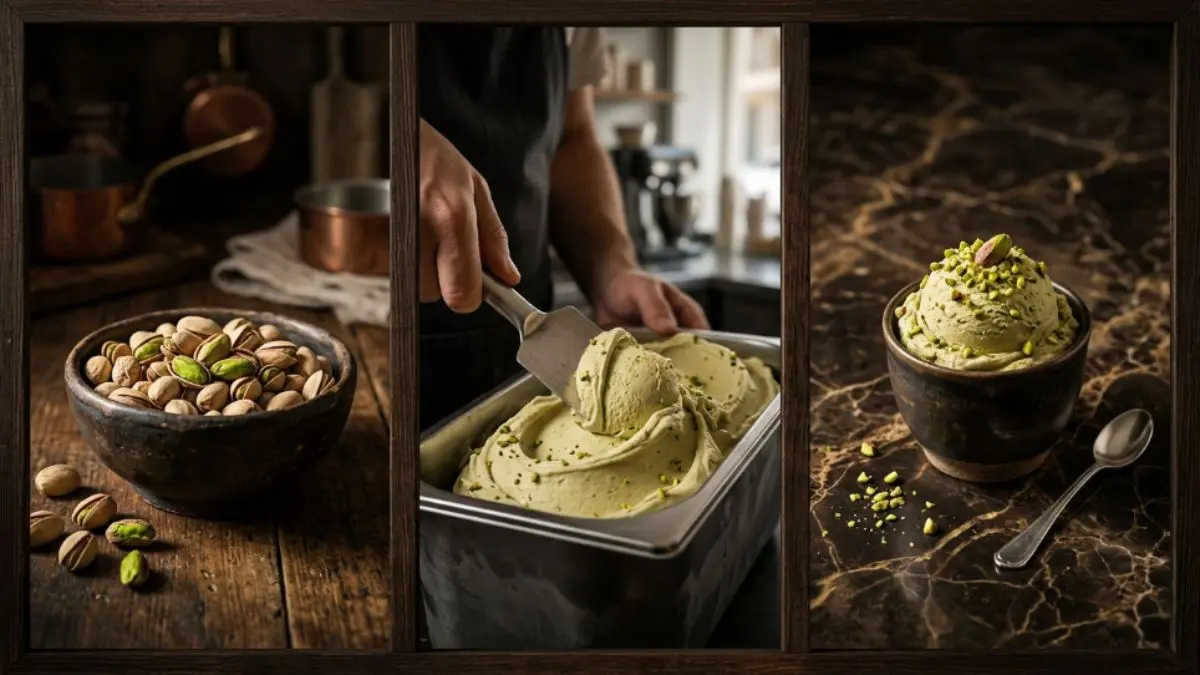
How to Make Authentic Pistachio Gelato at Home
There is a reason pistachio gelato stops people in their tracks the moment they walk past a gelateria in Sicily. The color is an unmistakable pale sage green — nothing like the artificial bright green you find in supermarket tubs. The flavor is deep, slightly sweet, faintly salty, and intensely nutty in a way that lingers long after the last spoonful.
We have tasted pistachio gelato across Italy — from the famous gelaterias of Bronte, the small Sicilian town that produces the world’s most prized pistachios, to neighborhood shops in Palermo and Rome. And we can tell you with confidence: once you understand what authentic pistachio gelato is supposed to taste like, nothing else will do.
The good news is that you can replicate that experience at home. In this guide, we walk you through every step — from selecting the right pistachios to churning a batch that rivals what you would find in Italy. No shortcuts, no artificial flavoring. Just the real thing.
What Makes Pistachio Gelato Different from Ice Cream
Before we get into the recipe, it helps to understand why gelato and ice cream are fundamentally different products — and why that difference matters for pistachio in particular.
Gelato is churned more slowly than ice cream, which means less air is incorporated during freezing. The result is a denser, silkier texture that carries flavor more intensely. Because gelato is served at a slightly warmer temperature than ice cream — typically around -11°C versus -15°C — it stays softer and more scoopable.
For pistachio, this density is everything. The nut’s delicate, complex flavor is not lost in a mass of overchurned cream and air. Every bite delivers the full profile of the pistachio — something that is difficult to achieve in a standard ice cream.
Gelato also uses a higher proportion of whole milk to cream, which keeps the fat content lower. This lighter base lets the pistachio flavor step forward rather than being muted by heavy cream.
👉 If you want to explore the full science behind what separates gelato from frozen desserts, we cover it in detail in our DIY Gelato Recipe: Step-by-Step Guide for Beginners
The Star Ingredient: Why Sicilian Pistachios Matter
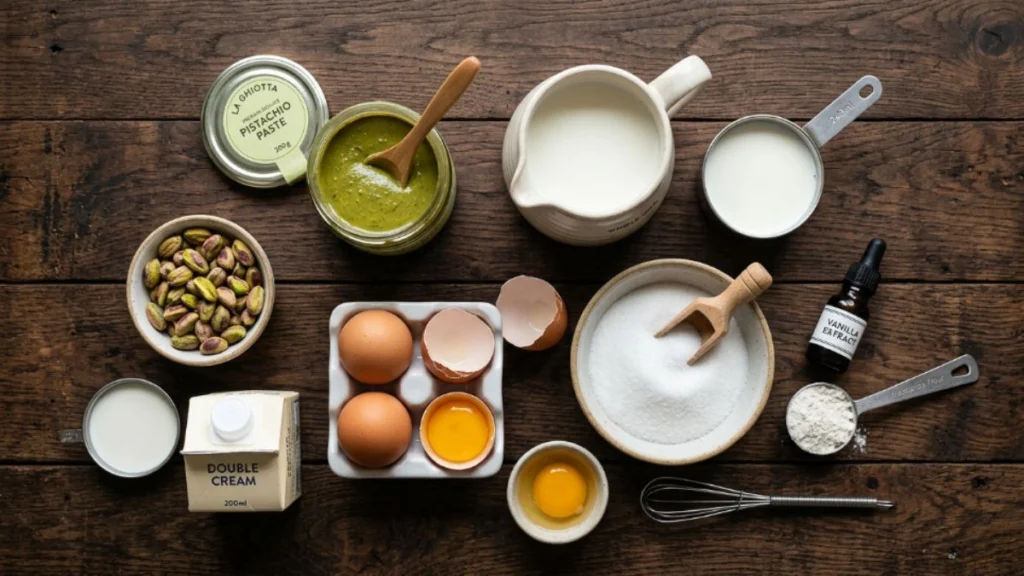
The single most important decision in this recipe is the pistachio you choose.
Bronte pistachios, grown on the volcanic slopes of Mount Etna in Sicily, are considered the finest in the world. The soil composition — rich in volcanic minerals — gives Bronte pistachios a flavor intensity and a natural sweetness that regular commercial pistachios simply do not have. They are protected by a DOP (Denominazione di Origine Protetta) designation, meaning the name “Bronte pistachio” is legally reserved for nuts grown in that specific territory.
For a truly authentic pistachio gelato, you need pure pistachio paste made from Sicilian pistachios — not pistachio-flavored extract, not pistachio cream spreads loaded with added sugar and palm oil. Pure paste. The ingredient list should read: pistachios. Nothing else.
Where to find it: Authentic Sicilian pistachio paste is not always available in local grocery stores, but it is easy to source online.
👉Bronte Sicilian Pistachio Paste 100% Pure
A 200g jar of quality pistachio paste is enough for two full batches of the recipe below.
Equipment You Will Need
Making gelato at home does not require professional equipment, but it does require the right tools. Here is what you need:
Essential:
- A gelato or ice cream machine with a compressor or pre-freezable bowl
- A medium saucepan
- A kitchen thermometer
- A fine-mesh strainer
- Mixing bowls (at least two)
- A whisk
Recommended:
- A high-powered blender or immersion blender
- A gelato storage container with a lid
For the machine itself, the texture of your pistachio gelato will be directly influenced by how well your machine churns at a slow, consistent speed. We tested and reviewed the best options available for home cooks in our dedicated guide — if you are still deciding which machine to buy, start there before investing.
SEE MORE: Best Gelato Machines for Home Use
Our top pick for pistachio gelato specifically is a machine with a compressor built in, since you can go from base to churned gelato without pre-freezing a bowl overnight.
👉 Cuisinart ICE-100 Compressor Ice Cream and Gelato Maker
👉 Whynter ICM-200LS Automatic Ice Cream Maker with Compressor
Authentic Pistachio Gelato Recipe
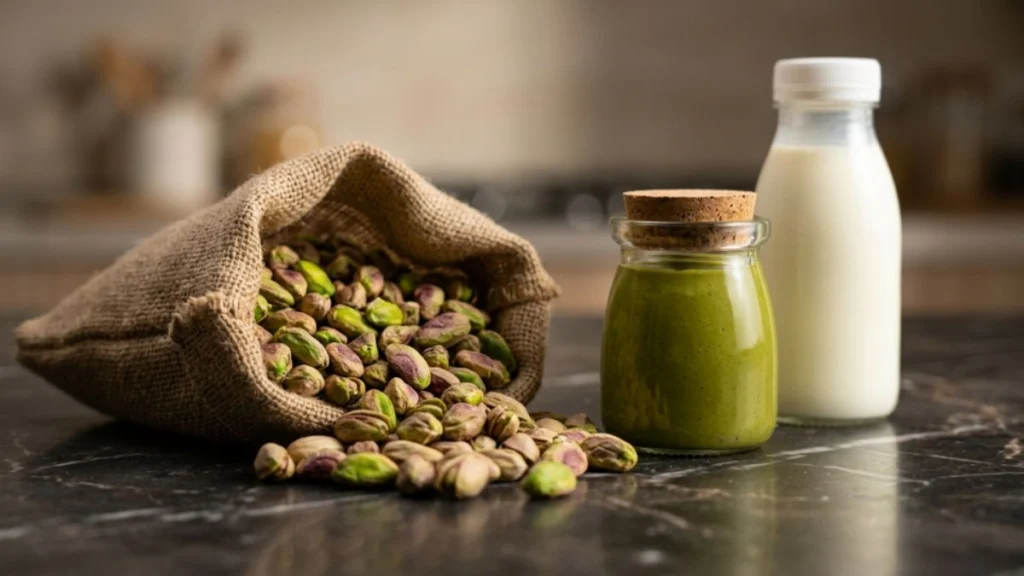
Yield: approximately 750ml (serves 4–6) Active time: 30 minutes Chilling time: 4 hours minimum (overnight preferred) Churning time: 25–35 minutes
Ingredients
| Ingredient | Quantity | Notes |
|---|---|---|
| Whole milk | 400ml | Full fat, not UHT if possible |
| Heavy cream | 100ml | Less than standard ice cream |
| Egg yolks | 4 large | Room temperature |
| Granulated sugar | 130g | Divided: 100g + 30g |
| Pure pistachio paste | 80g | Sicilian, no additives |
| Pinch of sea salt | — | Enhances pistachio flavor |
| Vanilla (optional) | ½ tsp | Only pure extract, not artificial |
Step-by-Step Instructions
Step 1 — Prepare the pistachio base
In a small bowl, combine the pistachio paste with 3 tablespoons of the measured milk. Whisk vigorously until the paste is fully dissolved into a smooth, uniform liquid. This prevents lumps from forming in the custard. Set aside.
Step 2 — Heat the milk mixture
In a medium saucepan over medium heat, combine the remaining milk, heavy cream, and 100g of the sugar. Heat gently, stirring occasionally, until the mixture reaches 70°C (158°F). Do not allow it to boil. Remove from heat.
Step 3 — Temper the egg yolks
In a separate bowl, whisk the egg yolks with the remaining 30g of sugar until the mixture becomes pale and slightly thickened — about 2 minutes of active whisking. This step is not optional. It prevents the eggs from scrambling when they meet the hot milk.
Pour the hot milk mixture slowly into the egg yolks, a ladleful at a time, whisking constantly. This gradual introduction is called tempering. Once half of the milk is incorporated, pour the yolk mixture back into the saucepan with the rest.
Step 4 — Cook the custard (anglaise)
Return the saucepan to medium-low heat. Stir constantly with a wooden spoon or heat-resistant spatula, scraping the bottom and sides of the pan. Cook until the custard reaches 82–85°C (180–185°F) and coats the back of a spoon. This takes approximately 8–10 minutes.
Do not rush this step with high heat. Patience here is what separates a silky gelato base from a grainy, curdled one.
Step 5 — Incorporate the pistachio paste
Remove the custard from heat immediately. Pour in the dissolved pistachio mixture and the sea salt. Whisk until fully combined. If you notice any small lumps, pass the entire mixture through a fine-mesh strainer.
At this point the base will have a warm, muted green color. Do not be alarmed — the color will deepen slightly as it chills and churns.
Step 6 — Chill the base
Pour the custard into a clean bowl set over an ice bath. Stir occasionally until cooled to room temperature, then cover with plastic wrap pressed directly onto the surface (this prevents a skin from forming). Refrigerate for a minimum of 4 hours, though overnight produces a noticeably better result.
Step 7 — Churn
Pour the chilled base into your gelato machine and churn according to the manufacturer’s instructions. Gelato is typically churned at a slower speed and for a shorter time than ice cream — aim for a soft, creamy consistency, not a hard-frozen mass. The texture at this stage should look like soft-serve.
👉 Cuisinart ICE-70 Electronic Ice Cream Maker
Step 8 — Harden
Transfer the churned gelato to a storage container. Press a sheet of parchment paper directly onto the surface before sealing with the lid. Freeze for 2–3 hours before serving. This hardening stage allows the gelato to set to the correct scoopable texture.
How to Serve Pistachio Gelato the Italian Way
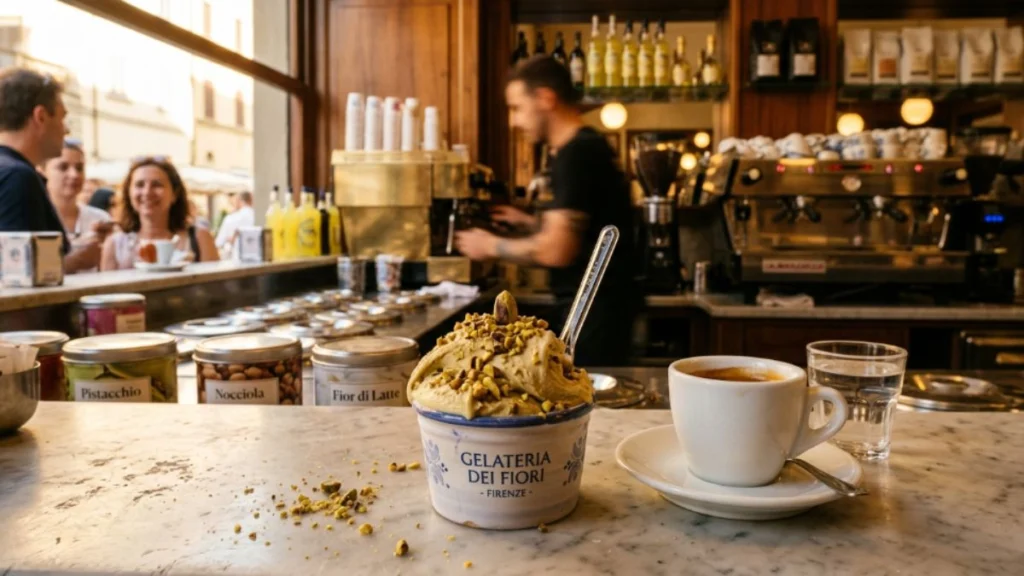
In Italy, gelato is served with a flat paddle spatula, not a round scoop. The paddle allows the gelato to be spread across a cone or cup in that characteristic draped, flowing shape you see in Italian gelaterias. A proper gelato spade also minimizes pressure, which preserves the smooth texture.
👉 Italian Gelato Spatula Spade
Pistachio gelato pairs beautifully with:
- A small drizzle of dark chocolate sauce
- A handful of roughly chopped toasted Sicilian pistachios on top
- Served alongside a shot of espresso as an affogato variation
- Combined with dark chocolate gelato in a half-and-half serving
Serve immediately after removing from the freezer. Authentic Italian gelato is never served rock-hard. If it has been in the freezer longer than a few hours, let it sit at room temperature for 5 minutes before scooping.
Common Mistakes and How to Avoid Them
| Mistake | Why it happens | How to fix it |
|---|---|---|
| Icy, grainy texture | Base not chilled enough before churning | Always chill overnight |
| Pale, washed-out color | Low-quality pistachio paste | Use pure Sicilian paste, no additives |
| Too sweet | Pistachio paste already contained sugar | Reduce added sugar by 20g if using sweetened paste |
| Custard curdled | Heat too high during cooking | Keep temperature below 85°C at all times |
| Flavor too faint | Not enough pistachio paste | Increase to 100g for a more intense result |
| Hard as a rock | Over-churned or stored too long | Let sit at room temperature 5 min before serving |
The History Behind Pistachio Gelato
The pistachio arrived in Sicily with Arab traders during the medieval period, and the island has been cultivating the nut ever since. The town of Bronte, nestled on the western slope of Etna, became the epicenter of Sicilian pistachio production — a tradition that continues today with harvests that happen only every two years to allow the trees to rest and recover.
Sicilian gelato makers began incorporating pistachio paste into their craft in the late 19th century, and the combination became so identified with the island that pistachio is now considered one of the defining flavors of Sicilian gelateria culture. Visiting a gelateria in Palermo or Catania without ordering a cup of pistacchio would be, to a local, almost unthinkable.
👉 If you are planning a trip to discover these flavors firsthand, we have a guide to the best gelaterias across Italy that is worth bookmarking before you go — The Gelato Route: Best Gelaterias in Italy and How to Visit Them
Frequently Asked Questions
Can I make pistachio gelato without a machine?
Yes, but with limitations. Pour the chilled base into a shallow container and freeze. Every 45 minutes for the first 3 hours, remove it and whisk vigorously to break up ice crystals. The result will be less smooth than machine-churned gelato, but still far superior to commercial pistachio ice cream.
Where can I buy authentic Sicilian pistachio paste?
Online is the most reliable source. Search for brands like Agrimontana, Babbi, or simply “100% Sicilian pistachio paste” on Amazon. The ingredient list should contain only pistachios — no added oils, sugar, or colorings.
Why is my pistachio gelato not green enough?
Natural pistachio paste produces a subtle sage green, not a bright artificial green. If you want a slightly deeper color, a very small amount of natural spinach powder (tasteless in this quantity) can be added without affecting flavor. Avoid green food coloring — it will taste artificial.
How long does homemade pistachio gelato keep?
Up to 2 weeks in the freezer with the parchment paper pressed directly onto the surface. Beyond that, ice crystals begin to form and texture degrades.
Can I use roasted salted pistachios instead of paste?
You can blend roasted pistachios into a paste using a high-powered food processor — process for 8–10 minutes until a smooth butter forms. Reduce added salt in the recipe if your pistachios are already salted. The flavor will be slightly different from Sicilian paste but still excellent.
Is pistachio gelato gluten-free?
This recipe contains no gluten ingredients. However, always check your specific pistachio paste label for allergen information, as some products are processed in facilities that handle wheat.
What is the difference between pistachio paste and pistachio cream?
Pistachio paste is made from pure ground pistachios. Pistachio cream (crema di pistacchio) typically contains added sugar, oils, and sometimes dairy. For this recipe, always use paste — cream will throw off the sugar balance and dilute the pistachio flavor.

Mary Ciss is a food writer and Italian gastronomy enthusiast with a passion for authentic recipes, culinary history, and the stories behind every dish. Through Mio Gelatto, she explores the real flavors of Italy — from centuries-old gelato traditions to the hidden trattorias that locals love. For Mary, every recipe is a journey.