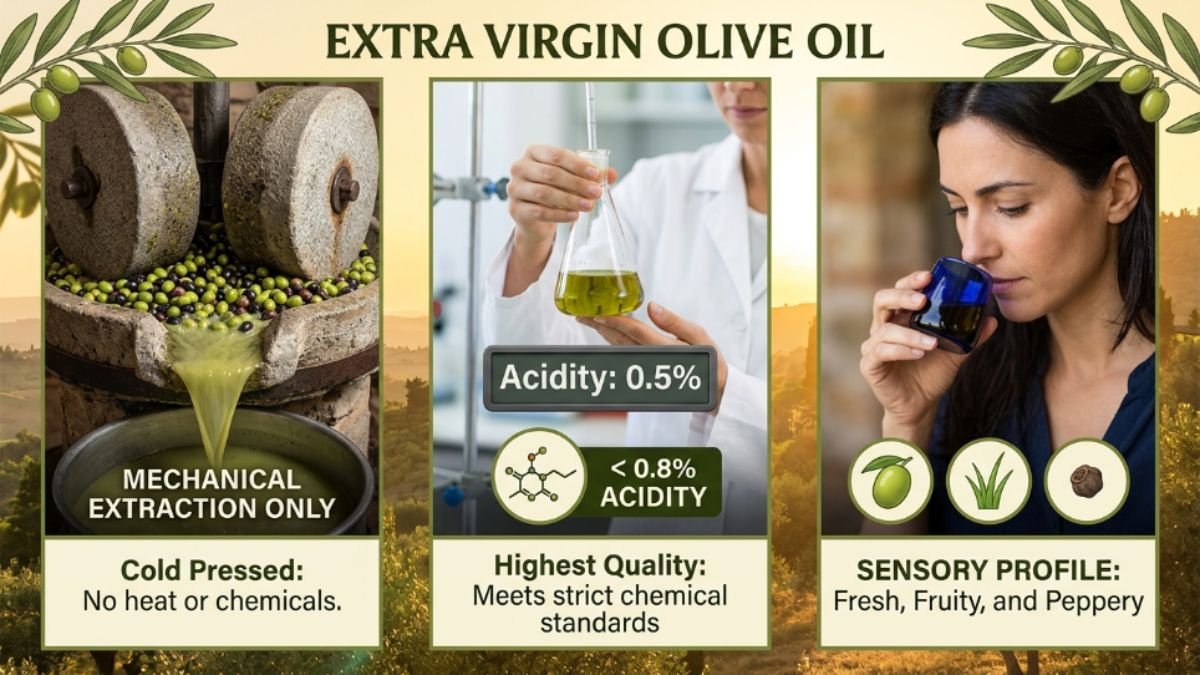
What Is Extra Virgin Olive Oil and Why Does It Matter?
Walk into any kitchen in southern Italy — a farmhouse in Puglia, a family trattoria in Calabria, a home in the hills above Florence — and you will find a bottle of extra virgin olive oil on the counter within arm’s reach. It is not a condiment in the way Americans typically think of condiments. It is a fundamental ingredient, a finishing element, and in many regions, the defining flavor of an entire culinary tradition.
American interest in olive oil has grown significantly over the past two decades. According to the Olive Oil Times, the United States is now the third largest consumer of olive oil in the world, with annual imports consistently exceeding 300,000 metric tons. Yet despite that volume, the majority of American home cooks still reach for whatever bottle is on sale at the grocery store — often without knowing whether what they are buying actually qualifies as extra virgin olive oil in any meaningful sense.
We have spent years cooking with olive oils from across Italy — testing bottles from Sicilian producers using Nocellara olives, from Tuscan estates pressing Frantoio and Moraiolo varieties, and from small Ligurian farms where the oil is so delicate it borders on floral. That direct experience has made one thing clear: not all extra virgin olive oil is the same, and the differences are not subtle. They are the difference between a dish that tastes genuinely Italian and one that merely approximates it.
This guide will walk you through exactly what extra virgin olive oil is, how it is classified, what to look for on a label, how to store it correctly, and which bottles are worth buying. By the end, you will shop for olive oil the way an Italian home cook does — with intention.
⚠️ Important Notice: This article is for informational and educational purposes only. Any references to health properties of olive oil are based on general nutritional research and do not replace guidance from a qualified healthcare professional. For personal dietary decisions, consult a licensed professional.
What “Extra Virgin” Actually Means — and Why Most Bottles Lie
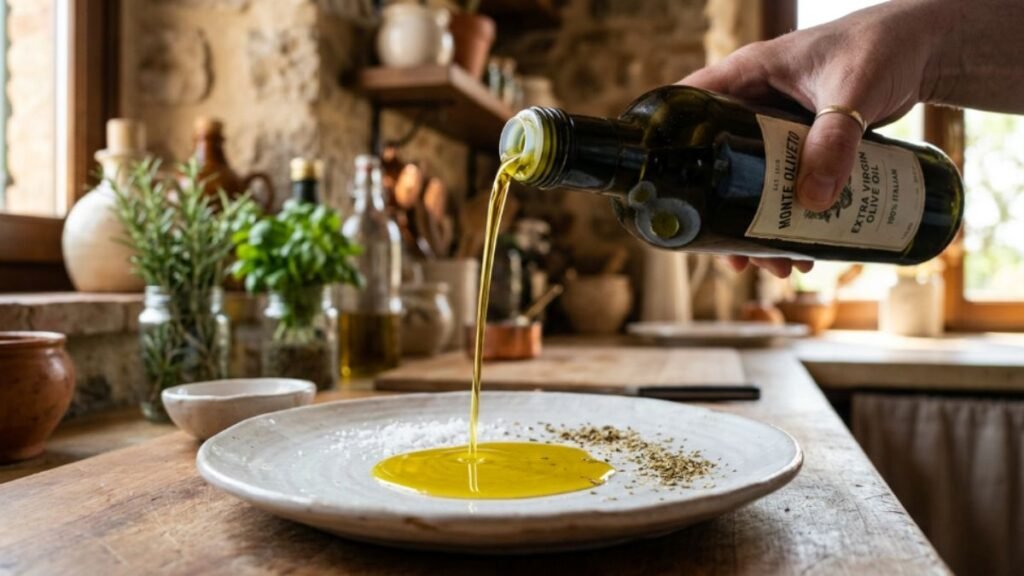
The term extra virgin is not marketing language. It is a legal classification defined by the International Olive Council (IOC) and enforced — with varying degrees of rigor — by governments and certification bodies around the world. Understanding what it requires explains why so many bottles on American supermarket shelves fall short.
The Legal Definition
To be classified as extra virgin, an olive oil must meet three core criteria:
- Free acidity below 0.8% — measured as oleic acid content. Acidity increases as olives deteriorate or are processed incorrectly. A lower number means fresher, higher-quality oil.
- Zero sensory defects — assessed by a trained tasting panel. The oil must have no rancid, fusty, winey, or muddy flavors. It must also demonstrate positive fruity, bitter, and pungent attributes.
- Cold-pressed or cold-extracted only — no heat above 27°C (80.6°F) and no chemical solvents may be used at any point in processing. Heat and chemicals destroy the delicate polyphenols and aromatic compounds that give genuine extra virgin olive oil its character.
The Problem with American Shelves
A landmark study conducted by the UC Davis Olive Center found that more than 69% of imported olive oils labeled as extra virgin on American store shelves failed to meet IOC or USDA standards when independently tested. The oils were either oxidized, adulterated with lower-grade refined oils, or mislabeled at origin.
This is not a minor discrepancy. Refined olive oil — what is sometimes sold as “pure” or “light” olive oil — has been processed with heat and chemicals to neutralize defects. It has almost no polyphenol content, a neutral flavor, and none of the aromatic complexity that makes extra virgin olive oil worth using in the first place.
⚠️ Attention: “Pure olive oil,” “light olive oil,” and “olive oil” on a label all indicate refined oil blended with a small percentage of virgin olive oil. None of them are extra virgin. If the label does not say “extra virgin,” it is a different product entirely.
How Extra Virgin Olive Oil Is Made: From Grove to Bottle
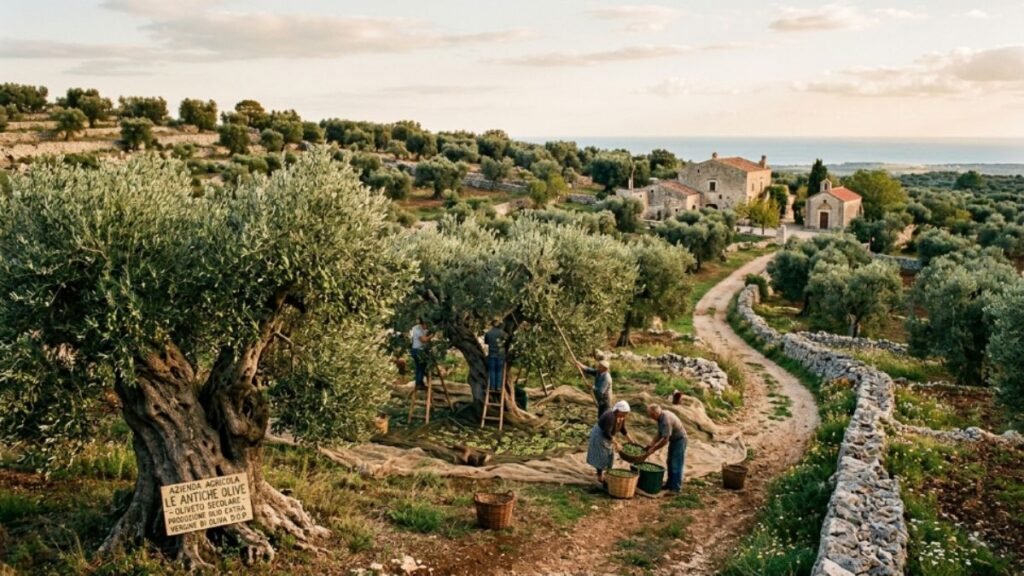
The quality of extra virgin olive oil is determined long before it reaches a bottle. Every decision made in the grove and at the mill — variety selection, harvest timing, processing speed, storage conditions — shapes the final product.
Harvest Timing Is Everything
Olives harvested slightly before full ripeness — when they transition from green to violet — produce oil with the highest polyphenol content, the most complex flavor, and the lowest acidity. This early-harvest oil is often called olio nuovo in Italy and has a vivid green color, a peppery bite at the back of the throat, and a grassiness that fades over time.
Olives harvested late, after they have fully ripened and fallen, produce oil that is milder, yellower, and lower in protective antioxidants. It is easier and cheaper to process but significantly inferior as a final product.
The Milling Process
After harvest, olives must reach the mill within 24 hours — preferably within 4 to 6 hours. Delays allow fermentation to begin, which increases acidity and introduces the musty, fusty defects that disqualify an oil from extra virgin status.
At the mill, olives are crushed into a paste and then malaxed — slowly mixed — before centrifugal extraction separates the oil from the water and solids. No heat above 27°C and no chemical agents are used at any stage. The resulting oil is filtered, tested, and bottled immediately to preserve freshness.
How to Read an Olive Oil Label Like an Italian
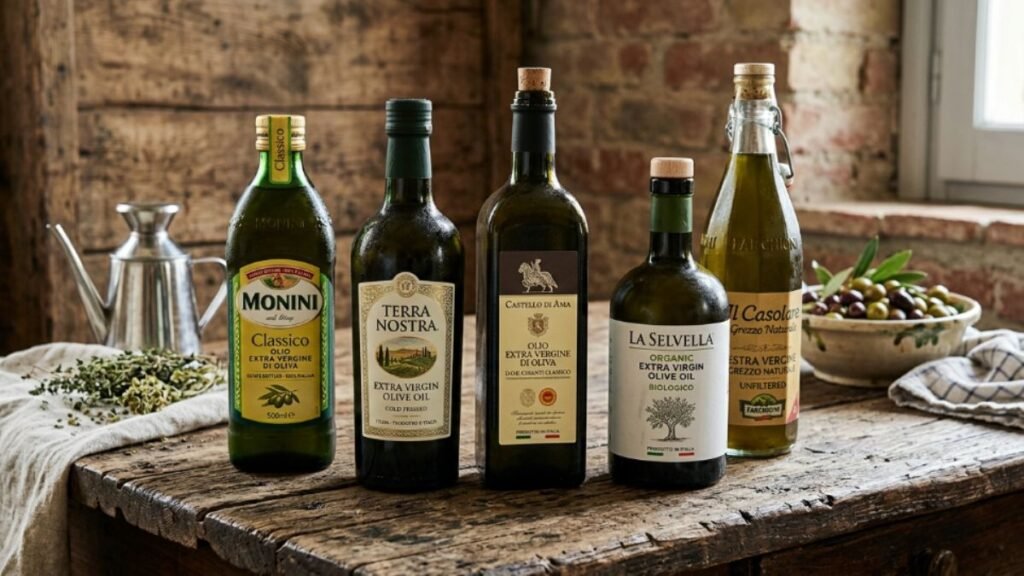
An Italian consumer standing in front of an olive oil display reads the label differently than most American shoppers. Here is what they look for — and what you should too.
Harvest Date vs. Best Before Date
The best before date tells you almost nothing useful. Olive oil does not spoil in the way dairy or meat does — it oxidizes and goes rancid gradually. The best before date is typically set 18 to 24 months after bottling, but bottling can happen months after harvest.
What matters is the harvest date — the year the olives were picked. Fresh extra virgin olive oil is best consumed within 12 to 18 months of harvest. If a bottle does not list a harvest date, that absence is itself informative. Reputable producers are proud of their freshness and display it prominently.
DOP and IGP Designations
- DOP (Denominazione di Origine Protetta) — the equivalent of the French AOC system. The olives must be grown, pressed, and bottled in a specific defined region. Examples include Toscano DOP, Riviera Ligure DOP, and Terra di Bari DOP.
- IGP (Indicazione Geografica Protetta) — a slightly less strict designation where at least one stage of production must occur in the defined region.
Both designations are independently audited and provide meaningful quality assurance. An olive oil carrying a DOP seal has been tested and verified, not merely claimed.
Single Origin vs. Blend
Single-origin oils come from one defined region or even one specific estate. They have a distinct flavor profile tied to the olive variety, soil, and climate of that place. Blended oils — including most supermarket bottles labeled “Product of Italy” — may contain oils from multiple countries mixed together.
Neither is inherently bad, but single-origin oils from named Italian producers are almost always of higher quality and more traceable.
The Flavor Profiles of Italian Extra Virgin Olive Oil by Region
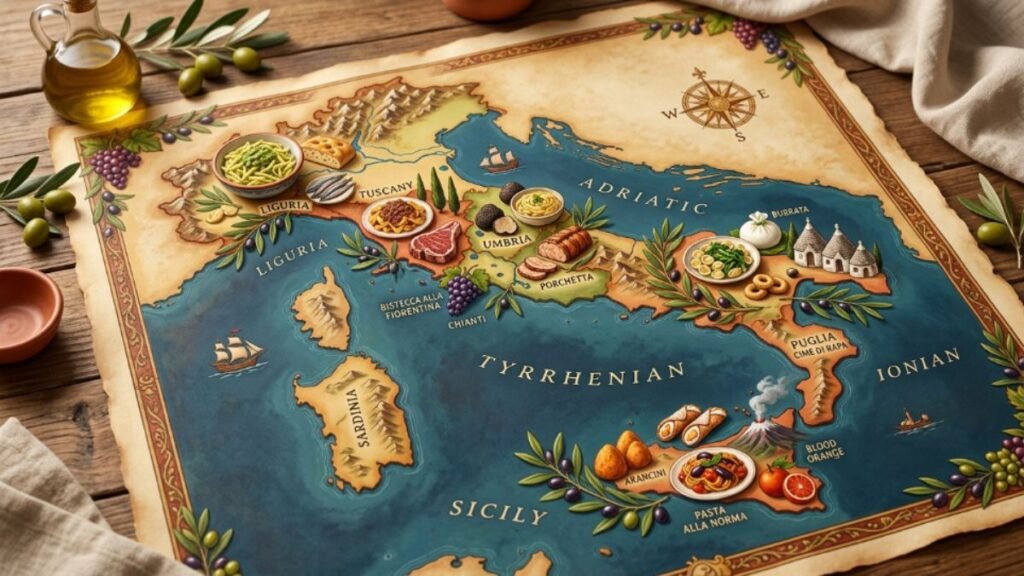
Understanding that Italian extra virgin olive oil is not a single flavor is one of the most useful things a home cook can internalize. The country produces dramatically different oils depending on region, variety, and producer.
| Region | Olive Varieties | Flavor Profile | Best Used For |
|---|---|---|---|
| Tuscany | Frantoio, Moraiolo, Leccino | Herbaceous, peppery, grassy | Salads, bruschetta, finishing soups |
| Liguria | Taggiasca | Delicate, buttery, mild, slightly sweet | Fish, pesto, light pasta dishes |
| Sicily | Nocellara del Belice | Fruity, fresh, balanced bitterness | Raw on vegetables, bread, light proteins |
| Puglia | Coratina, Ogliarola | Intensely bitter, robust, high polyphenols | Robust salads, grilled meats, legumes |
| Umbria | Moraiolo, Frantoio | Complex, spicy, slightly fruity | Lentil dishes, grilled vegetables, pasta |
💡 Practical Tip: Match the intensity of your olive oil to the intensity of the dish. Pugliese Coratina oil on a delicate fish will overpower it. Ligurian Taggiasca on a hearty ribollita will disappear. Treat olive oil the way you treat wine — as an ingredient with a flavor that needs to complement the food.
Recommended Extra Virgin Olive Oils Available in the US
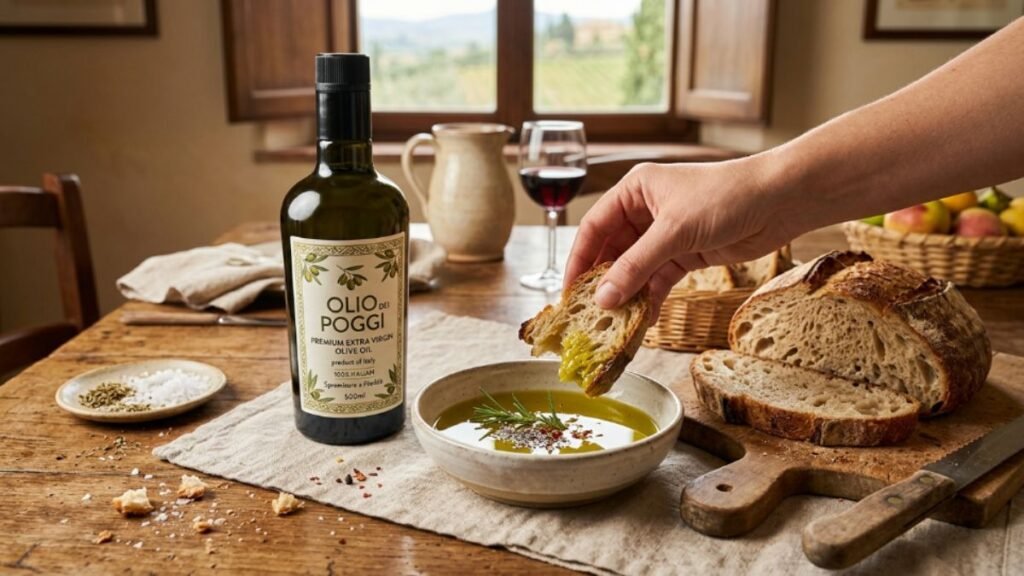
These are the bottles we return to consistently — selected for traceability, documented harvest dates, and verified quality.
Everyday Cooking Options
👉 California Olive Ranch Extra Virgin Olive Oil
👉 Kirkland Signature Organic Extra Virgin Olive Oil
Premium Finishing Oils
👉 Cirulli Organic Extra Virgin Olive Oil
👉 Lucini Italia Premium Select Extra Virgin Olive Oil
What to Spend
A genuinely good extra virgin olive oil for everyday cooking costs between $15 and $30 for a 500ml to 750ml bottle. Anything significantly below that price point at that volume should be treated with skepticism. A finishing oil from a named single estate — used by the tablespoon over finished dishes — can cost $30 to $60 for a smaller 250ml bottle, and is worth it for the occasions when flavor is the entire point.
How to Store Extra Virgin Olive Oil Correctly
The enemies of extra virgin olive oil are heat, light, and oxygen. All three accelerate oxidation — the process that turns fresh, polyphenol-rich oil into a flat, rancid product that contributes no flavor and none of the beneficial compounds associated with quality oil.
- Keep it dark. Store in a dark cupboard or pantry, away from windows and stove heat. A clear glass bottle left on a sunlit kitchen counter can degrade noticeably within weeks.
- Avoid temperature fluctuations. A consistent cool temperature between 57°F and 70°F (14°C–21°C) is ideal. Refrigeration is possible but causes harmless cloudiness — the oil returns to its normal appearance at room temperature.
- Seal it properly after each use. Oxygen contact begins the oxidation clock. Close the bottle tightly immediately after pouring.
- Buy in appropriate quantities. A large bulk container saves money but costs quality. If you cannot use a 3-liter tin within 60 days of opening, buy smaller bottles more frequently.
- Never store near the stove. The most common mistake in American kitchens. The heat from cooking slowly destroys the oil over weeks and months without any visible sign — the degradation is invisible until you taste it.
✓ Best Practice: Buy a 500ml bottle, store it in a dark cupboard, and replace it within 45 to 60 days of opening. For high-volume cooking, keep one large tin sealed until needed and decant into a smaller dark bottle for daily use.
How to Use Extra Virgin Olive Oil in Italian Cooking
The most important distinction Italian home cooks make is between oil used for cooking and oil used for finishing. These are often different bottles with different flavor profiles, and treating them interchangeably wastes both money and flavor.
For Cooking
A robust Pugliese oil with high polyphenol content holds up well to heat and is appropriate for sautéing, roasting vegetables, and building the base flavors of a sauce. The bitter, peppery notes that make it slightly aggressive when raw soften and mellow with heat into a rounded, savory base.
For Finishing
A Ligurian Taggiasca or a fresh-pressed Sicilian oil should never see high heat. These are poured raw over finished dishes — a bean soup, a plate of grilled fish, a simple bruschetta — immediately before serving. Their role is to add aroma and flavor at the moment of eating, not to cook.
In authentic Italian cooking — Italian pasta dishes , roasted vegetables, Italian bread — the finishing pour of extra virgin olive oil is not optional. It is structural. The dish is not complete without it.
⚠️ Medical Disclaimer: The information provided in this article regarding the nutritional properties of extra virgin olive oil is for educational purposes only and is not intended to serve as medical advice, diagnosis, or treatment. For any dietary concerns or health conditions, consult a licensed healthcare professional before making changes to your diet.
Conclusion
Extra virgin olive oil is not a pantry staple to buy on autopilot. It is an ingredient with a provenance, a flavor profile, and a shelf life — one that deserves the same attention you give to a good bottle of wine or a piece of aged cheese.
The four things that matter most: always look for a harvest date, match oil intensity to dish intensity, store every bottle away from heat and light, and keep a second, better bottle reserved for finishing. These four habits alone will noticeably elevate the flavor of everything you cook from an Italian kitchen.
If this is your first time buying with intention, start with a reliable mid-range bottle for cooking and a single smaller bottle of Sicilian or Tuscan origin for finishing. Taste both side by side on a piece of plain bread with no other flavors competing. That comparison will teach you more in two minutes than any guide can explain in two thousand words.
Frequently Asked Questions
What is the difference between extra virgin olive oil and regular olive oil?
Extra virgin olive oil is cold-pressed with no heat or chemicals, has acidity below 0.8%, and must pass sensory evaluation with no defects. Regular or “pure” olive oil is refined using heat and chemical processes to neutralize defects, then blended with a small amount of virgin oil. It has a neutral flavor, virtually no polyphenols, and is a fundamentally different product. For Italian cooking — especially for finishing dishes — only extra virgin qualifies.
Is extra virgin olive oil safe to cook with at high heat?
Yes, within reasonable limits. Extra virgin olive oil has a smoke point between 375°F and 405°F (190°C–207°C), which is sufficient for sautéing, roasting, and pan-frying at typical home cooking temperatures. The presence of natural antioxidants in quality extra virgin olive oil actually makes it more heat-stable than many refined oils. Deep frying at temperatures consistently above 375°F is not recommended.
How can I tell if my olive oil has gone rancid?
Rancid olive oil smells waxy, crayon-like, or similar to stale walnuts. The flavor turns flat, slightly sour, and unpleasant. Fresh extra virgin olive oil should smell grassy, fruity, or faintly peppery. If your bottle has been open for more than three months or has been stored near the stove, taste a small amount before using it on a finished dish. When in doubt, replace it — good olive oil is inexpensive insurance against a ruined dish.
What does “Product of Italy” mean on an olive oil label?
It means the oil was bottled in Italy — not necessarily that the olives were grown there. Italian law allows oils from Spain, Greece, Tunisia, and other countries to be imported, blended, and bottled in Italy under an Italian label. If you want oil made from Italian olives, look for a named DOP designation, an explicitly stated olive variety and growing region, or language such as “100% Italian olives.”
How long does an unopened bottle of extra virgin olive oil last?
An unopened bottle stored in a cool, dark place will remain at peak quality for 12 to 18 months from the harvest date — not from the best before date. After 18 months, even a well-stored oil begins to lose its aromatic complexity and polyphenol content. Always prioritize the harvest date over the best before date when evaluating freshness at the point of purchase.
Why does good extra virgin olive oil taste bitter and peppery?
The bitterness and the characteristic burn at the back of the throat are caused by polyphenols — specifically oleocanthal and oleuropein — which are natural antioxidant compounds present in higher concentrations in fresh, early-harvest oils. Their intensity is a reliable indicator of freshness and polyphenol content. A complete absence of any bitterness often signals oxidation, late harvest, or low polyphenol content rather than superior delicacy.
Is expensive olive oil worth it?
For finishing dishes — a tablespoon poured over completed pasta, bruschetta, or soup — yes, unambiguously. The difference between a $10 supermarket bottle and a $35 single-estate Sicilian oil is immediately perceptible when the oil is used raw. For everyday sautéing, a reliable mid-range brand with a documented harvest date is sufficient. Investing in one quality finishing oil is the single highest-impact upgrade most American home cooks can make to their Italian cooking.

Mary Ciss is a food writer and Italian gastronomy enthusiast with a passion for authentic recipes, culinary history, and the stories behind every dish. Through Mio Gelatto, she explores the real flavors of Italy — from centuries-old gelato traditions to the hidden trattorias that locals love. For Mary, every recipe is a journey.