European Frozen Desserts: What Makes Italian Gelato Stand Apart
Europe has given the world some of its most beloved frozen desserts, and the variety across the continent is far more interesting than most Americans realize. From the elastic, stretchy dondurma of Turkish origin that influenced parts of southeastern Europe, to the dense parfaits of French haute cuisine, to the crystalline granita of Sicily and the rich cream ices of England — European frozen desserts form a complex, centuries-old tradition with distinct regional identities that rarely overlap. At the center of that tradition, by almost any measure, sits Italian gelato.
American interest in authentic Italian food culture has grown consistently over the past decade. The National Restaurant Association consistently ranks Italian cuisine among the top three most sought-after food experiences for American travelers abroad, and gelato specifically has seen a dramatic rise in American consumer awareness — artisan gelato shop openings in the United States grew by over 30% between 2018 and 2024, according to industry research from the International Dairy Foods Association. Yet despite this growing familiarity, most Americans have never had the opportunity to understand what separates Italian gelato from the other frozen dessert traditions of Europe, or why those distinctions matter.
We have spent considerable time studying and tasting frozen dessert traditions across Europe — from Parisian glacier shops to Sicilian granita bars to Turkish pastry houses in Istanbul. What consistently emerges from that experience is that while every tradition has genuine merit and cultural depth, Italian gelato occupies a position that is technically, historically, and gastronomically distinct. Understanding why requires looking at the full landscape of European frozen desserts with real curiosity rather than assumption.
In this guide, you will learn what defines the major frozen dessert traditions of Europe, how they developed and where they differ technically, and why Italian gelato — despite sharing a continent and some historical roots with its counterparts — represents a category of its own.
The Landscape of European Frozen Desserts: An Overview
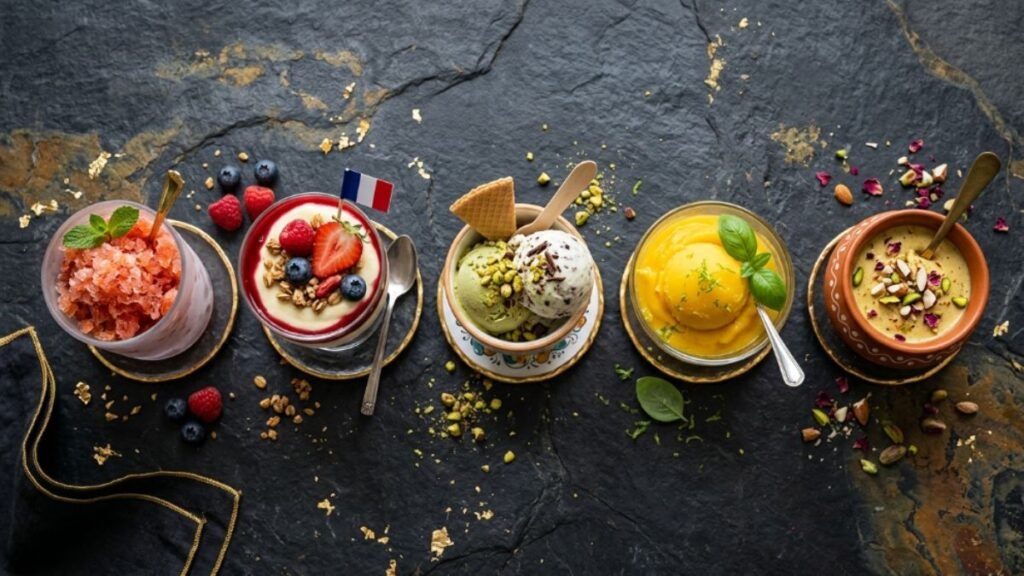
Before comparing individual traditions, it helps to understand the broad categories that organize frozen desserts across Europe. These are not arbitrary classifications — they reflect genuine differences in production method, ingredient composition, and cultural context that affect how each dessert tastes, behaves at different temperatures, and fits into the dining experience it was designed for.
Dairy-based frozen desserts
The most familiar category to American consumers, dairy-based frozen desserts use milk, cream, or eggs as their primary base. Italian gelato, French glace, English cream ice, and Scandinavian glass all belong to this group, though they differ significantly in fat content, air incorporation, and serving temperature. The proportion of cream to milk, the presence or absence of egg yolks, and the speed of churning determine the final texture and flavor intensity of each tradition.
Water-based frozen desserts
Sorbets, granitas, and sherbets use no dairy at all — or use dairy in such small quantities that it does not define the product. These desserts exist across nearly every European tradition and are particularly important in the Mediterranean, where the Arab sharbat tradition influenced Italian, Spanish, and French frozen dessert cultures directly. Water-based desserts typically deliver more intense, cleaner flavors than their dairy counterparts, at the cost of richness and body.
Specialty regional formats
A third category covers desserts that do not fit neatly into either group — semifreddo, parfait, cassata gelata, and the Turkish-influenced elastic ices found in parts of the Balkans. These products use freezing as part of their preparation but often involve different structural techniques — mousse bases, layered compositions, or the addition of mastic resin — that place them outside standard ice cream or sorbet production.
Italian Gelato: The Standard Against Which Others Are Measured
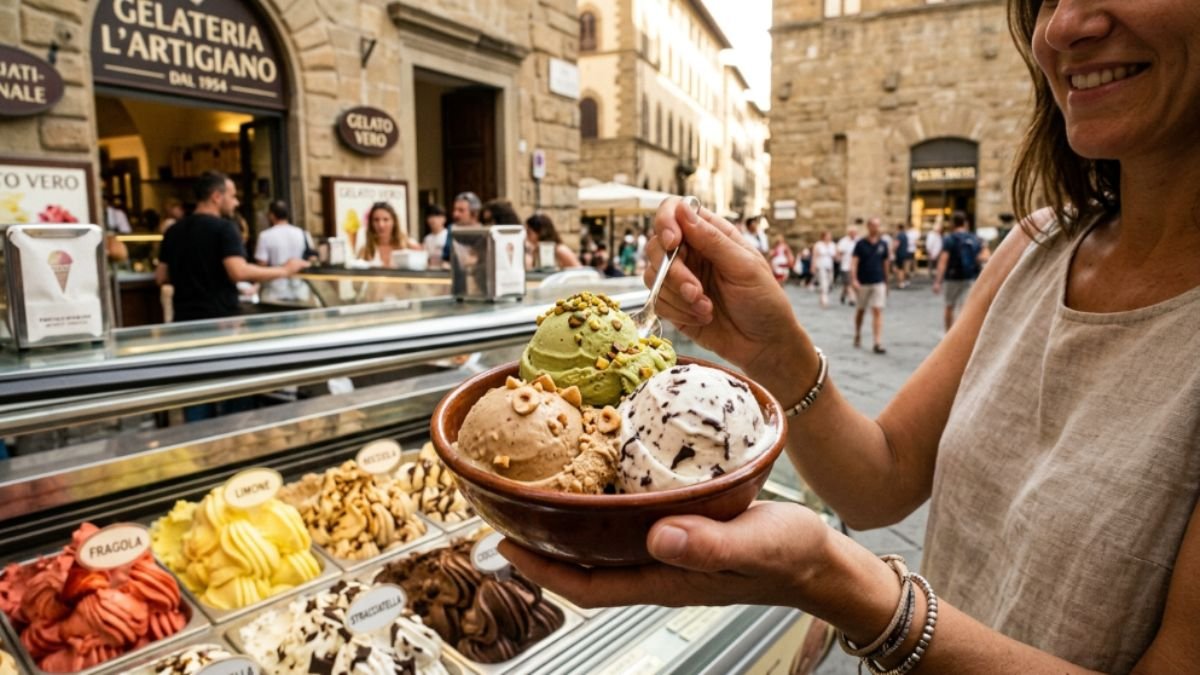
Italian gelato is the most studied, most imitated, and most institutionally supported frozen dessert tradition in Europe. The existence of Carpigiani Gelato University in Bologna — a full academic institution dedicated entirely to gelato production and culture, with students from over 100 countries — reflects the seriousness with which Italy treats this tradition. No other European country has anything comparable for its own frozen dessert heritage.
What makes gelato technically distinct
The technical characteristics that define authentic Italian gelato are specific and measurable. Fat content sits between 4% and 8%, significantly lower than American ice cream’s 10–18%. Air incorporation (overrun) ranges from 20% to 35%, compared to 50–100% for most industrial ice creams. Serving temperature is warmer than most frozen desserts — between 10°F and 22°F (-12 to -6°C) — which keeps the texture soft, dense, and pliable rather than hard and crystalline.
Each of these technical choices produces a specific sensory outcome. Lower fat means flavor compounds reach the palate more directly — less fat coating means more intense taste. Lower overrun means the product is denser and more satisfying per serving. Warmer serving temperature means the texture is silky and yielding rather than firm, which affects how flavors are released as the gelato melts on the tongue.
The ingredient philosophy
Authentic Italian gelato is built on an ingredient philosophy that prioritizes specificity and seasonality over consistency. The best gelato shops in Italy change their menus with the seasons because the ingredient quality changes with the seasons — strawberry gelato is only on the menu when local strawberries are at their peak, and it comes off the menu when they are not. This relationship with seasonal ingredients is embedded in the culture and has no real equivalent in any other European frozen dessert tradition at the artisan level.
💡 Practical Tip: When evaluating any gelato — in Italy or in the United States — the single best test flavor is fior di latte: plain milk gelato with no additional flavoring. It has nothing to hide behind and reveals the quality of the base and the technique of the maker immediately. A shop that makes excellent fior di latte makes everything well.
LEARN ALSO: DIY Gelato Recipe: Step-by-Step Guide for Beginners
French Frozen Desserts: Glace, Sorbet, and the Parfait Tradition
France has one of the oldest and most technically sophisticated frozen dessert traditions in Europe. French glacier culture — the craft of the professional ice cream maker — developed alongside the broader French pastry tradition and shares its emphasis on classical technique, precise temperature control, and the use of high-quality dairy from specific regional sources.
Glace vs gelato: the fat question
French glace uses a higher cream content than Italian gelato, resulting in a richer, denser product with a fat content typically between 8% and 14%. The higher fat creates a smoother mouthfeel at colder temperatures — French ice cream is often served harder than gelato — but it also mutes the intensity of flavor ingredients. A pistachio glace and a pistachio gelato made with identical pistachio paste will taste noticeably different because the fat content of the French version coats the palate more heavily, reducing the directness of the pistachio flavor.
Sorbet: France’s greatest frozen contribution
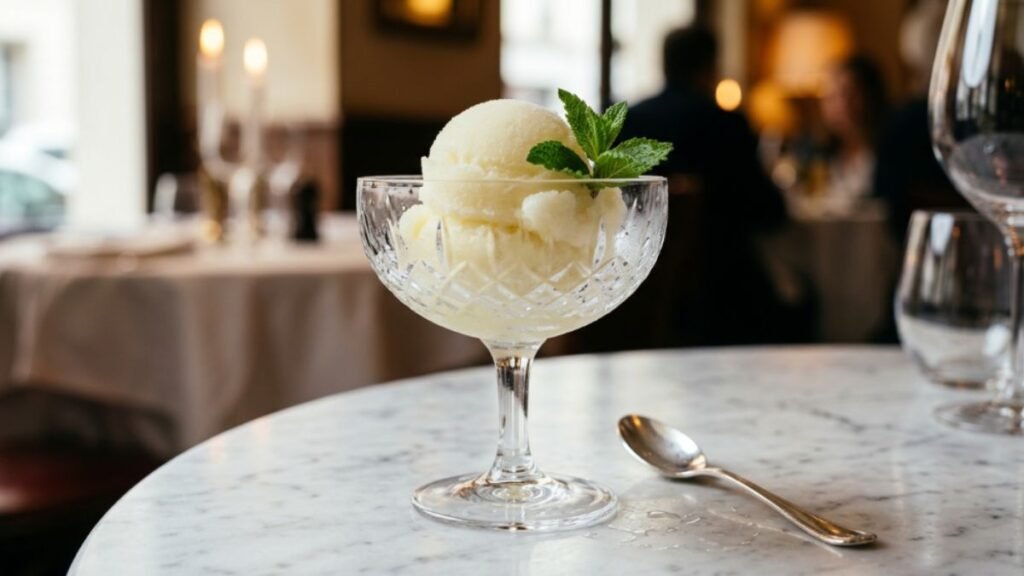
If France has a contribution to European frozen desserts that genuinely rivals Italian gelato in its own category, it is sorbet. French sorbet-making has been elevated to a precise technical art, with strict standards governing sugar content, fruit concentration, and serving temperature. A well-made French lemon sorbet — with its perfect balance of acid, sweetness, and body — is one of the most refined frozen desserts in Europe. The best Parisian glacier shops produce sorbets that have no peer outside France.
Parfait: the frozen mousse tradition
The French parfait is a distinct category — a frozen mousse rather than a churned ice cream, made by folding a whipped cream base around a cooked sugar syrup and egg yolk mixture, then freezing without churning. The result is an extremely smooth, rich dessert with a texture closer to frozen mousse than to ice cream. Parfaits are served in slices rather than scoops and are more commonly encountered in fine dining contexts than in casual dessert shops. They are technically impressive but occupy a different niche from everyday frozen desserts.
Spanish and Portuguese Frozen Traditions: Horchata, Helado, and the Mediterranean Line
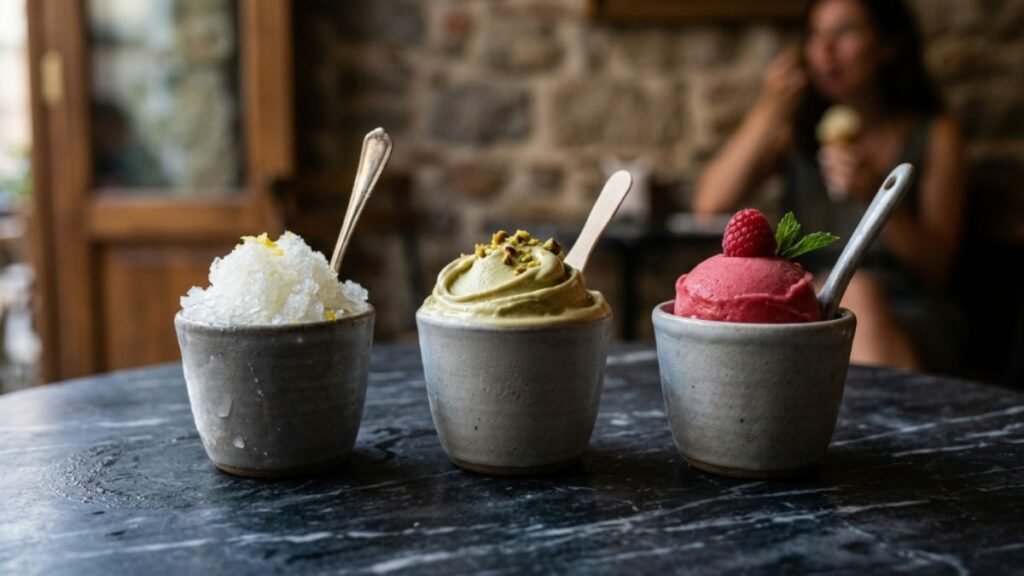
The Iberian Peninsula’s frozen dessert tradition draws from the same Arab Mediterranean roots as Sicily — the sharbat influence arrived in Spain through centuries of Moorish presence and created a water-ice tradition that still defines the region’s approach to frozen desserts today.
Horchata de chufa
Horchata de chufa — made from tiger nuts, water, and sugar — is one of the most unusual and distinctive beverages in European culinary culture. While technically a cold drink rather than a frozen dessert, it occupies the same cultural space as gelato or sorbet in Valencian daily life, consumed by adults and children throughout the summer. The flavor is nutty, slightly sweet, and completely unlike anything in the Italian or French tradition. Paired with fartons — soft, glazed pastry sticks — it is a uniquely Valencian experience.
Spanish helado culture
Spanish helado (ice cream) follows the same basic production methods as French and Italian frozen desserts but with a regional flavor palette that reflects Spanish ingredients — turrón (nougat), membrillo (quince paste), saffron, and manchego cheese appear as gelato flavors in ways that would be unusual in Italy or France. The artisan helado tradition in Spain is less institutionally formalized than in Italy but has produced genuinely exceptional regional products, particularly in Catalonia and the Basque Country.
Northern European Frozen Desserts: Scandinavia, Germany, and the British Tradition
Northern Europe’s frozen dessert traditions developed later than Mediterranean traditions — the relative scarcity of fresh fruit for much of the year and the colder climate meant that frozen desserts were less central to daily culinary life. Yet each region developed distinctive approaches that reflect local ingredients and cultural preferences.
Scandinavian glass culture
Scandinavian countries — particularly Sweden and Denmark — developed a sophisticated ice cream culture in the 20th century that borrowed from Italian gelato technique while incorporating distinctly Nordic ingredients. Cloudberry, lingonberry, salted licorice, and cardamom appear as flavors in Scandinavian artisan ice cream shops that would be remarkable in any context. The Swedish glass tradition in particular has produced artisan producers who are taken seriously at the European level.
German Eis: the Italian connection
Germany has a unique relationship with Italian gelato because of the large-scale migration of Italian gelato makers — predominantly from the Veneto region — to Germany in the early and mid-20th century. These Italian Eismacher (ice cream makers) established a tradition of Italian-style gelato production across German cities that persists today. Many German Eiscafé are still family businesses with roots in Veneto, still producing gelato using techniques brought from northeastern Italy generations ago. Germany’s artisan gelato scene is therefore more authentically Italian than it might appear from the outside.
British cream ice and the seaside tradition
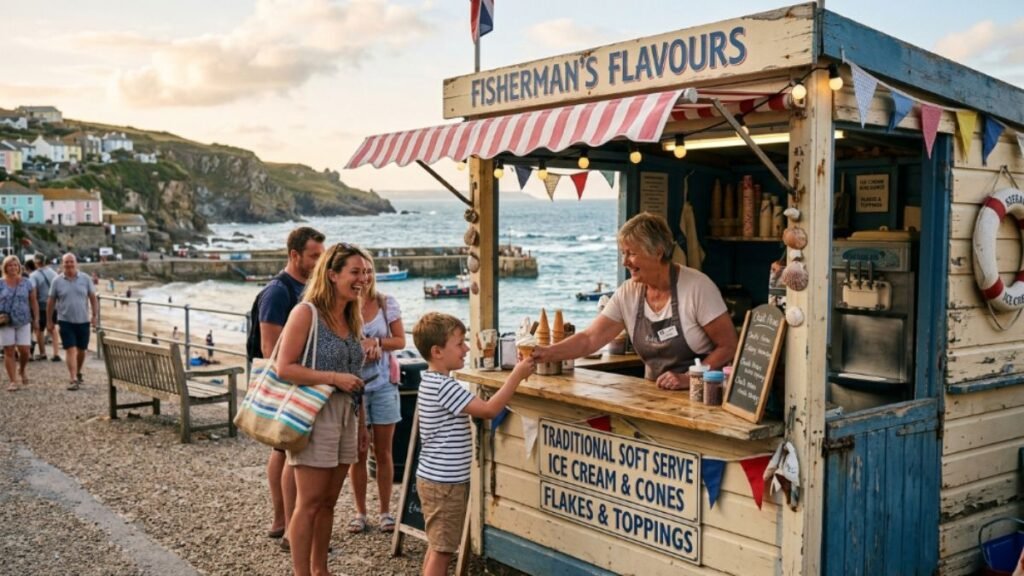
Britain’s ice cream tradition is distinct from the continent’s in its strong association with the seaside and with specific formats — the 99 Flake (a soft-serve cone with a Cadbury chocolate bar pressed into it), the oyster (two wafers sandwiching a scoop of vanilla), and the traditional Italian ice that became a British seaside staple through the wave of Italian immigration in the late 19th and early 20th centuries. The Capaldi, Nardini, and Luca families — all Italian-Scottish — established ice cream parlors in Scotland that are now cultural institutions with more than a century of history.
The Full Comparison: European Frozen Desserts Side by Side
| Tradition | Country | Base | Fat Content | Key Characteristic |
|---|---|---|---|---|
| Gelato | Italy | Whole milk | 4–8% | Dense, silky, intensely flavored, low overrun |
| Granita | Sicily, Italy | Water + fruit | 0% | Coarse crystalline texture, Arab heritage |
| Glace | France | Heavy cream | 8–14% | Rich, smooth, served harder than gelato |
| Sorbet | France / Italy | Water + fruit | 0% | Intensely fruity, palate-cleansing, dairy-free |
| Parfait | France | Cream + egg mousse | 20%+ | Frozen mousse, sliced not scooped, fine dining |
| Helado | Spain | Milk / cream | 6–12% | Regional flavors, turrón and saffron common |
| Glass | Scandinavia | Milk / cream | 8–12% | Nordic flavors — cloudberry, salted licorice |
| Cream ice | United Kingdom | Cream | 10–16% | Soft-serve tradition, seaside cultural context |
| Dondurma | Turkey / Balkans | Milk + mastic/salep | 6–10% | Elastic, stretchy texture, resistant to melting |
⚠️ Attention: The term “gelato” has no legal protection outside Italy and can be applied to any frozen dessert in the American market regardless of production method. When purchasing gelato in the United States, the same evaluation criteria apply as in Italy — natural colors, pozzetti storage where possible, and a shop that makes specific claims about its production process rather than relying on the name alone.
Why Italian Gelato Stands Apart: The Cultural and Technical Case
After examining the full landscape of European frozen desserts, the question of what makes Italian gelato stand apart has both a technical answer and a cultural one. Neither is sufficient on its own.
The technical case
Technically, gelato’s combination of low fat content, low overrun, and warmer serving temperature produces a sensory experience that no other European frozen dessert tradition replicates. The flavor intensity that comes from lower fat, combined with the dense, yielding texture that comes from lower overrun, creates a product that is simultaneously lighter in body and more powerful in flavor than any of its counterparts. This is not an accident of tradition — it is the result of centuries of deliberate optimization by artisan makers who understood the physics of their craft before food science existed to explain it.
The cultural and institutional case
Culturally, no other European country has invested in the documentation, education, and institutional support of its frozen dessert tradition the way Italy has. The Gelato Museum in Bologna, Carpigiani Gelato University, the Gambero Rosso annual gelateria rankings, the Artglace association for artisan gelato makers — these institutions exist because Italy treats gelato as cultural heritage worth preserving, not simply as a commercial product. That institutional weight has made Italian gelato the most studied, most traveled, and most influential frozen dessert tradition in the world.
The ingredient philosophy
The commitment to seasonal, regional, and traceable ingredients — Bronte pistachios, Amalfi lemons, Avola almonds, Sicilian blood oranges — gives Italian gelato a geographical specificity that no other European tradition matches at the artisan level. When you eat pistachio gelato in Bronte, you are tasting the specific terroir of a volcanic hillside on the slopes of Mount Etna. That connection between place and product is the deepest form of food authenticity, and it is something Italian gelato culture has cultivated deliberately for generations.
✓ Best Practice: When comparing European frozen desserts in a tasting context, evaluate them on their own terms rather than against a single standard. A French sorbet should be judged by its balance of acid and sweetness and the purity of its fruit flavor. A Sicilian granita should be judged by its crystalline texture and the authenticity of its ingredient. Italian gelato should be judged by its density, flavor intensity, and the quality of its base. Different standards apply to different traditions — and understanding those standards is what transforms casual consumption into genuine appreciation.
Every Tradition Has Its Place — But Gelato Has Its Own
The landscape of European frozen desserts is richer, more varied, and more technically sophisticated than most Americans have had the opportunity to discover. French sorbet is a genuine art form. British cream ice carries a cultural history worth knowing. German Eiscafé preserve an Italian tradition in an unexpected place. Sicilian granita is as close as any food gets to tasting a specific landscape.
And yet, when all of it is considered together, Italian gelato occupies a position that is genuinely its own — the product of a longer history, a deeper institutional investment, and a more explicit commitment to ingredient quality and artisan technique than any of its counterparts. That is not a value judgment about the other traditions. It is an observation about what Italian culture has chosen to do with a shared starting point.
The key takeaways: understand what you are eating before you evaluate it — a granita should not be judged by gelato standards, and a parfait should not be judged by sorbet standards. Seek out the defining versions of each tradition rather than settling for tourist-accessible imitations. And if you have not yet tasted the full range of what European frozen desserts have to offer, consider that an invitation rather than an oversight. There is a great deal of pleasure waiting on the other side of that exploration.
Frequently Asked Questions About European Frozen Desserts
What is the most popular frozen dessert in Europe?
By volume of consumption, standard dairy ice cream — in formats similar to American ice cream — is the most consumed frozen dessert across Europe. By cultural significance and artisan prestige, Italian gelato is the most celebrated. France’s sorbet tradition holds particular regard in fine dining contexts. The answer depends significantly on whether you are asking about everyday consumption or about the frozen desserts that define each country’s culinary identity at its most refined level.
Is gelato the same as Italian ice cream?
No, though the terms are sometimes used interchangeably in casual American usage. Genuine Italian gelato is technically distinct from ice cream in its fat content (4–8% vs 10–18%), its air incorporation (20–35% vs 50–100%), and its serving temperature (warmer than ice cream). Italian ice cream, when made outside the artisan gelato tradition, can resemble American ice cream much more closely. The distinction matters because it affects flavor intensity, texture, and the entire sensory experience of eating it.
What is dondurma and how does it differ from gelato?
Dondurma is a Turkish frozen dessert made with milk, sugar, and two unusual ingredients: mastic resin from the mastic tree and salep, a flour made from the tubers of wild orchids. These ingredients give dondurma a distinctive elastic, stretchy texture and a resistance to melting that no other European frozen dessert shares. It is chewy rather than creamy, and is traditionally served by street vendors who perform theatrical stretching and spinning with long paddles. It is genuinely unlike anything in the Italian or French tradition.
Which European country has the best gelato outside Italy?
Germany has a strong claim to this title, given its historical connection to Italian gelato makers from the Veneto region who emigrated to German cities in the early and mid-20th century. Many German Eiscafé are still family operations using techniques brought directly from Italy. Argentina also has a strong Italian gelato tradition through a different wave of Italian immigration, though it is outside Europe. Within Europe, Germany’s artisan gelato scene is more authentically rooted in Italian technique than most people expect.
Is sorbet a European invention?
Sorbet’s origins trace back to the Arab sharbat tradition — sweetened fruit syrups consumed over crushed ice — which entered Europe through Sicily and Spain via the medieval Arab Mediterranean world. The word “sorbet” itself comes directly from the Arabic sharbat. So while Europe refined and formalized sorbet into the precise culinary product it is today, the concept originated outside Europe and arrived through cultural exchange rather than independent invention.
Can I find authentic European frozen desserts in the United States?
Yes, particularly in cities with large Italian-American, French, or Scandinavian communities. Authentic artisan gelato is now available in most major American cities. French-style sorbet can be found in quality patisseries and glacier shops, particularly in New York and San Francisco. Scandinavian-style ice cream with Nordic flavors appears in cities with significant Scandinavian heritage like Minneapolis and Seattle. The availability of authentic European frozen desserts in America has improved dramatically over the past decade alongside growing consumer interest in artisan food culture.
What is semifreddo and is it the same as parfait?
Semifreddo is an Italian dessert that means “half cold” — it is frozen to a temperature between a fully frozen ice cream and a refrigerated mousse, giving it a lighter, airier texture than gelato while retaining a creamy consistency. French parfait follows a similar logic — a frozen mousse that is richer and denser than semifreddo due to its higher cream and egg content. The two are conceptually related but technically distinct, and they come from different culinary traditions with different flavor profiles and presentation styles.

Mary Ciss is a food writer and Italian gastronomy enthusiast with a passion for authentic recipes, culinary history, and the stories behind every dish. Through Mio Gelatto, she explores the real flavors of Italy — from centuries-old gelato traditions to the hidden trattorias that locals love. For Mary, every recipe is a journey.