Why Italians Eat Pasta Every Day and Don’t Gain Weight
Why Italians Eat Pasta Every Day and sty thin? There is a question that travels with almost every non-Italian who sits down at a table in Rome, Bologna, or Naples and watches locals eat — seemingly without restraint — and still walk away looking entirely unbothered by it. The pasta arrives. It gets finished. Wine is poured. Nobody reaches for a salad as penance. And yet obesity rates in Italy remain among the lowest in Europe.
This observation has launched countless theories, diet trends, and half-truths. The real answer is both more mundane and more interesting than most of them. It has little to do with genetics, metabolism, or some secret Italian resistance to carbohydrates. It has everything to do with how Italians actually eat — the structure of their meals, the size of their portions, the quality of their ingredients, and a food culture built around fundamentally different priorities than the ones that shape eating habits elsewhere.
Understanding this is useful whether you are trying to eat better, cook more authentically, or simply make sense of why the same food that feels like an indulgence in one context becomes an unremarkable daily staple in another.
This post contains affiliate links. If you purchase through these links, we may earn a small commission at no extra cost to you. We only recommend products we genuinely believe in.
The Portion Question Nobody Talks About Honestly
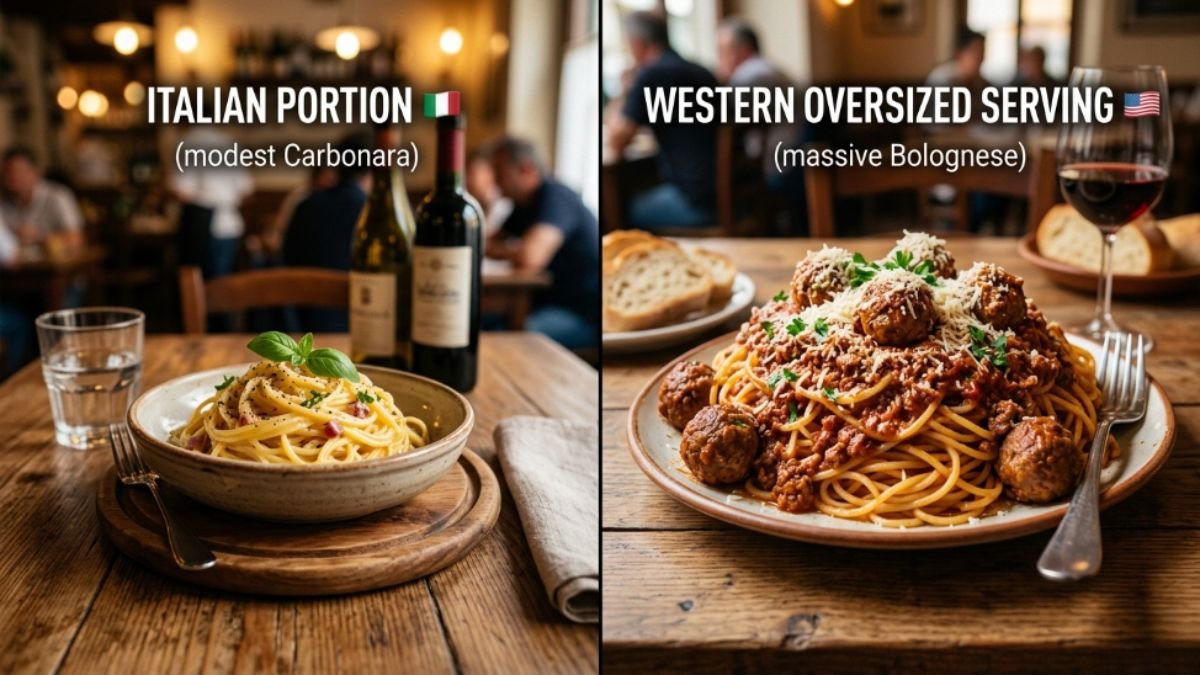
The single most overlooked factor in the Italian pasta paradox is portion size. In Italy, a serving of pasta — what they call the primo piatto, or first course — is roughly 80 grams of dry pasta per person. That is less than three ounces. In most restaurants outside Italy, a standard pasta dish runs two to three times that weight before a single drop of sauce is added.
This is not self-restraint in any dramatic sense. Italians do not sit down to a bowl of pasta and heroically stop at 80 grams. That is simply what a portion is. The cultural expectation was set differently from the beginning, and it shapes perception without requiring willpower. A plate that looks full in Italy looks modest — even small — to someone raised on larger servings.
The pasta is also one course among several, not the entire meal. It arrives after an antipasto and before a secondo of fish or meat, a contorno of vegetables, and fruit or cheese at the end. Eating pasta every day in Italy is entirely consistent with a varied, nutrient-dense overall diet because the pasta is one component of a broader structure, not the whole thing.
| Factor | Italian Approach | Typical Western Approach |
| Portion size | 80–100g dry pasta per person | 200–300g or more per serving |
| Sauce ratio | Sauce coats pasta lightly | Heavy sauce dominates the dish |
| Meal timing | Midday, as primo piatto | Evening, as main course |
| Ingredients | Few, high quality, fresh | Pre-made, processed, sauce-heavy |
| Pace of eating | Slow, social, multi-course | Fast, often alone, single large plate |
| Fat addition | Small amount of quality olive oil | Butter, cream, large fat quantities |
| Accompaniments | Vegetables, legumes, small protein | Bread, large protein, caloric sides |
What Italian Pasta Actually Is — and What It Is Not
The pasta eaten daily in Italian homes is not the same product as most of what gets sold under that name internationally. This distinction matters more than it might seem.
The Flour Difference
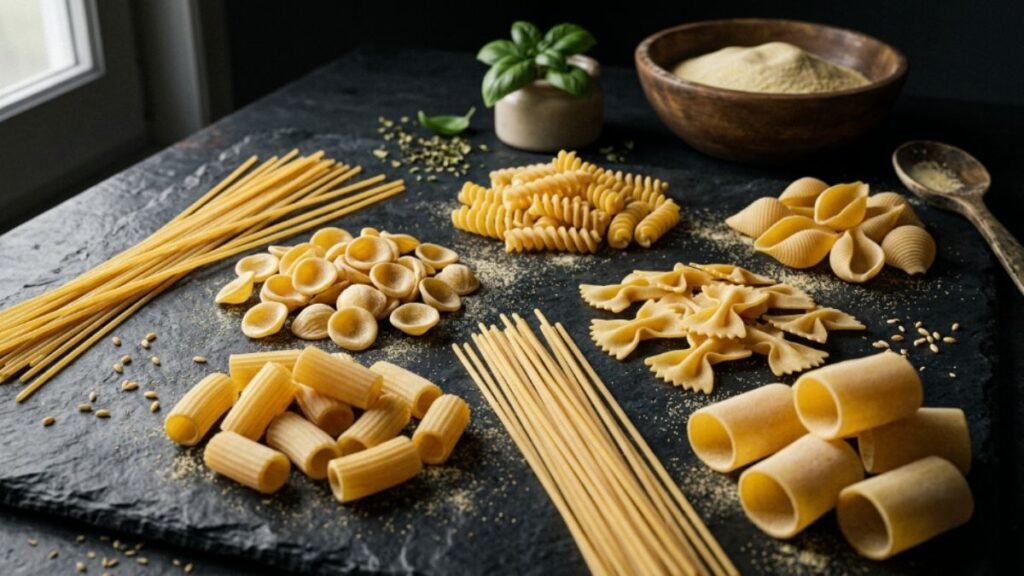
Traditional Italian pasta is made from durum wheat semolina — a hard wheat with high protein content, low glycemic response compared to refined flour, and a firm texture that holds up during cooking. The gluten structure in durum semolina creates a dough that takes longer to digest and produces a more gradual rise in blood sugar than pasta made from soft wheat flour or mixed blends. Italian law regulates dried pasta production: commercially made pasta in Italy must use 100% durum wheat semolina.
Much of the pasta sold in other markets uses softer wheat varieties or blends, which behave differently in the body. The product looks similar and goes by the same names, but the glycemic and textural properties diverge in ways that accumulate over daily consumption.
The Cooking Point
Al dente is not an aesthetic preference. It is a practical one with measurable consequences. Pasta cooked to a firm, slightly resistant bite has a meaningfully lower glycemic index than the same pasta cooked soft. The starch structure remains partially intact, which slows digestion and extends the feeling of satiety. Italian home cooks learn to pull pasta from the water before it finishes cooking, relying on the residual heat and the sauce to complete the process.
Overcooked pasta — the kind that slides apart easily, that has absorbed excess water, that offers no resistance — has lost this advantage. The starch has fully gelatinized, and the glycemic response accelerates accordingly.
The al dente rule is non-negotiable in Roman cooking — anyone who has made a proper authentic carbonara understands immediately why overcooked pasta ruins the dish structurally, not just texturally.
The Mediterranean Diet Is Not a Diet — It Is a Framework
The term Mediterranean diet gets used loosely enough that it has lost much of its meaning. In its original description — developed through epidemiological research in the 1950s and 1960s by Ancel Keys, who studied populations in southern Italy and other Mediterranean regions — it described the actual eating patterns of people in those communities at that time.
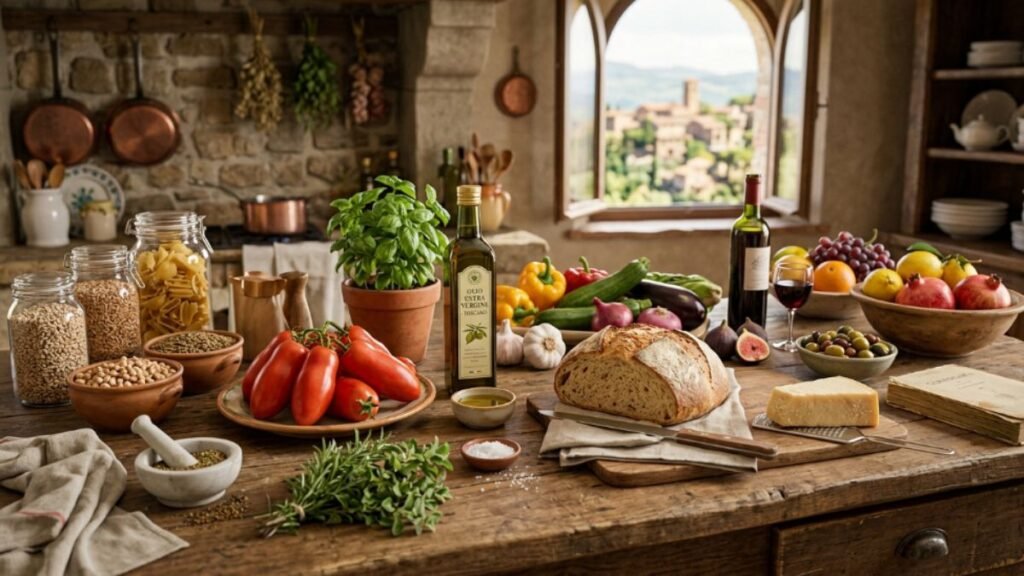
Those patterns were characterized by high consumption of vegetables, legumes, whole grains, and olive oil; moderate fish and dairy; limited red meat; and wine in moderation with meals. Research published by the New England Journal of Medicine has since confirmed associations between this eating pattern and reduced risk of cardiovascular disease, type 2 diabetes, and certain cancers.
Pasta sits within this framework as one element among many. It is never the centerpiece of the entire eating pattern. The olive oil that dresses it, the vegetables that accompany it, the legumes that appear alongside it across the week — these are not afterthoughts. They are equal parts of the same structure. Removing pasta from this context and evaluating it in isolation misses the point entirely.
Olive oil is not a condiment in the Italian kitchen — it is a structural ingredient. Understanding what extra virgin olive oil actually means helps explain why the quality of the fat used in pasta dishes matters as much as the pasta itself.
How Italians Eat: The Rhythms That Make the Difference
Beyond the food itself, the way Italians structure eating through the day creates conditions that support a healthy relationship with pasta and with food generally.
The Main Meal Is at Midday
In traditional Italian culture — still practiced widely outside major urban centers — the largest meal of the day is lunch. Pasta appears at lunch, not as a late-evening meal eaten close to sleep. Eating the most calorie-dense part of the day when metabolic activity is highest and physical activity continues afterward is fundamentally different from consuming the same food at nine in the evening before sitting still for hours.
This rhythm is not universal in Italy anymore — urban work schedules have shifted it for many people — but the cultural default toward a substantial midday meal and a lighter dinner persists in ways that still distinguish Italian eating patterns from those in many other countries.
Eating Slowly, Eating Together
Italian meals are social events by design. Sitting at a table with other people, eating without screens, holding conversation between bites — these behaviors naturally slow the pace of eating. Slower eating gives the digestive system time to signal satiety before overconsumption occurs. The brain requires roughly twenty minutes from the start of eating to register fullness; a meal that takes forty-five minutes produces a very different outcome than the same food consumed in ten.
This is not a philosophy Italians consciously adopt. It is the default structure of the meal. The table is set, the food is shared, nobody is rushing anywhere during the primo piatto.
Walking Is Built Into Daily Life
Italian cities and towns are built at a human scale. Errands happen on foot. Markets are walked to. Lunch requires a commute home in many cases. Physical movement is embedded in daily structure in ways that contrast sharply with more car-dependent environments. This accumulated daily activity — not gym sessions or intentional exercise — creates a consistent caloric balance against regular pasta consumption.
| KEY INSIGHT: The Italian approach to pasta is not a diet strategy. It is a set of cultural defaults around portion size, meal structure, ingredient quality, and daily rhythm that collectively prevent overconsumption without requiring any deliberate restriction. |
The Quality of Ingredients Changes Everything
Italian cooking applies a principle that runs counter to the logic of most convenience food: the fewer the ingredients, the more each one matters. A pasta dish with three or four components — semolina pasta, a good olive oil, garlic, a single vegetable or protein — cannot hide poor quality anywhere. There is nowhere for it to go.
This structural simplicity pushes Italian home cooks toward better ingredients by necessity. A tomato sauce that is only tomatoes, olive oil, and basil is only as good as the tomatoes. San Marzano DOP tomatoes, grown in volcanic soil in Campania, taste fundamentally different from their supermarket equivalents — sweeter, less acidic, with a more concentrated flavor that requires less cooking and no added sugar. Using them in the same recipe produces a better result with less effort.
The same principle applies to the pasta itself. Artisan dried pasta — made from quality durum wheat semolina, extruded through bronze dies rather than Teflon-coated ones, dried slowly at low temperatures — has a rougher surface texture that holds sauce differently and a flavor that contributes to the dish rather than serving as a neutral carrier.
Making fresh pasta at home is another dimension of this quality principle. A Marcato Atlas 150 pasta maker — made in Italy, with nine thickness settings — allows complete control over the dough, flour type, hydration, and thickness, producing results that no dried pasta can replicate in dishes like tagliatelle al ragù or fresh lasagna.
The same principle that applies to pasta — fewer ingredients, higher quality — runs through every corner of Italian cooking, from homemade pistachio gelato to a simple weeknight sauce.
What the Science Actually Says About Pasta and Weight
The relationship between pasta consumption and body weight has been studied directly. A 2016 analysis published in Nutrition and Diabetes examined data from two large Italian population studies and found that pasta consumption was associated with a lower body mass index and a lower waist-to-hip ratio — not higher. The researchers noted that pasta in this population was consumed as part of the Mediterranean diet pattern, with appropriate portion sizes and alongside vegetables, legumes, and olive oil.
A separate analysis published in BMJ Open reviewing eleven randomized trials found that pasta consumption — eaten as part of a low glycemic index diet — was associated with modest weight loss compared to control diets. The context and overall dietary pattern, not the pasta itself, determined the outcome.
These findings do not suggest pasta is a weight loss tool. They suggest that within a balanced eating pattern characterized by appropriate portions and high-quality whole ingredients, pasta does not cause weight gain — and the evidence for it causing harm in the Italian context is essentially absent.
What does cause problems is the combination of oversized portions, heavily processed sauces with added sugars and fats, pasta cooked beyond al dente, and the absence of the vegetables, legumes, and physical activity that frame Italian pasta consumption in its native context.
Bringing the Italian Approach Into Your Own Kitchen
The practical takeaway from Italian pasta culture is not a set of rules but a shift in framing. Pasta is not inherently problematic or inherently virtuous. It is one ingredient among many, and how it performs in your diet depends almost entirely on the other decisions made around it.
Start with Portion Recalibration
Eighty grams of dry pasta per person is the Italian standard. Weigh it once to establish a visual reference, and you will not need to weigh it again. Most kitchen scales accurate to one gram cost less than fifteen dollars and are useful far beyond pasta. This single change — eating the Italian serving size rather than the Western restaurant size — reduces pasta-associated calories by thirty to sixty percent without changing anything else.
Use Durum Wheat Pasta and Cook It Al Dente
Check the ingredient list on your pasta. It should say semolina or durum wheat semolina — nothing else in a traditional Italian-style dried pasta. Cook it until it offers the slightest resistance when bitten, then drain it and finish it in the pan with the sauce for one to two minutes. The pasta absorbs the sauce rather than sitting under it, the texture is correct, and the glycemic response is lower.
Keep Sauces Simple
The Italian instinct is to dress pasta rather than drown it. A tablespoon of excellent olive oil, a handful of cherry tomatoes cooked down with garlic, a few torn basil leaves — this is aglio e olio, cacio e pepe, pomodoro. These dishes are built on restraint and ingredient quality, not abundance and complexity. They also cook in ten minutes, which means fresh pasta at home is genuinely practical for a weekday meal.
For anyone serious about making fresh pasta at home, the Marcato Atlas 150 remains the benchmark manual pasta machine. Made in Italy, it produces consistent sheets across nine thickness settings, handles any flour combination, and lasts for decades.
The same restraint that makes a great pasta sauce — quality olive oil, few ingredients, no shortcuts — is exactly what separates a proper authentic Italian focaccia from the thick, oily versions sold everywhere else.
The Paradox That Is Not a Paradox
Italians eat pasta every day because it is a genuinely good food when eaten the way Italians eat it. The portion is modest. The pasta is made from quality durum wheat. It is cooked correctly. It is one course within a varied meal that includes vegetables, legumes, good oil, and often a light protein. The meal takes time. The day includes movement.
None of this requires extraordinary discipline. It requires a food culture that sets different defaults — and those defaults, accumulated across a lifetime, produce outcomes that look inexplicable from the outside but are entirely logical from within. The lesson is not to copy Italian habits wholesale, but to understand which specific elements of the Italian approach account for the result, and apply them in whatever way fits your own kitchen and life.
The pasta itself is not the mystery. The mystery dissolves the moment you understand the context it comes from.
| Medical Disclaimer: The information provided in this article is for educational purposes only and is not intended as medical advice, diagnosis, or treatment. Results vary based on individual health conditions, lifestyle, and dietary patterns. If you have concerns about your diet or weight, consult a licensed healthcare professional before making changes. |
Frequently Asked Questions about Why Italians Eat Pasta Every Day
Why do Italians eat pasta and stay thin?
Italians eat pasta in small portions — typically 80–100g dry per person — as one course within a structured, multi-component meal. The pasta is made from durum wheat semolina, cooked al dente, dressed lightly, and accompanied by vegetables and olive oil. Combined with an active daily lifestyle and slower eating habits, these factors prevent overconsumption. The food itself is not inherently slimming; the cultural context around it is what makes the difference.
Is pasta actually healthy?
Pasta made from 100% durum wheat semolina is a moderate glycemic index carbohydrate that provides sustained energy and reasonable protein content. When eaten al dente in appropriate portions as part of a varied diet rich in vegetables, legumes, and olive oil, it is associated with healthy weight maintenance in population studies. The glycemic response and caloric impact change significantly with larger portions, soft cooking, and heavy cream or meat-based sauces.
How much pasta do Italians eat per day?
A typical Italian pasta serving is 80–100g of dry pasta per person, consumed once per day at the midday meal as a primo piatto. This is considerably less than standard restaurant servings in the United States or Northern Europe, which often range from 150 to 300g. Many Italians do not eat pasta every single day, but it is common enough to appear four to five times per week in a typical household.
What kind of pasta do Italians eat?
Italian dried pasta is made exclusively from durum wheat semolina by law. Many Italians also make fresh pasta at home using 00 flour and eggs (for egg-based pasta like tagliatelle) or semolina and water (for shapes like orecchiette). Artisan dried pasta extruded through bronze dies has a rougher texture that holds sauces better. The variety of pasta shape used depends on the region and the specific sauce — the pairing is not random but follows longstanding culinary logic.
Does eating pasta at lunch instead of dinner make a difference?
Yes, timing matters. Eating the most calorie-dense meal when metabolic activity is highest — midday — and when physical activity continues through the afternoon produces a different physiological response than the same meal eaten late in the evening before rest. The Italian cultural default of a substantial midday meal followed by a lighter dinner is consistent with research on chrono-nutrition, which examines how meal timing affects metabolism and body composition.
Can I make pasta at home the Italian way?
Fresh pasta made at home with quality durum wheat semolina or 00 flour gives you complete control over thickness, texture, and ingredients. A manual pasta roller allows you to produce sheets thin enough for pasta that cooks in two minutes and holds sauce at the table. The equipment investment is modest and the technique is straightforward after one or two practice sessions. Most Italian families consider a simple weeknight pasta — fresh or dried — one of the easiest meals to prepare well.
Is the Mediterranean diet the same as the Italian diet?
The Mediterranean diet as described in research is a generalized pattern drawn from multiple countries. The traditional Italian diet — particularly in southern Italy — was one of the primary models it was based on. However, Italian food varies significantly by region: northern Italy uses butter and cream more than olive oil; the south relies heavily on olive oil, vegetables, and legumes. The Mediterranean diet framework captures the southern Italian pattern more accurately than the national Italian diet as a whole.

Mary Ciss is a food writer and Italian gastronomy enthusiast with a passion for authentic recipes, culinary history, and the stories behind every dish. Through Mio Gelatto, she explores the real flavors of Italy — from centuries-old gelato traditions to the hidden trattorias that locals love. For Mary, every recipe is a journey.