Italian Food Regions: A Flavor Map of Italy From North to South
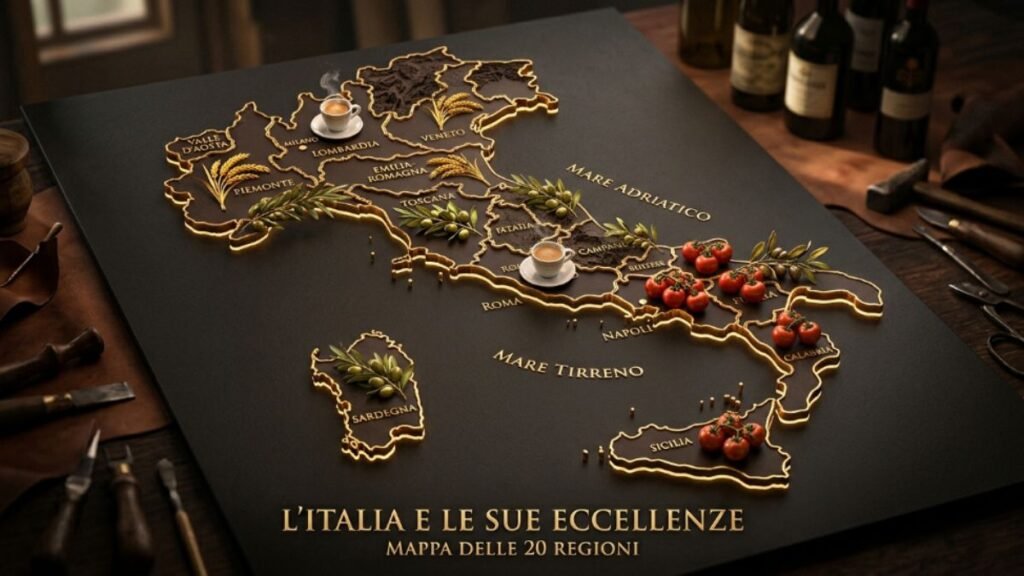
About Italian Food Regions. Ask ten Italians to name the country’s national dish and you will get ten arguments, not ten answers. That is not stubbornness. It is the truth about how Italy eats. What most of the world calls “Italian food” is really a loose family of twenty regional cuisines, each shaped by its own soil, coastline, climate, and centuries of local pride. A plate of food in Bologna has almost nothing in common with a plate of food in Palermo, and both would be unrecognizable to a cook in the Alpine valleys of the far north.
Understanding those differences is the single most useful thing you can do before you cook your way through Italy or travel there to eat. It turns a vague craving for “pasta and pizza” into a real sense of place: knowing why the butter starts disappearing as you move south, why rice rules one region and durum wheat another, and where a dish you love was actually born. This is the map.
Disclosure: This article contains affiliate links. If you book or buy through them, we may earn a small commission at no extra cost to you.
Why a Single “Italian Cuisine” Never Really Existed
Italy only became one country in 1861. For most of its history it was a patchwork of kingdoms, republics, and city-states, each trading with different neighbors and cooking with whatever the land gave them. By the time the regions were politically united, their kitchens were already centuries apart, and they stayed that way. Even today, a recipe considered sacred in one province can be treated as a curiosity fifty kilometers down the road.
Geography did the rest. The north sits against the Alps and a belt of rich dairy farmland, so it leans on butter, cream, rice, and slow-braised meat. The center is hill country built on olive oil, beans, bread, and grilled simplicity. The south and the islands face the warm Mediterranean, where tomatoes, citrus, seafood, and chili thrive. Italy’s official tourism resources, such as the national tourism portal, organize travel around exactly these regional identities for a reason: in Italy, the region is the cuisine.
The North: Butter, Rice, and Unhurried Richness
If you grew up thinking Italian food meant red sauce, the north will surprise you. Here the kitchen runs on dairy and patience. Sauces are built slowly, dishes are rich rather than bright, and you will find more rice and corn than you might expect.
Piedmont and Lombardy
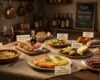
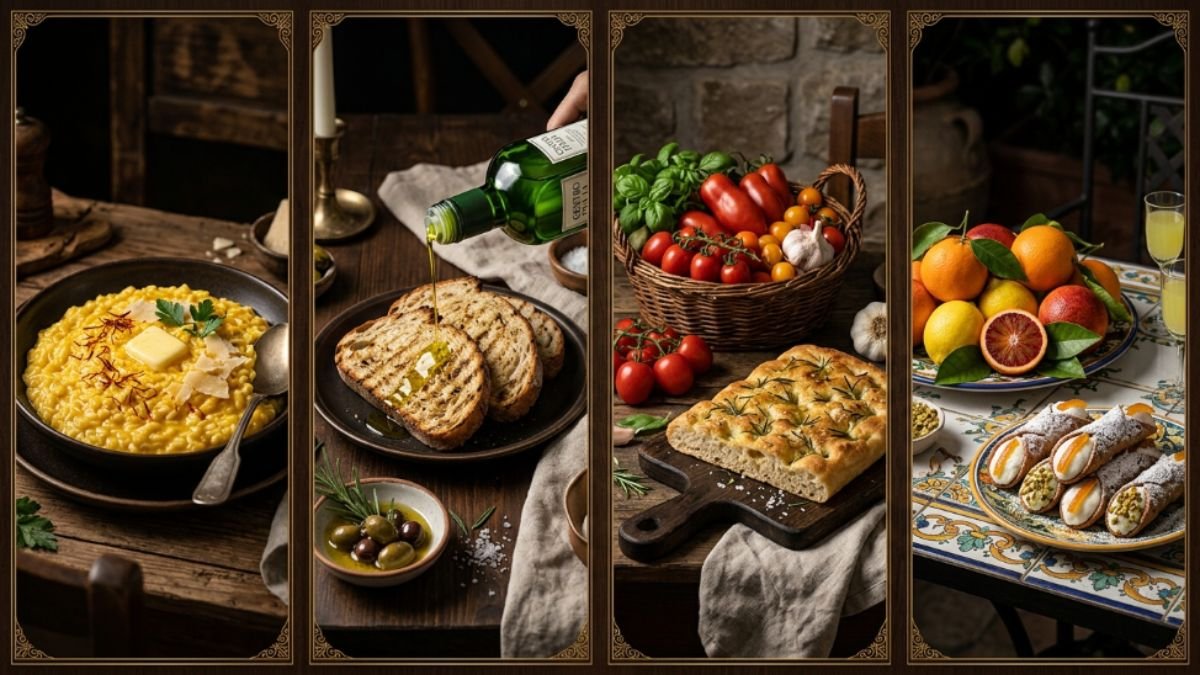
Tucked under the Alps, Piedmont gave the world slow food as an actual movement, along with hazelnuts, white truffles, and braises cooked in big northern reds. Lombardy, centered on Milan, turns rice into a religion: risotto alla milanese, golden with saffron, is the dish that defines the region. Butter, not oil, is the fat that carries flavor here.
Veneto and Emilia-Romagna
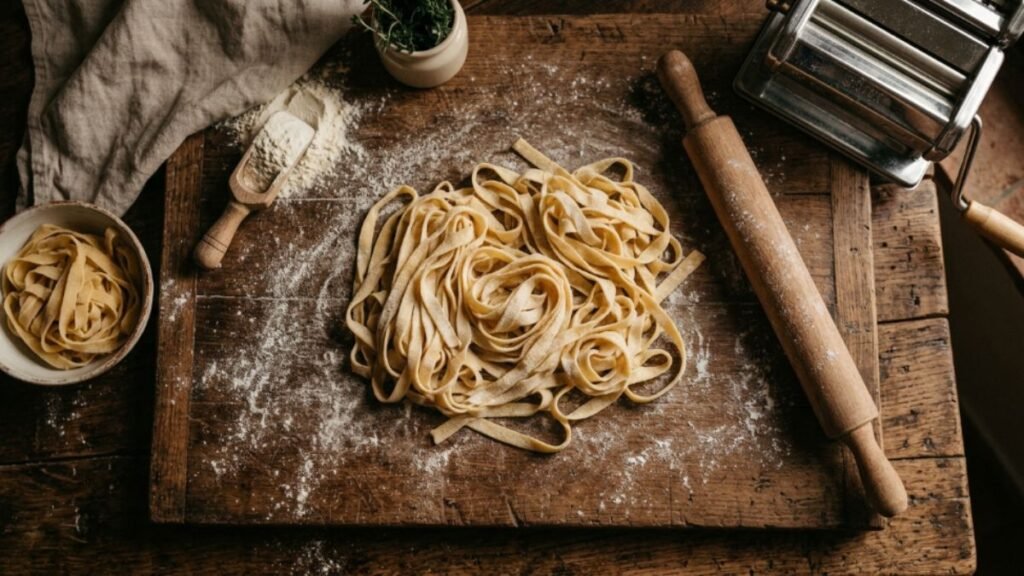
Veneto stretches from the lagoons of Venice to the mountains, mixing seafood, polenta, and bitter radicchio. But the true engine room of northern cooking is Emilia-Romagna, often called Italy’s pantry. This is the home of long-aged hard cheese, cured pork, balsamic vinegar, and fresh egg pasta rolled by hand. The famous slow-simmered meat ragu belongs here, and it looks nothing like the quick tomato sauces of the south.
That tradition of handmade egg pasta is worth studying on its own before you tackle the regional shapes, and our walkthrough of traditional hand-rolled pasta techniques is a practical place to begin.
The Center: Where Simplicity Becomes a Skill
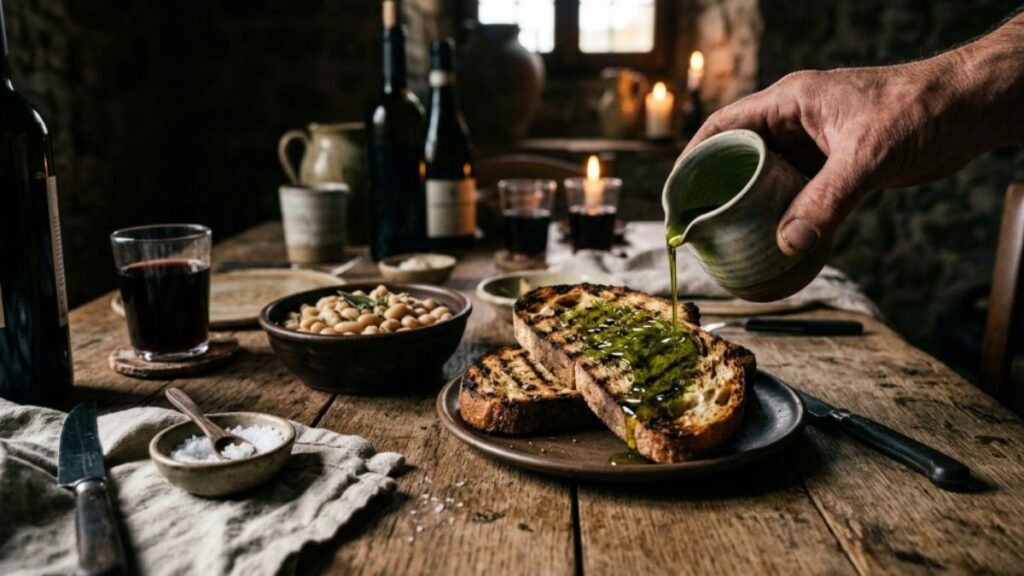
Move into the central regions and the cooking gets leaner, louder, and prouder of its restraint. Tuscany, Lazio, Umbria, and Le Marche share a philosophy: a few excellent ingredients, treated with respect, beat a long list of them every time. This is the heartland of good olive oil, crusty unsalted bread, beans, and open-fire grilling.
Tuscany is famous for its thick-cut grilled steak, its ribollita bread soup, and a frugal genius for wasting nothing. Lazio, anchored by Rome, gave us the four pasta dishes people argue about endlessly: cacio e pepe, gricia, amatriciana, and carbonara. Each is built on pork, sheep’s cheese, and technique rather than a pantry of extras. Umbria, landlocked and green, leans on lentils, pork, and black truffle, while Le Marche bridges the hills and the Adriatic coast.
If you only learn one central-Italian dish, make it a Roman classic: the story and method behind the city’s most argued-over pasta shows exactly how restraint creates depth.
The quality of the oil matters more here than almost anywhere else, which is why it pays to understand what separates a real extra virgin olive oil from the rest before you buy.
The South: Sun, Tomatoes, and the Sea
The south is where the food finally matches the postcard: bright, generous, and built on the Mediterranean. Tomatoes ripen with real intensity, olive oil flows freely again, and seafood is everywhere. This is also the Italy that fed the great waves of emigration, which is why southern dishes are the ones most of the world recognizes.
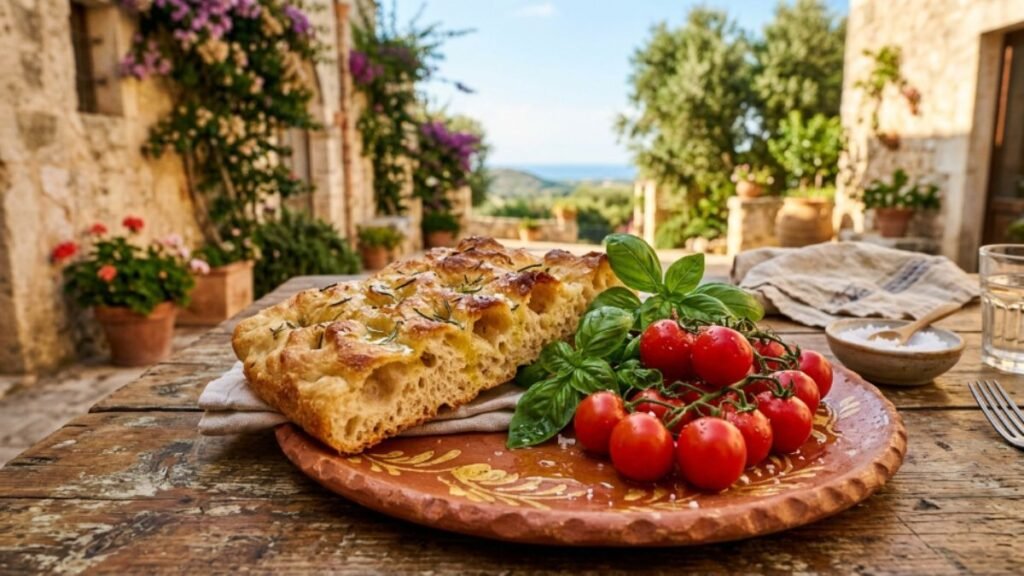
Campania, with Naples at its center, is the birthplace of pizza and of the long-cooked tomato sauce known as ragu napoletano. Puglia, the heel of the boot, turns hard wheat into ear-shaped orecchiette and bakes some of the country’s best bread and focaccia. Calabria brings the heat with spreadable chili salami, while Basilicata cooks rugged, peasant-rooted food in the mountains.
Puglia’s baking tradition is a perfect entry point into southern home cooking, and you can bring that same bread into your own kitchen with a method that transfers directly.
The Islands: Sicily and Sardinia, Each Its Own World
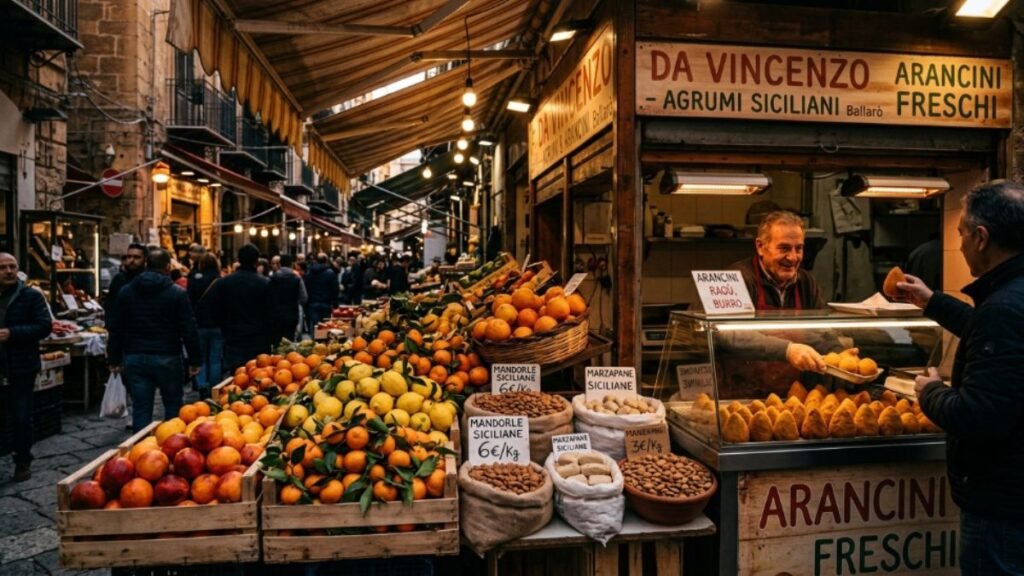
Italy’s two great islands are not footnotes to the mainland. They are distinct culinary cultures shaped by everyone who ever sailed to them. Sicily carries the deepest imprint, with Arab, Greek, and Spanish layers visible in its food: sweet-and-sour caponata, saffron, almonds, citrus, and the ricotta-filled cannoli that became a global symbol. Street food rules here, from arancini to grilled seafood.
Sardinia feels older and more pastoral. Its kitchen revolves around sheep rather than the sea: aged pecorino, suckling lamb, cured fish roe, and a paper-thin crisp bread made for shepherds who spent weeks away from home. Eating across these two islands is the clearest proof that “Italian food” is a category, not a single tradition.
Italy’s Regions at a Glance
Use this quick reference to orient yourself before a trip or a cooking project. It is a simplified snapshot, not a full inventory, but it captures how sharply the priorities shift from one part of the country to another.
| Area | Signature dish | Defining flavor |
| North | Saffron risotto, slow meat ragu | Butter, rice, aged cheese |
| Center | Roman pasta, grilled steak | Olive oil, bread, restraint |
| South | Pizza, orecchiette, chili salami | Tomato, seafood, heat |
| Islands | Cannoli, caponata, pecorino | Citrus, almonds, sheep’s milk |
How to Actually Taste a Region, Not Just a Restaurant
Knowing the map is one thing. Eating your way into it is another, and the usual approach, picking a restaurant near the main square, is the surest way to miss the point. Tourist-facing menus tend to flatten regional character into a safe, national average. The real flavor of a place lives in its markets, its family-run trattorias, and the hands of people who learned to cook it from their grandparents.
The most efficient shortcut is to spend a few hours with someone local who does this for a living. Walking a morning market with a guide who explains why a certain cheese or cut is regional, then cooking or tasting alongside them, teaches you more in an afternoon than a week of guessing from menus.
For travelers who want that kind of inside access without the planning, booking a small-group food experience led by a local host turns a single meal into a genuine lesson in the region you are standing in.
The real flavor of a place lives in its markets, its family-run trattorias, and, for something sweet, the neighborhood gelaterias locals actually return to.
Planning Your Own Regional Food Journey
Whether you are traveling or simply cooking through the regions at home, a few principles keep you anchored to the real thing rather than a generic version of it.
- Eat with the season and the place. Order what the region is known for and what is on the table right now, not what you could get anywhere.
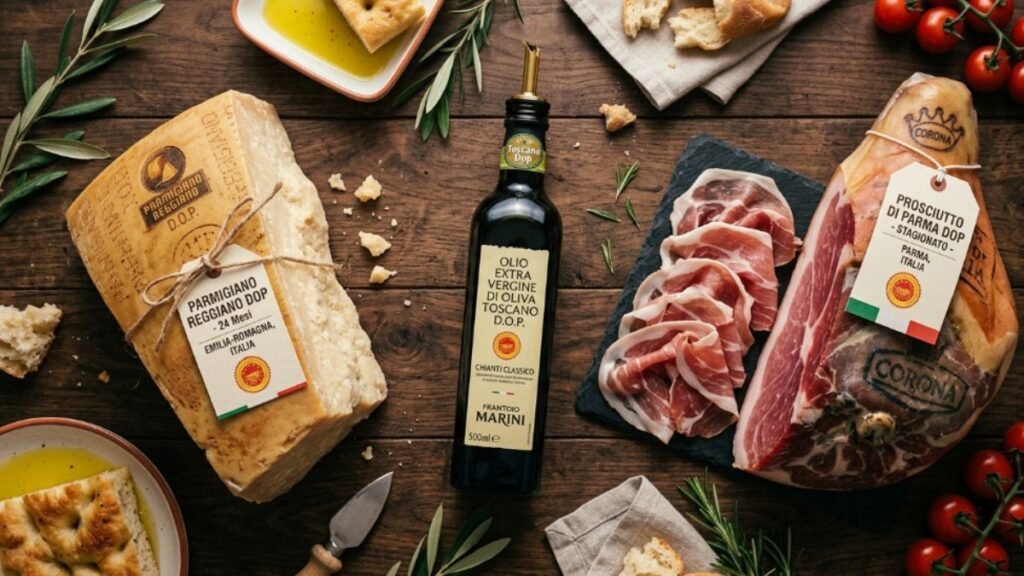
- Follow the protected names. Italy’s most iconic foods carry legal geographic protection that guarantees origin and method.
- Go one region at a time. Trying to taste all of Italy in one trip guarantees you taste none of it properly.
Those protected names are easy to verify. The European Union maintains an official register of protected food names, so you can confirm whether a cheese, oil, or cured meat truly comes from where its label claims. For deeper cultural background, institutions such as the Italian Academy of Cuisine document and defend traditional regional recipes against dilution.
Where to Start
Italy rewards the eater who slows down and goes local. Pick one region that speaks to you, learn its three or four defining dishes, and build a trip or a month of cooking around them. The depth you find in a single place will teach you more than any attempt to sample everything at once.
And when you do travel, anchor each stop with one real food experience: a guided tasting walk through a single neighborhood is often the difference between seeing a region and actually tasting it.
Frequently Asked Questions
How many distinct food regions does Italy have?
Italy has twenty administrative regions, and each has its own well-defined culinary identity. Within them, individual provinces and towns often guard their own variations, so the real number of distinct local cuisines is far higher.
Is northern or southern Italian food healthier?
Both can be very healthy, but in different ways. The south sits closest to the classic Mediterranean diet, built on olive oil, vegetables, seafood, and tomatoes. The north relies more on butter, cheese, and rich meats, which makes portion and balance more important.
Why does so much “Italian” food abroad look southern?
Most historic Italian emigration came from the south and Sicily. The dishes those families carried abroad, especially tomato-based pasta and pizza, became the global shorthand for Italian food, even though they represent only part of the country.
What is the easiest region to start cooking from?
Central Italy is a forgiving entry point. Its dishes rely on a short list of quality ingredients and simple technique, so you can produce something authentic without specialized equipment or hard-to-source items.
What does a protected-origin label actually mean?
It means the product was made in a specific area using a defined traditional method, verified under European law. It is your best guarantee that a regional specialty is the real thing and not an imitation.
Should I plan an Italian trip around food or around sights?
If food is your priority, let it lead. Choosing one or two regions and organizing your route around their markets, producers, and local tables will give you a far richer experience than racing between famous landmarks.

Mary Ciss is a food writer and Italian gastronomy enthusiast with a passion for authentic recipes, culinary history, and the stories behind every dish. Through Mio Gelatto, she explores the real flavors of Italy — from centuries-old gelato traditions to the hidden trattorias that locals love. For Mary, every recipe is a journey.