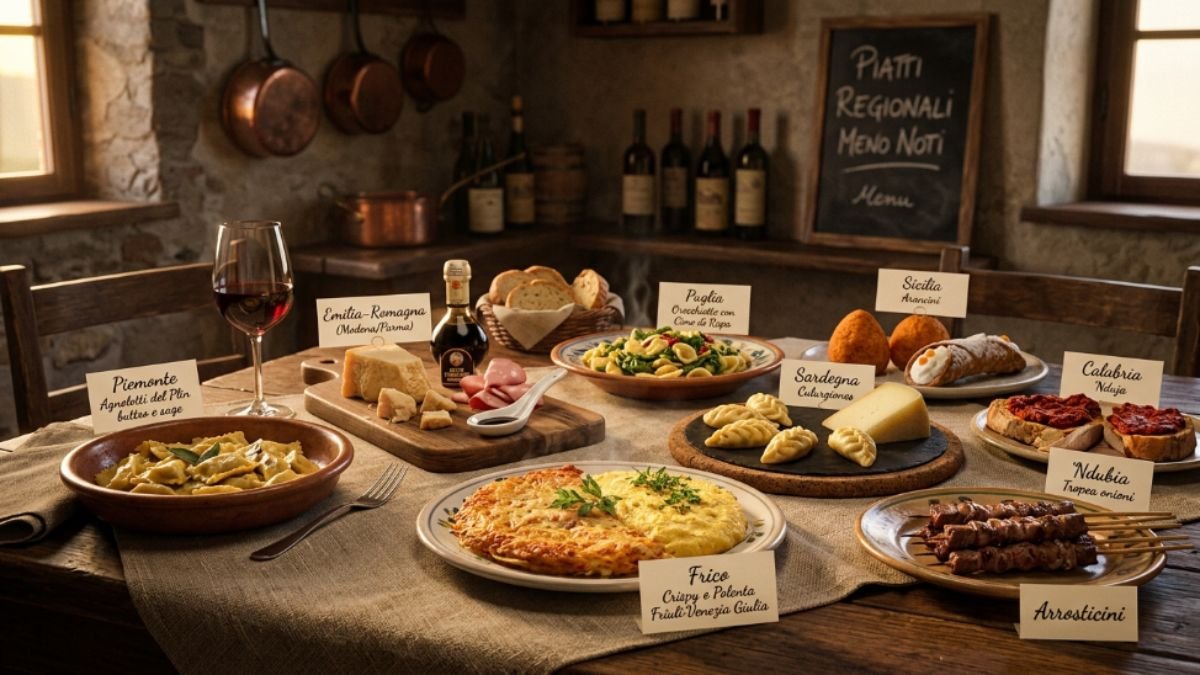
Regional Italian Cuisine: 7 Culinary Worlds Most Tourists Miss
Regional Italian cuisine differences are not a footnote in Italian food culture — they are the entire story. Italy as a unified nation is barely 160 years old. The twenty regions that make up the country were, for most of their history, separate kingdoms, duchies, city-states, and republics, each developing its own agricultural traditions, trade routes, and cooking practices in near-complete isolation from one another. The result is not one cuisine but a collection of distinct culinary identities that happen to share a border.
Most international visitors never encounter this. Tourism concentrates in Rome, Florence, Venice, and Naples — cities with undeniable pull, but not necessarily representative of the full range of what Italian cooking actually is. The bolognese sauce served in Bologna tastes nothing like what gets called bolognese outside Italy. The pasta eaten in Sardinia uses ingredients and techniques that have no equivalent in Piedmont. The bread traditions of Liguria would be unrecognizable in Calabria.
Understanding regional Italian cuisine differences is the difference between knowing about Italian food and actually knowing it. These seven regions represent the depth and diversity that most tourists fly over without ever tasting.
Seven Regions at a Glance
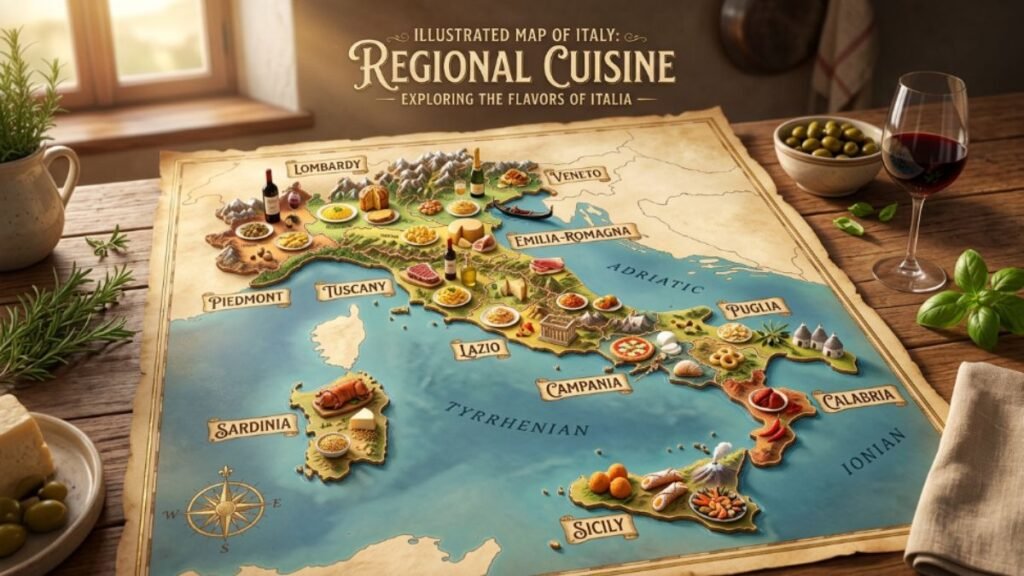
| Region | Capital / Key City | Signature Ingredient | Must-Try Dish |
| Emilia-Romagna | Bologna | Parmigiano-Reggiano, Prosciutto di Parma | Tagliatelle al ragù |
| Campania | Naples | San Marzano tomatoes, buffalo mozzarella | Pizza Napoletana, ragù |
| Liguria | Genoa | Riviera olive oil, fresh basil | Pesto alla Genovese, focaccia |
| Friuli-Venezia Giulia | Trieste | San Daniele prosciutto, Montasio cheese | Frico, jota stew |
| Basilicata | Matera | Peperoni cruschi, Pecorino di Filiano | Pasta con i peperoni cruschi |
| Sardinia | Cagliari | Bottarga, Pecorino Sardo, saffron | Culurgiones, porceddu |
| Valle d’Aosta | Aosta | Fontina DOP, chestnuts, game | Fonduta, polenta concia |
1. Emilia-Romagna: The Region That Feeds Italy’s Reputation
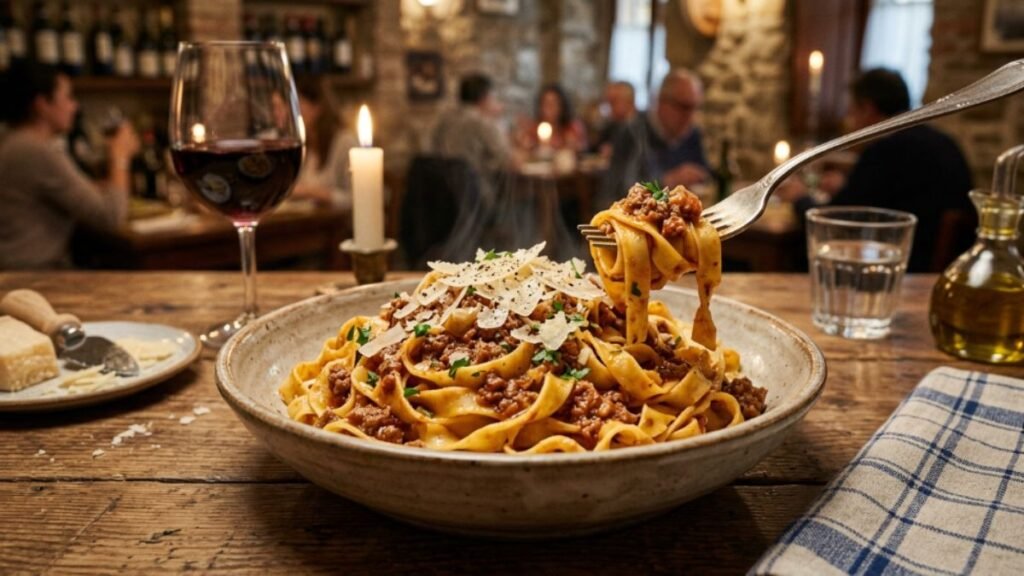
If one region can be credited with shaping the global image of Italian food, it is Emilia-Romagna. Bologna, Parma, Modena, and Reggio Emilia sit along the Via Emilia — a Roman road that has been a trade corridor for two millennia — and the agricultural wealth of the Po Valley has made this strip of northern Italy the most densely DOP-certified food region on earth.
Parmigiano-Reggiano, Prosciutto di Parma, Mortadella Bologna, Culatello di Zibello, Aceto Balsamico Tradizionale di Modena — the list of protected products originating here reads like a who’s who of Italian pantry essentials. What makes Emilia-Romagna unusual is not just the quality of individual products but how deeply they are woven into everyday cooking. Parmigiano is not a finishing garnish here; it goes into pasta dough, into sauces during cooking, into fillings for tortellini.
The Fresh Pasta Tradition
Emilia-Romagna is the undisputed home of fresh egg pasta in Italy. Tagliatelle, tortellini, tortelloni, lasagne, garganelli — these are not restaurant specialties here. They are made in home kitchens on wooden boards, rolled by hand or through machines passed down through families, using the local soft wheat 00 flour and the deeply golden eggs from local farms. The standard for tagliatelle width in Bologna is legally defined — a golden ribbon on display at the Chamber of Commerce specifies it as 8mm cooked, roughly 1/12,270th of the height of the Asinelli Tower.
The ragù that dresses tagliatelle in Bologna contains no tomato paste, no garlic, and very little tomato — it is predominantly meat, soffritto, white wine, and milk, slow-cooked for hours into something dense and almost creamy. Essentials of Classic Italian Cooking by Marcella Hazan — the definitive English-language reference for Italian regional cooking — dedicates significant space to Emilian technique, and for good reason: getting the ragù right requires understanding the regional logic behind every ingredient choice.
2. Campania: Where the Mediterranean Diet Was Born
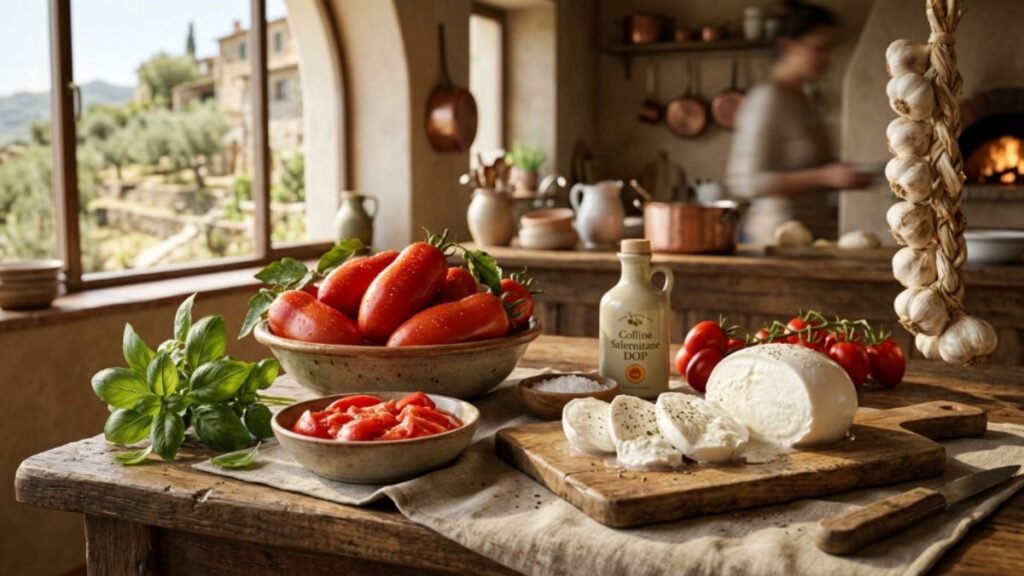
Campania is the region that gave the world pizza, but reducing it to that single contribution would be like describing Paris as the city with the tall metal tower. The food of Naples and the surrounding countryside is one of the most complex and historically layered in Italy — shaped by Greek colonization, Arab influence, Spanish occupation, and the extraordinary agricultural fertility of volcanic soil around Vesuvius.
San Marzano DOP tomatoes, Mozzarella di Bufala Campana DOP, Provolone del Monaco, Colatura di Alici di Cetara (an ancient fish sauce made on the Amalfi Coast) — Campania’s larder is built on ingredients with genuine geographic identity. The cooking philosophy is the inverse of Emilia-Romagna: fewer animal products, more vegetables, fish, legumes, and the tomato as a central structural ingredient rather than an accent.
The Neapolitan Ragù
Neapolitan ragù is not bolognese. It is not even close. Where the northern version is a meat sauce — fine-ground, pale, dairy-enriched — the Neapolitan version cooks whole cuts of pork, beef, and sometimes sausage in tomato for four to six hours until the meat falls apart and the sauce turns brick-red and intensely concentrated. It is a Sunday dish, a feast dish, something that perfumes an entire apartment building from morning. The pasta it dresses is typically rigatoni or ziti spezzati — sturdy shapes that can hold the weight of the sauce.
According to UNESCO, which recognized Neapolitan pizza-making as an Intangible Cultural Heritage of Humanity in 2017, the craft represents a living tradition tied directly to the social and cultural identity of Naples — not simply a cooking technique but a community practice passed through generations.
Know More – Why Italians Eat Pasta Every Day and Don’t Gain Weight
3. Liguria: The Narrow Coast That Invented a Global Sauce
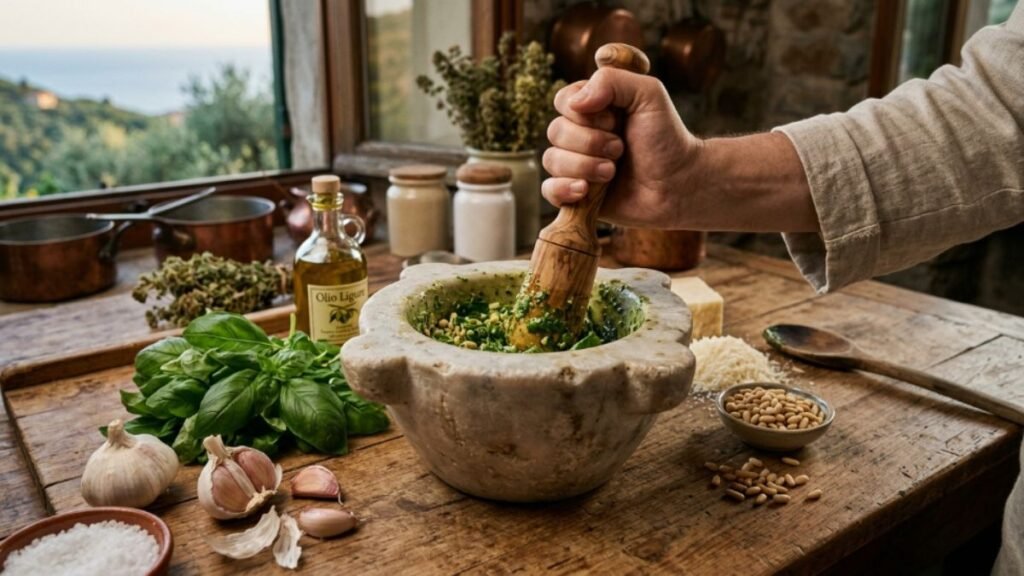
Liguria occupies a thin strip of coastline between the Alps and the Ligurian Sea, squeezed between the mountains and the water in a way that shaped its cuisine profoundly. Flat agricultural land is almost nonexistent here. The terraced hillsides grow the small-leafed Genovese basil that is sweeter and less pungent than varieties grown elsewhere — a product of the particular microclimate, the soil, and centuries of selection.
Pesto alla Genovese made with Genovese DOP basil tastes different from pesto made with any other basil. This is not exaggeration; the chemical composition differs. The terpenes responsible for flavor vary with growing conditions, and Ligurian basil produces a floral, almost minty note that disappears when the same recipe is made with supermarket basil grown under different conditions.
Focaccia as Daily Bread
In Liguria, focaccia — called fugassa in the local dialect — is not a restaurant item or a special occasion bread. It is the morning meal, eaten warm from the bakery on the way to work, dunked in coffee or eaten plain. The Ligurian version is thinner and crispier than the thick, pillowy versions that became popular internationally. It is covered in dimples that trap olive oil and coarse sea salt, baked at very high heat, and consumed the same day it is made. Focaccia di Recco, a paper-thin version filled with fresh stracchino cheese, has IGP status.
4. Friuli-Venezia Giulia: Where Italy Meets Central Europe
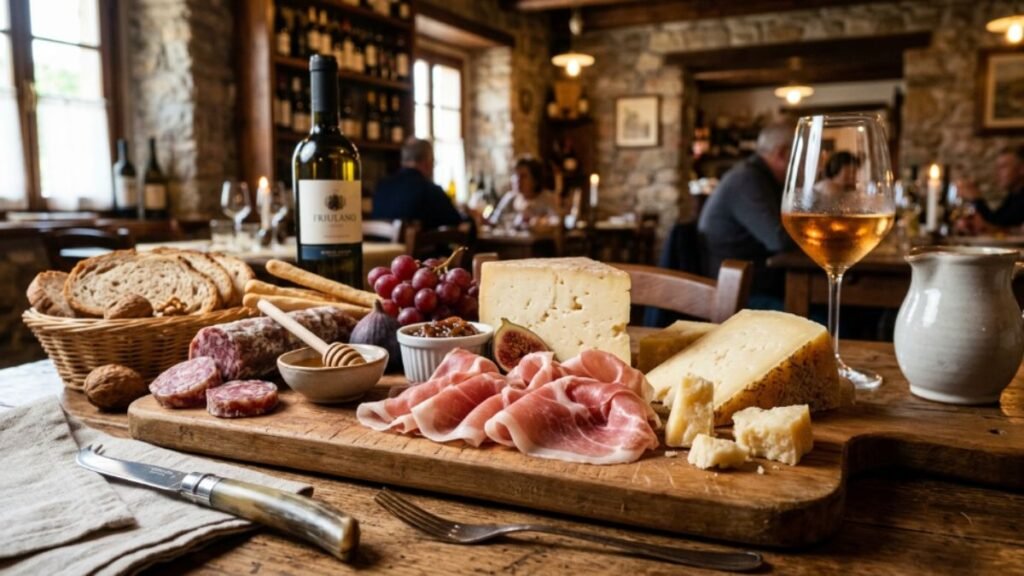
Friuli-Venezia Giulia sits in the northeastern corner of Italy, bordering Slovenia and Austria, and its food reflects centuries of crossover between Italian, Slavic, and Central European culinary traditions. This is one of the least-visited regions in Italy and one of the most underrated gastronomically. It produces San Daniele DOP prosciutto — the only direct rival to Prosciutto di Parma for quality and complexity — and Montasio DOP cheese, a semi-firm mountain cheese that forms the base of frico.
Frico and the Logic of Mountain Cooking
Frico is, at its simplest, melted cheese. At its best, it is a crispy, lacy disc of aged Montasio cooked in a pan until the fat renders and the proteins caramelize into something between a crisp and a cracker. A more substantial version adds potato and onion, becoming a thick, almost cake-like preparation that was originally peasant food — a way to use broken cheese rinds and aging scraps that could not be sold whole. The result is one of the most satisfying things in Italian regional cooking, almost entirely unknown outside the region.
Jota, the bean and sauerkraut stew of Trieste, reflects the city’s position as the historical port of the Habsburg Empire. It uses smoked pork, sour cabbage, and beans in a combination that would be entirely out of place anywhere else in Italy — but in Trieste, it has been eaten for centuries and is considered as definitively local as any Venetian risotto or Roman carbonara.
5. Basilicata: The Region That Preserved What Others Forgot
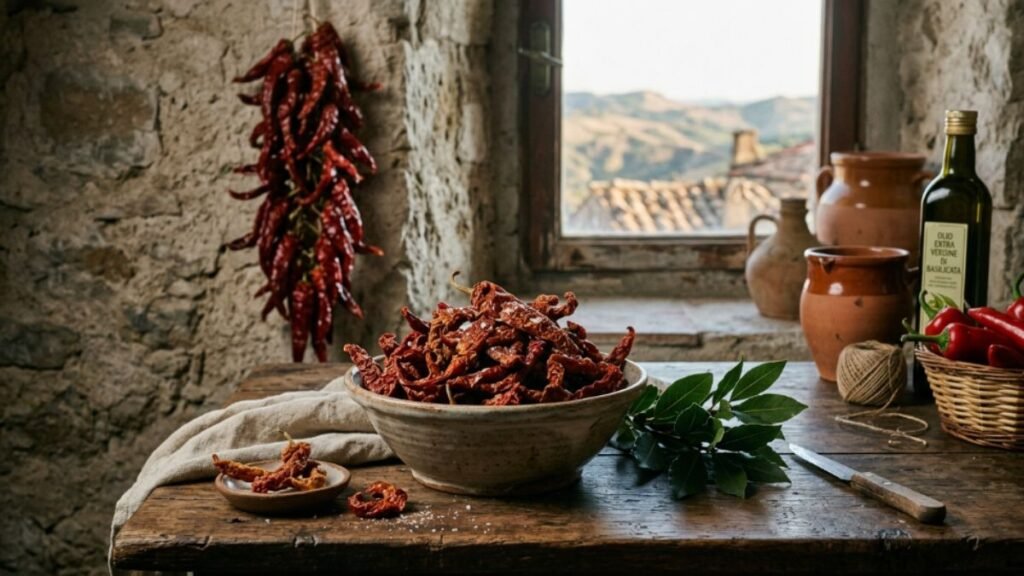
Basilicata — also called Lucania — sits between Campania, Puglia, and Calabria in the deep south of Italy. It is one of the least densely populated and least touristically developed regions in the country, and its cuisine reflects the traditions of a community that survived centuries of poverty, geographic isolation, and agricultural difficulty through extraordinary resourcefulness.
The signature ingredient is the peperone crusco — a sweet red pepper, IGP-protected, grown in the Senise area and dried whole until it becomes crispy and concentrated. Fried briefly in olive oil, it disintegrates into shards of sweet-smoky flavor that are crumbled over pasta, eggs, salt cod, and vegetables. It serves as both a flavoring and a condiment, filling the role that harder-to-source proteins might play elsewhere.
Pasta con i Peperoni Cruschi
This dish is the most direct expression of Basilicatan cooking philosophy: few ingredients, each carrying maximum flavor, assembled quickly. Pasta — typically spaghetti or mafaldine — is tossed with fried breadcrumbs, fried peperoni cruschi, a generous amount of local olive oil, and sometimes salt cod. There is no cream, no heavy sauce, no protein in the conventional sense. The combination of the sweet pepper, the crunchy breadcrumb, and the clean olive oil creates a dish of remarkable depth from almost nothing.
Pecorino di Filiano DOP, made from the milk of the local Gentile di Puglia sheep, is the finishing cheese — sharp, grainy, with a mineral edge that anchors the sweetness of the pepper. Basilicata produces very few internationally recognized products and draws very few visitors. That combination means its food traditions remain largely intact, untouched by the adaptations that tourist demand has introduced elsewhere.
6. Sardinia: An Island That Cooked in Isolation for Millennia
Sardinia is the second-largest island in the Mediterranean, and its food culture developed in almost complete isolation from mainland Italy for most of its history. The island’s culinary traditions predate Roman occupation and in some cases predate written records. The cooking is pastoral and coastal simultaneously — sheep herding in the interior mountains produced a deep tradition of lamb, aged sheep’s milk cheeses, and cured meats, while the coastal communities developed techniques for preserving and cooking the sea’s harvest.
Bottarga — cured and pressed grey mullet roe — is Sardinia’s most internationally known specialty and one of the most misunderstood. It is not a condiment. Shaved thinly over pasta with olive oil and lemon, it delivers an intense, oceanic depth that comes from the concentration of flavor during the curing process. Genuine Sardinian bottarga is dry, firm, and amber-colored, with none of the fishiness associated with lesser versions.
Culurgiones and the Art of the Pinch
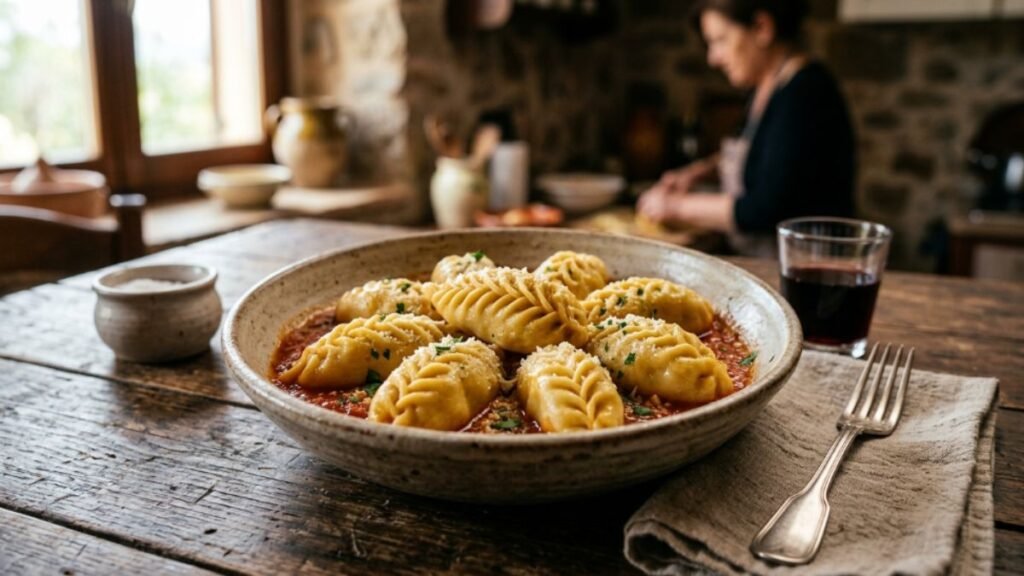
Culurgiones are fresh pasta parcels from the Ogliastra region of eastern Sardinia, filled with potato, Pecorino Sardo, and mint — a combination found nowhere else in Italian cooking. What makes them visually distinctive is the closure technique: a decorative pinch pattern that resembles a wheat ear, requiring a specific hand motion that takes practice to execute correctly. The technique is so locally specific that it varies village to village, and Ogliastra Culurgiones now carry IGP protection.
The sheep traditions of the Barbagia region in central Sardinia produce Pecorino Sardo DOP in two styles — dolce (young, mild) and maturo (aged, sharp) — both with protected designation status. The island’s saffron, grown in the Medio Campidano province, is considered among the finest in Europe and features in festive pasta dishes that would be entirely unrecognizable to anyone whose Italian food experience is limited to the mainland.
7. Valle d’Aosta: Italy’s Smallest Region, Alpine to Its Core
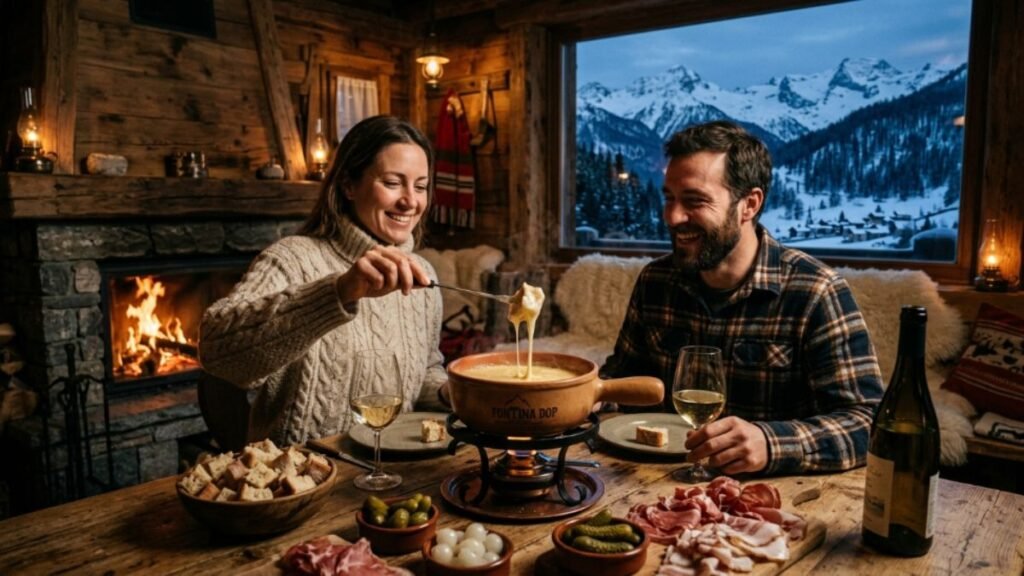
Valle d’Aosta is Italy’s smallest region by both area and population, tucked between the Alps on three sides at the meeting point of Italy, France, and Switzerland. It is the only region of Italy where French is an official language alongside Italian, and its food reflects a mountain culture shaped more by altitude, livestock herding, and winter preservation than by the agricultural abundance of the plains.
Fontina DOP is the defining product — a semi-soft cow’s milk cheese with a washed rind and a buttery, slightly earthy interior, made from the milk of Valdostana cows that graze on alpine pasture from May to October. The milk changes character with the seasons: summer milk, from cows grazing on wild mountain herbs and flowers, produces a more aromatic cheese than winter milk. Fontina is the base of fonduta, the Valdostana answer to Swiss fondue — made with egg yolks and milk in addition to the cheese, creating a silkier, less stringy texture.
A Cuisine Built on Altitude
Valle d’Aosta uses butter, lard, and cream where olive oil dominates the south — a practical response to an environment where olives cannot grow and dairy production is central to the regional economy. Polenta concia, polenta stirred with Fontina and butter until it becomes almost impossibly rich, is the staple starch. Carbonade — beef braised in red wine with spices — reflects the French influence and the need for warming, calorie-dense food during mountain winters.
Game, chestnuts, rye bread, and aged cheeses fill the pantry of a region that spent most of its history cut off from the rest of Italy by snow for months at a time. The result is a cuisine that looks and tastes unlike anything else in Italy — and is almost never encountered by visitors who stay on the tourist circuit.
The Map Behind the Meal
Regional Italian cuisine differences are not variations on a theme — they are separate chapters of a food culture that happened to develop within the same political borders. The cooking of Valle d’Aosta and the cooking of Campania share almost no ingredients, techniques, or underlying logic. They are the products of entirely different climates, agricultural histories, and cultural influences.
What connects them is the Italian insistence that place matters — that where a cheese was made, which pasture the milk came from, which specific climate dried the ham, which soil grew the tomato, are not incidental details but defining characteristics. That insistence produced the DOP and IGP certification systems. It also produced a food culture where regional identity is a source of genuine, non-negotiable pride.
For anyone who wants to cook from these traditions at home, a structured regional Italian cookbook is the most direct route into the specificity that makes each cuisine what it is. Essentials of Classic Italian Cooking by Marcella Hazan remains the most thorough English-language guide to Italian regional cooking — organized not by technique but by the logic of each region’s ingredients and traditions. It is the reference that makes the map behind the meal legible.
Frequently Asked Questions
What are the main regional Italian cuisine differences?
The differences are fundamental, not cosmetic. Northern Italy — Piedmont, Lombardy, Emilia-Romagna, Valle d’Aosta — uses butter, cream, and fresh egg pasta, reflecting a dairy and grain agricultural base. Central Italy — Tuscany, Lazio, Umbria, Marche — uses olive oil, cured meats, and dried pasta alongside fresh. Southern Italy and the islands — Campania, Calabria, Sicily, Sardinia — rely heavily on olive oil, tomatoes, legumes, and fish. Each region also has specific DOP and IGP products that cannot be replicated elsewhere.
Which Italian region has the best food?
There is no objective answer, and the question slightly misses the point. Emilia-Romagna is often cited by chefs for the concentration of exceptional DOP products and the fresh pasta tradition. Campania has the most globally recognized dishes. Sardinia and Friuli-Venezia Giulia offer the most unusual and least-replicated traditions. The best approach is to identify the specific flavors and ingredients that interest you and trace them to their source region.
Why is Italian food so different by region?
Italy was not a unified country until 1861, and for most of its history its regions were separate political entities with distinct trade relationships, agricultural conditions, and cultural influences. Sicily was shaped by Arab and Norman occupation. Friuli by Habsburg rule. Venice by its maritime empire. Each of these histories left traces in the local food culture that persist today. Geography reinforced isolation: the Alps, the Apennines, and the sea created natural barriers between communities that were often more connected to neighboring countries than to other Italian regions.
What is the difference between northern and southern Italian food?
Northern Italian cooking uses butter, polenta, risotto, and fresh egg pasta. The diet is richer in dairy and animal fat, reflecting a cattle and grain farming economy. Southern Italian cooking centers on olive oil, dried pasta, tomatoes, legumes, and seafood — a plant-forward diet shaped by a warmer climate and a longer tradition of poverty that made meat a luxury. The Mediterranean diet framework describes the southern Italian pattern specifically; the north is closer to French and Central European cooking traditions.
Which Italian regions are least visited but worth exploring for food?
Basilicata, Molise, and Friuli-Venezia Giulia are consistently undervisited and have exceptional food traditions. Sardinia’s interior — beyond the coastal resorts — offers some of the most distinctive and unchanged culinary traditions in Italy. Valle d’Aosta is easily reached from Turin or Geneva and is almost always overlooked. These regions offer the combination of authentic local cooking, fewer tourists, and lower prices that the heavily visited cities cannot provide.
Is Sicilian food different from mainland Italian food?
Significantly. Sicily’s food reflects 2,500 years of layered cultural influence — Greek, Arab, Norman, Spanish — that left specific traces: couscous in Trapani, sweet-and-sour agrodolce preparations derived from Arab cooking, pasta with sardines and wild fennel, granita and cassata with Middle Eastern sugar and nut traditions. The Arab period in particular introduced new ingredients — citrus, almonds, saffron, rice, eggplant, sugar — that transformed Sicilian cooking and filtered slowly into mainland Italian cuisine over centuries.
Can I find authentic regional Italian ingredients outside Italy?
The most widely exported products carry DOP or IGP certification, which guarantees geographic authenticity. Parmigiano-Reggiano, Prosciutto di Parma, San Marzano DOP tomatoes, Riviera Ligure olive oil, and Sardinian bottarga are available internationally through specialty food retailers and online importers. Less commercially successful regional products — peperoni cruschi from Basilicata, Fontina DOP from Valle d’Aosta, culurgiones from Ogliastra — require more specialized sourcing but are increasingly available through Italian food importers.

Mary Ciss is a food writer and Italian gastronomy enthusiast with a passion for authentic recipes, culinary history, and the stories behind every dish. Through Mio Gelatto, she explores the real flavors of Italy — from centuries-old gelato traditions to the hidden trattorias that locals love. For Mary, every recipe is a journey.