What Does DOP Mean in Italian Food? The Authenticity Rules Explained
What Does DOP Mean in Italian Food? Walk through the cheese aisle of any well-stocked grocery store or specialty food shop and you will notice a small detail printed on certain packaging: a yellow oval symbol with the letters “PDO” — or its Italian equivalent, “DOP.” That label is not decorative. It is a legal designation backed by European Union regulation, and it tells you something important: this product was made in a specific place, according to specific rules, by people who have been producing it the same way for generations.
For anyone serious about Italian cooking — or simply curious about why Prosciutto di Parma tastes different from generic cured ham — understanding what DOP means is genuinely useful. It explains why certain ingredients cost more, why substitutes rarely deliver the same result, and why Italian food culture places such fierce emphasis on origin and tradition.
This guide breaks down the DOP certification, how it compares to the related DOC and IGP designations, which iconic Italian products carry these labels, and how to use that knowledge when you shop, cook, or travel through Italy.
What DOP Actually Stands For
DOP is the Italian abbreviation for Denominazione di Origine Protetta. In English, the same system is known as PDO — Protected Designation of Origin. Both terms refer to the same EU-wide certification framework, established by European Council Regulation No. 2081/92 and updated over subsequent decades to cover an expanding list of agricultural products and foodstuffs.
The core principle is straightforward: a product bearing the DOP label must be produced, processed, and prepared exclusively within a defined geographical area, using recognized local expertise and ingredients native to that region. The entire supply chain — from raw material to finished product — must stay within those geographic and procedural boundaries.
The certification is managed at the European level by the European Commission’s DOOR database, which maintains the official registry of all protected designations across EU member states. Italy holds one of the largest shares of registered products — consistently ranking among the top three countries alongside France and Spain.
KEY FACT: Italy currently has over 870 products protected under EU quality schemes, covering food, wines, and spirits — more than any other EU member state.The DOP label appears in Italian on packaging sold in Italy and in EU markets; the PDO label is used for the English-speaking market.
The Difference Between DOP, DOC, and IGP
Italian food and wine labeling uses three related but distinct designations. Each one signals a different level of geographic and procedural protection. Understanding the differences helps you make more informed choices, whether you are selecting olive oil for a vinaigrette or choosing wine for a dinner party.
| Criteria | DOP (PDO) | DOC | IGP (PGI) |
| Origin requirement | 100% from specific region | Wine-specific regional origin | At least one stage in region |
| Production rules | Entire process in region | Grapes and winemaking in region | At least processing in region |
| EU recognition | Yes — strongest protection | Italy-specific (wines) | Yes — intermediate protection |
| Examples | Parmigiano-Reggiano, Prosciutto di Parma | Chianti Classico, Barolo | Mortadella Bologna, Bresaola |
| Consumer signal | Highest guarantee of authenticity | Regional wine authenticity | Regional connection, some flexibility |
DOP — The Strictest Standard
DOP is the gold standard for food products. Every step of production must take place within the designated region. For Parmigiano-Reggiano, that means the milk must come from cows raised in the provinces of Parma, Reggio Emilia, Modena, Bologna, and Mantua — and the cheese must be made and aged there as well. There is no flexibility. A producer who sources milk from outside that zone, even if the final product is otherwise identical, cannot legally use the DOP label.
Extra virgin olive oil is one of the most misrepresented products in grocery stores worldwide — understanding what extra virgin olive oil actually means helps explain exactly why the DOP designation exists in the first place.
DOC — Originally Designed for Wine
DOC stands for Denominazione di Origine Controllata. This designation was created specifically for Italian wines before the EU-wide DOP framework existed. It requires that grapes be grown and wine be produced within a defined zone, following approved grape varieties, yields per hectare, and winemaking practices. Chianti Classico, Barolo, Amarone della Valpolicella — these are all DOC wines. Some have since been elevated to DOCG (Denominazione di Origine Controllata e Garantita), which adds an extra layer of quality oversight including mandatory government tasting panels.
IGP — Geographic Connection with More Flexibility
IGP stands for Indicazione Geografica Protetta, the Italian equivalent of the EU’s PGI (Protected Geographical Indication). The connection to a specific place is still required, but it is less absolute than DOP. At least one stage of production — growing, processing, or preparation — must occur in the designated area. Mortadella Bologna, for instance, carries IGP status. The pork can come from outside the Bologna region, but the processing and preparation must happen there according to the registered recipe.
For a deeper dive into wine certification, the Italian Trade Agency provides updated documentation on Italian food and wine export designations.
Why These Labels Exist: The History Behind Food Protection
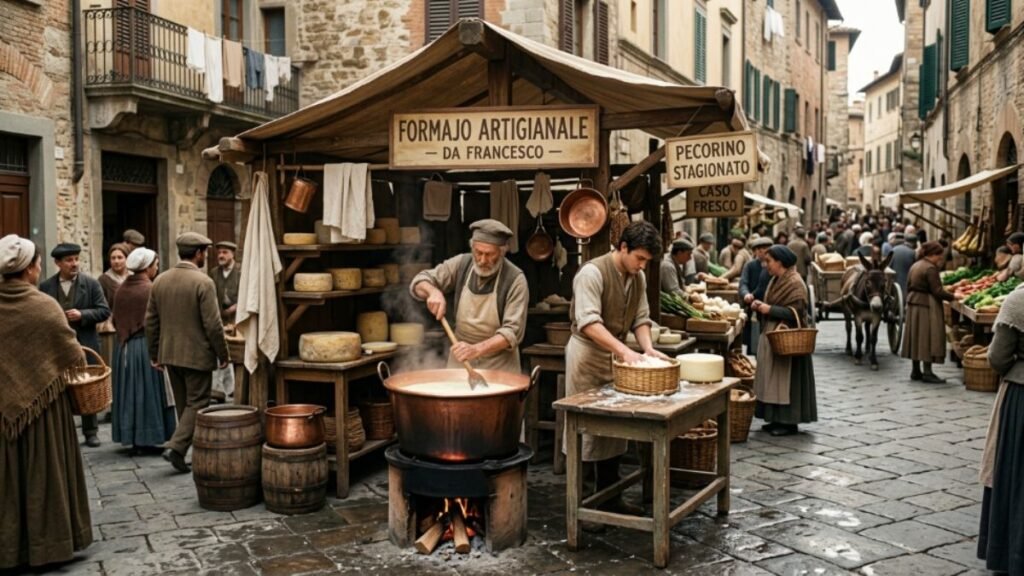
The push for geographic food protection did not begin with European bureaucracy. It grew out of centuries of local pride, commercial fraud, and the very practical problem of imitators profiting from someone else’s reputation.
Parmigiano-Reggiano provides the clearest example. By the twentieth century, producers across Italy — and eventually across the Atlantic — were slapping the word “Parmesan” on powdered, pre-grated cheese products that bore little resemblance to the aged, complex wheels made in Emilia-Romagna. The name had become generic through misuse. Italian producers lobbied for a legal framework that would tie the name to its authentic origin.
Grating Parmigiano-Reggiano tableside is one of those small rituals worth doing right — a sharp Microplane grater produces the fine, feathery texture that dissolves into pasta and risotto rather than sitting on top.
The first formal protections emerged at the national level in Italy during the 1950s and 1960s, with the DOC system for wines codified in 1963. Food products gained protection through national legislation before the EU standardized the approach in 1992 with the introduction of the PDO and PGI frameworks — creating a common market for authentically-origin products and a unified legal mechanism for protecting them.
The result is a system that preserves biodiversity, traditional knowledge, and local economies simultaneously. When you buy a DOP-certified product, you are participating in a supply chain that has survived centuries and, in many cases, resists industrial shortcuts not because producers cannot modernize, but because the rules prevent them from doing so — and they would not want to anyway.
Iconic Italian DOP Products You Should Know
Italy’s DOP list is long and sometimes surprising. These are the products you are most likely to encounter in recipes, specialty shops, or on menus — and the ones where the label makes the most tangible difference in flavor.
Parmigiano-Reggiano DOP
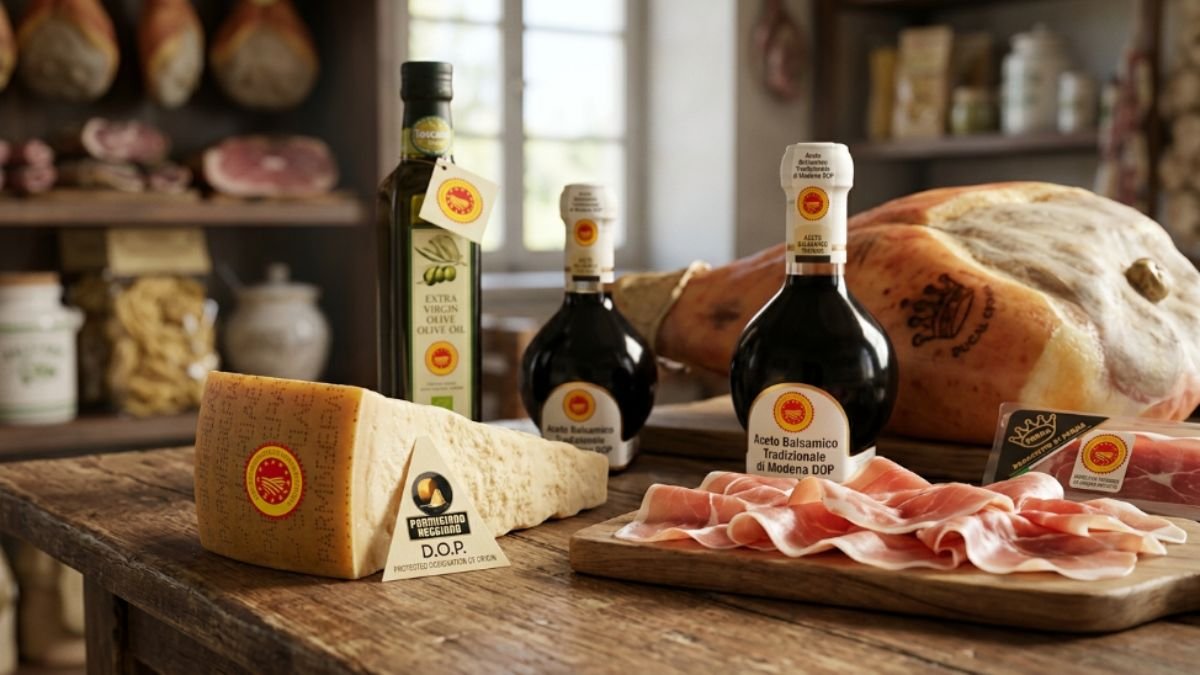
The most famous Italian cheese in the world. Aged a minimum of 12 months, though 24 and 36-month wheels are common in quality-focused shops. The rind is studded with pin-dot letters spelling out the name and the production zone. The crystalline, granular texture and the deep, complex umami flavor are the result of the specific bacterial cultures present in the region, the diet of the local cows, and the extended aging. Generic “Parmesan” — especially the pre-grated variety — is not a substitute.
For those planning a visit to Emilia-Romagna, a Parmigiano-Reggiano and Prosciutto di Parma factory tour offers a rare look at both products in a single half-day — from the aging rooms to the curing cellars.
Prosciutto di Parma DOP
The ham from Parma is perhaps the most recognizable Italian cured meat globally. The pigs must be born and raised in central and northern Italy, fed a regulated diet that includes whey from Parmigiano-Reggiano production, and slaughtered at weights and ages specified in the disciplinare (the official rulebook). The curing and aging must take place in the hills around Parma, where the local microclimate — particularly the dry winds coming through gaps in the Apennines — is considered essential to the final product. The five-pointed crown stamp on every cut identifies it as authentic.
Mozzarella di Bufala Campana DOP
Made from the milk of water buffalo raised in the Campania region and parts of Lazio and Puglia. The fresh, milky sweetness and elastic, slightly stringy texture of real Mozzarella di Bufala is impossible to replicate with cow’s milk. The cheese must be produced within hours of milking and consumed fresh. If you have only encountered rubbery, bland mozzarella, this product is what Italian tradition actually intended.
Aceto Balsamico Tradizionale di Modena DOP
Not to be confused with the inexpensive balsamic vinegars common in supermarkets. Aceto Balsamico Tradizionale di Modena DOP is aged a minimum of 12 years in a series of progressively smaller barrels made from different woods. The result is syrupy, intensely complex, and produced in tiny quantities. It is used by the drop, not the tablespoon. The “Tradizionale” designation is what distinguishes it from IGP balsamic, which has far fewer restrictions.
If your travels take you to Modena, a private balsamic vinegar tasting at a working acetaia — with barrels aging up to 25 years — is one of the most memorable food experiences in Italy.
Grana Padano DOP
Often described as Parmigiano-Reggiano’s more accessible sibling, Grana Padano covers a broader geographic zone — the Po Valley across multiple regions — and has somewhat less restrictive rules around aging and cow diet. It is still a DOP product with genuine geographic ties and a distinct flavor profile, but it lacks the depth and complexity that comes from Parmigiano-Reggiano’s stricter disciplinare.
How DOP Labels Protect Producers and Consumers
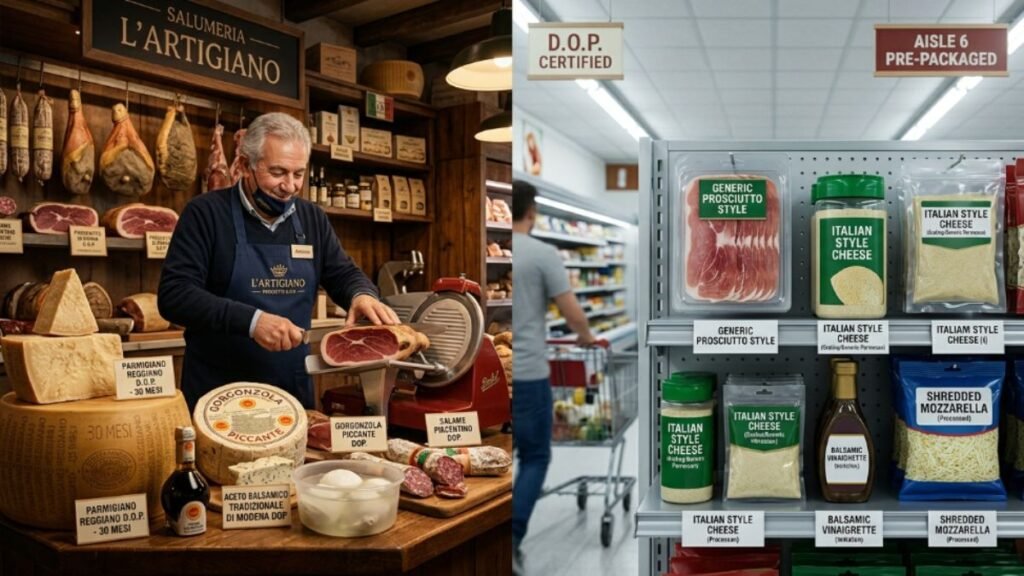
The DOP system serves two distinct groups simultaneously — and does it effectively precisely because both sides have something to gain.
For producers, the certification creates a legally protected market position. No competitor outside the designated zone can use the name, regardless of how similar their product might be. This means the economic value built up over centuries by generations of producers in Parma, Modena, or Reggio Emilia stays within those communities. It also creates incentives to maintain quality, because the label is only worth protecting if the product behind it continues to justify its reputation.
For consumers, the DOP label is a form of guaranteed traceability. You know where the product came from, roughly how it was made, and that it passed through inspection systems designed to catch fraud before it reaches the shelf. That is a meaningful assurance in a market where food labeling can be deliberately vague.
The Consortium of Parmigiano-Reggiano, like most DOP consortiums, maintains an active global anti-counterfeiting program, working with customs authorities and retailers to remove fraudulent products from markets. These are not passive trade associations — they operate like brand protection agencies with legal enforcement authority.
PRACTICAL TIP: When shopping, look for the EU PDO/DOP oval symbol in gold and yellow, and for the name of the product's consortium. Many DOP products also feature QR codes or specific numbering that allows full traceability back to the individual producer.
What DOP Means in the Kitchen
Understanding certification is useful for shopping, but it becomes most relevant when you are actually cooking. The DOP label answers one of the most common frustrations home cooks have with Italian recipes: “I followed the recipe exactly, but it didn’t taste right.”
Often, the ingredient is the issue — not the technique. A sauce made with genuine San Marzano DOP tomatoes tastes different from one made with standard canned tomatoes because the tomatoes themselves are genuinely different. They are a specific variety, grown in specific volcanic soil, with higher sugar content and lower acidity than commercial alternatives. That difference is not placebo. It is measurable and it affects the final dish.
The same applies to olive oil. An extra virgin olive oil from the Riviera Ligure DOP zone has a delicate, buttery profile suited for finishing dishes and raw applications — using a bold, peppery Sicilian oil in its place changes the flavor dynamic entirely. Neither is wrong. But they are not interchangeable, and a recipe that calls for one will behave differently with the other.
The practical takeaway is simple: when a recipe specifies a DOP product by name — Parmigiano-Reggiano, not just “Parmesan” — it is not being precious. The specific flavor, texture, or fat content of that certified product is part of why the dish works.
Once you bring a wedge of Parmigiano-Reggiano or Prosciutto di Parma home, proper storage makes all the difference — professional cheese storage bags designed for aged and cured products help preserve their texture and flavor far longer than plastic wrap.
The same logic applies to gelato ingredients — the difference between Sicilian pistachio paste and a generic substitute is as real and measurable as the gap between DOP Parmigiano and powdered Parmesan, as you can taste directly in authentic pistachio gelato made from scratch.
Finding DOP Products Outside Italy
The global availability of Italian DOP products has improved significantly over the past decade. Specialty food retailers, online importers, and even mid-range supermarkets in major cities now stock a reasonable selection. Here is where to look and what to prioritize.
Specialty Food Stores and Italian Delis
These remain the most reliable source for the full range of DOP-certified products. Staff in genuine Italian delis are usually knowledgeable and can source specific items on request. The selection is typically far more varied than supermarket offerings, and the products are more likely to be at peak condition.
Online Italian Food Retailers
Several importers specialize in shipping DOP products directly from Italian producers. This route works particularly well for shelf-stable products like aged cheeses, cured meats, olive oils, and balsamic vinegars. For fresh products like Mozzarella di Bufala, shorter supply chains are preferable.
What to Look for on Labels
- The gold-and-yellow PDO/DOP oval symbol — mandatory on all certified products sold in the EU
- The full protected name — e.g., “Parmigiano-Reggiano” not just “Parmigiano”
- The consortium name and sometimes a numbered seal
- Country of origin within EU labeling (Italy for Italian DOP products)
DOP in Context: The Broader Italian Food Identity
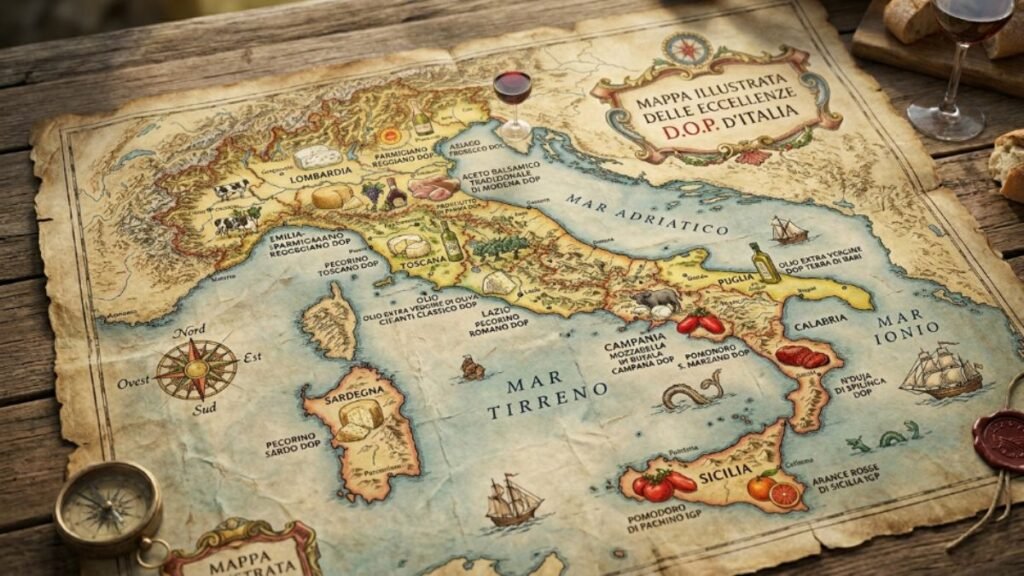
The DOP system is not simply a regulatory framework — it reflects something fundamental about the Italian relationship with food. The concept that a specific place produces a specific flavor, and that this connection is worth defending by law, assumes that geography is destiny in gastronomy. That assumption is deeply embedded in Italian culture.
It explains why Italians are often baffled by the concept of “Italian food” as a monolithic category. In Italy, the distinction between a Bolognese pasta tradition and a Neapolitan one, or between the food of Piedmont and the food of Calabria, is as significant as the difference between French and Spanish cuisine. DOP and DOC designations make those regional distinctions legally legible.
For anyone approaching Italian cooking from the outside, engaging with these certifications is one of the fastest ways to develop a more nuanced palate and a deeper understanding of why authentic Italian food consistently tastes different from its imitations. It is not about elitism or gatekeeping. It is about understanding that the ingredient is part of the recipe — and that where it comes from is part of what it is.
The Label Is a Map
The DOP stamp is, at its core, a geographic marker. It tells you where a product comes from — and in doing so, it tells you something about the landscape, the climate, the traditions, and the people behind it. Learning to read those labels gives you a more direct line to what Italian food actually is at its best: not a style, not a set of techniques, but a place.
Next time you reach for a wedge of Parmigiano-Reggiano or a package of Prosciutto di Parma, the DOP symbol is worth a second’s pause. It is your guarantee that what you are holding is the real thing — and that the real thing is worth the difference.
Ready to put authentic DOP ingredients to work? Explore our Italian Recipes collection for dishes that let these certified products shine.
Frequently Asked Questions
What does DOP mean in Italian food?
DOP stands for Denominazione di Origine Protetta, the Italian equivalent of the EU’s PDO (Protected Designation of Origin). It certifies that a product was produced, processed, and prepared entirely within a specific geographic area, following strict traditional methods registered with the European Commission.
What is the difference between DOP and DOC in Italian products?
DOP applies to food products such as cheese, cured meats, olive oils, and vinegars, requiring the entire production chain to occur within the certified area. DOC (Denominazione di Origine Controllata) was originally created for Italian wines and focuses on the controlled production of wines within defined regions. Both provide geographic protection, but they operate under different regulatory frameworks.
Is DOP better than IGP?
DOP represents a stricter geographic and procedural standard than IGP (Indicazione Geografica Protetta). For a product to carry the DOP label, every step from raw ingredient to finished product must occur within the designated area. IGP requires only that at least one stage of production takes place in the specified region. In terms of geographic integrity, DOP is the more rigorous designation.
Why does Parmigiano-Reggiano DOP taste different from regular Parmesan?
The differences are genuine and come from several sources: the specific bacteria present in the production zone, the regulated diet of local cows (which includes whey from the same cheese production), the traditional production methods, and the mandatory minimum aging period of 12 months. Generic Parmesan sold outside the DOP framework is not required to meet any of these standards, resulting in a significantly different flavor and texture profile.
How can I tell if a product is genuinely DOP certified?
Look for the EU PDO symbol — a gold-and-yellow oval — on the packaging. Also check for the full protected name (for example, ‘Prosciutto di Parma’ rather than just ‘prosciutto’) and, in many cases, a consortium seal or numbered band that allows the product to be traced back to its producer. In the EU, using the DOP name without the certification is illegal.
Are there DOP products outside of cheese and cured meats?
Yes. The DOP designation covers a wide range of Italian products including extra virgin olive oils, fresh pasta, balsamic vinegars, fruits and vegetables, legumes, and spices. Some examples include Lenticchie di Castelluccio di Norcia (lentils from Umbria), Nocciola del Piemonte (Piedmont hazelnuts), and Riviera Ligure extra virgin olive oil.
Can I find DOP Italian products outside Italy?
Yes. Major DOP-certified products are exported globally and are available in specialty food stores, Italian delis, and online retailers in most countries. Look for the PDO symbol on the packaging and verify the product carries the full protected name. Some products — especially fresh ones like Mozzarella di Bufala Campana — are best sourced through importers with fast turnover.

Mary Ciss is a food writer and Italian gastronomy enthusiast with a passion for authentic recipes, culinary history, and the stories behind every dish. Through Mio Gelatto, she explores the real flavors of Italy — from centuries-old gelato traditions to the hidden trattorias that locals love. For Mary, every recipe is a journey.