

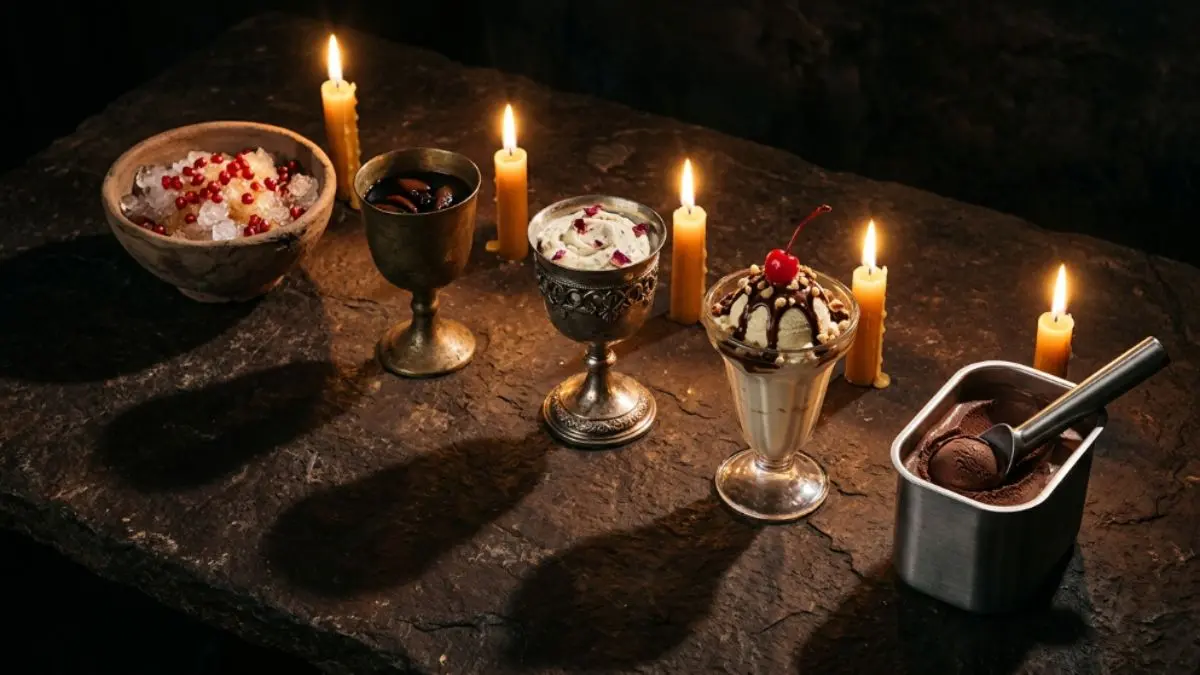
The Origin of Ice Cream: A Journey Through Time
The origin of ice cream is longer, stranger, and more international than most people expect. Long before refrigerators, ice cream trucks, or gelato counters lined the streets of Florence, humans were already finding ways to preserve cold and transform it into pleasure. The desire to eat something cold and sweet appears to be genuinely universal — documented across cultures separated by thousands of miles and centuries of time, with no apparent connection between them.
In the United States alone, ice cream is a $14 billion industry, consumed by more than 90% of American households every year, according to the International Dairy Foods Association. The average American eats approximately 4 gallons of ice cream annually — one of the highest per-capita rates in the world. Yet almost none of those consumers know that the dessert in their bowl has roots stretching back over two thousand years, connecting ancient China, the medieval Arab world, Renaissance Italy, and the royal courts of France and England before arriving on American shores.
We have spent considerable time tracing the documented history of frozen desserts across cultures and centuries — consulting food historians, culinary archives, and the accounts of travelers who first described these early cold creations. What emerges is not a single straight line from flavored snow to modern ice cream, but a series of independent discoveries, cultural exchanges, and culinary evolutions, each one adding something essential to the dessert we know today.
In this article, we trace the complete history of ice cream from its earliest origins to the Italian gelato tradition that defines our approach at Mio Gelatto. By the end, you will understand not just where ice cream came from, but why the Italian version occupies a unique and irreplaceable position in that long history.
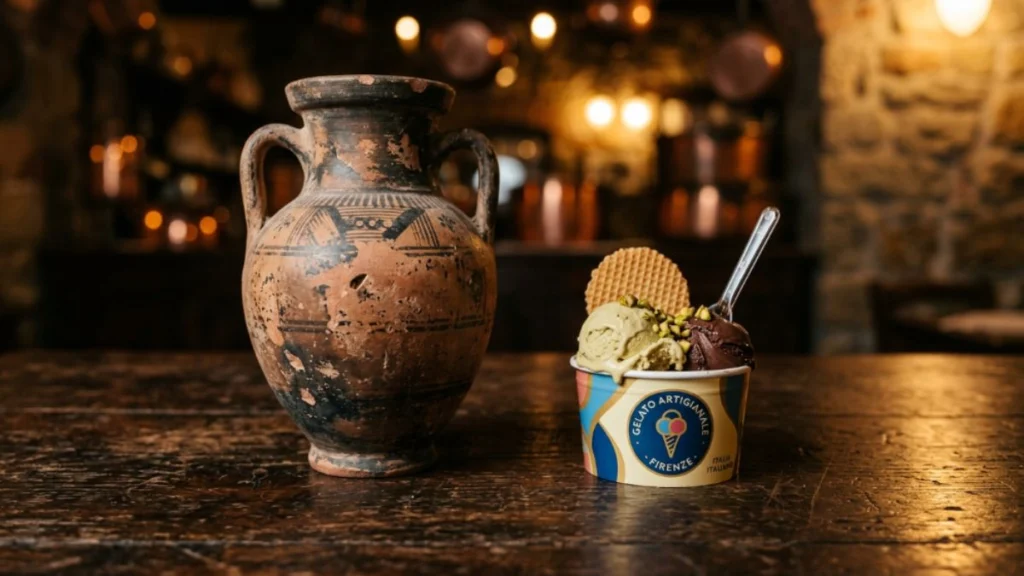
The History of Ice Cream: A Complete Timeline
| Period | Location | Key Development |
| 200 BC | China | Flavored ice and snow consumed by the royal court |
| 7th century AD | Arabia | Sharbat — sweetened fruit syrups over ice |
| 13th century | Italy (via Marco Polo) | Frozen dessert techniques arrive in Europe |
| 16th century | Italy (Florence & Naples) | Cream-based frozen desserts develop |
| 17th century | France & England | Ice cream served at royal courts |
| 1686 | Paris, France | Cafe Procope — first public ice cream sales |
| 1770s | United States | Ice cream reaches American colonies |
| 1851 | Baltimore, USA | First commercial ice cream production |
| Early 1900s | Italy (gelato tradition) | Artisan gelato culture fully established |
| 1920s–1940s | USA | Industrial ice cream production expands globally |
💡 Practical Tip: When reading the history of ice cream, it helps to distinguish between two separate traditions: flavored ice (water-based, no dairy) and cream-based frozen desserts. These two lineages developed largely independently and only merged into the modern concept of ice cream in 17th-century Europe.
The Earliest Origins: Ice, Snow, and the Ancient World
The story of frozen desserts begins not with cream or sugar, but with ice and snow — resources that were precious, laboriously gathered, and reserved for the privileged. Long before anyone understood refrigeration, cold was a luxury that rulers and emperors used to demonstrate their power and sophistication.
Ancient China: The First Frozen Treats
The earliest documented evidence of humans consuming flavored ice comes from China, where records from around 200 BC describe the imperial court enjoying mixtures of rice and milk packed in snow. Chinese emperors maintained elaborate underground ice storage facilities — essentially ancient ice houses — where snow collected during winter was preserved for use throughout the warmer months. These early frozen preparations were simple by modern standards: compressed snow or ice flavored with fruit juice, honey, or spices.
By the Tang Dynasty (618–907 AD), more refined versions appear in historical records. Emperor Taizong is said to have kept 94 ice-collecting men on his royal staff, whose sole duty was to harvest and store ice for the court’s use. Frozen buffalo milk dishes are mentioned in accounts from this period — making these preparations arguably the earliest documented dairy-based frozen desserts in history, predating European ice cream by nearly a thousand years.
Ancient Arabia: The Birth of Sharbat
Parallel to developments in China, the Arab world was crafting its own tradition of cold, sweetened beverages and preparations. The Arabic word sharbat — meaning a drink made from fruit syrup diluted with water or snow — is the direct linguistic ancestor of the English words sherbet and sorbet, and through them, connects to the entire European tradition of frozen desserts.
Arab physicians of the medieval period documented the cooling and restorative properties of cold drinks extensively. Sharbat was prepared by combining concentrated fruit syrups — made from pomegranate, rose, tamarind, or citrus — with crushed ice or snow brought down from mountain regions. These preparations were consumed both for pleasure and as medicinal remedies, prescribed for fevers and digestive ailments.
The Arab world’s sophisticated trade networks meant that these techniques traveled widely. By the time Arab culture reached Sicily and southern Spain through the medieval Mediterranean world, the tradition of flavored ice and cold syrups was well established — and would prove decisive in the next phase of frozen dessert history.
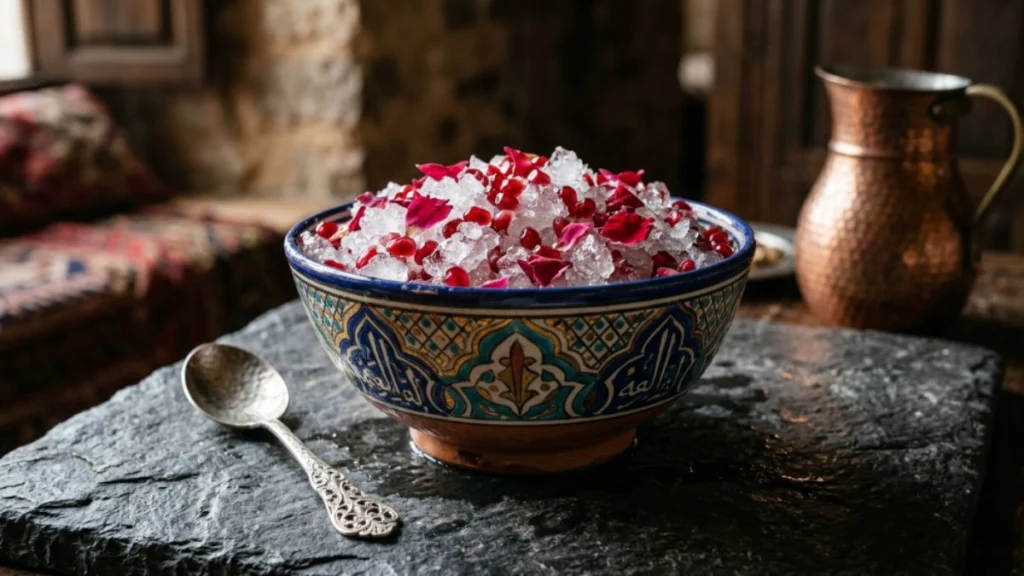
Italy’s Central Role in the History of Ice Cream
Italy’s contribution to the history of ice cream is not merely significant — it is foundational. The transformation of flavored ice into a cream-based frozen dessert happened largely on Italian soil, driven by Italian culinary innovation, and it was Italian culture that carried these techniques into the wider world through diplomatic exchange, royal marriages, and the movement of skilled artisans across Europe.
Sicily: The Mediterranean Crossroads
Sicily occupies a unique position in frozen dessert history precisely because of its geographic and cultural position. Conquered and influenced in sequence by the Greeks, Romans, Arabs, Normans, and Spanish, Sicily absorbed culinary traditions from across the Mediterranean world. The Arab presence in Sicily from the 9th to 11th centuries brought the sharbat tradition directly to Italian soil, where it mixed with local ingredients and techniques.
Sicilian granita — still made today in essentially the same form as its medieval predecessors — represents the most direct living link to this Arab-Italian fusion. Made from water, sugar, and fresh fruit or coffee, frozen slowly and scraped into a coarse, crystalline texture, granita is a direct descendant of sharbat and the oldest frozen dessert tradition still actively practiced in Italy. In the hill towns around Mount Etna, snow was harvested well into the 20th century for granita production.
Florence and the Medici Court
The leap from flavored ice to cream-based frozen desserts — the true birth of what we now call ice cream — happened in Renaissance Italy, and Florence is at the center of the story. The Medici court, one of the greatest patrons of art, science, and culinary innovation in European history, is credited by multiple food historians with developing and refining the first cream-based frozen preparations in the 16th century.
The figure most often associated with this development is Bernardo Buontalenti, a Florentine architect, engineer, and artist who also served as a creative director for Medici court festivities. Historical accounts credit Buontalenti with creating a frozen preparation of milk, honey, egg yolks, and sweet wine for a Medici banquet in 1565 — a recipe that bears a striking resemblance to modern gelato bases. Whether Buontalenti invented the dish entirely or refined existing preparations remains debated among food historians, but his name appears consistently in the most credible accounts of early Italian frozen desserts.
⚠️ Attention: Many popular accounts claim that Marco Polo brought ice cream recipes from China to Italy in the 13th century. Food historians largely dismiss this story as romantic myth — there is no credible documentary evidence supporting it, and the culinary techniques involved developed independently in Italy over several centuries without any documented Chinese influence.
Catherine de Medici and the French Connection
One of the most enduring stories in the history of ice cream involves Catherine de Medici, who left Florence in 1533 to marry the future King Henry II of France. According to popular tradition, she brought Florentine chefs and their frozen dessert recipes to the French court, where they became the foundation of the French ice cream tradition.
Like many compelling food history stories, this one is partially mythologized. Documentary evidence from the period does not specifically confirm that frozen desserts traveled to France via Catherine’s court. What is historically certain is that by the mid-17th century, frozen desserts were firmly established in French aristocratic culture, and Italian influence on French haute cuisine during this period was pervasive and well-documented. The connection, even if simplified in popular retelling, reflects a genuine historical reality.
SEE ALSO: The Gelato Route: Best Gelaterias in Italy and How to Visit Them
Ice Cream Reaches Europe: Royal Courts and Public Cafes
By the 17th century, frozen desserts had moved from the exclusive domain of Italian Renaissance courts into the broader European aristocratic world — and then, remarkably quickly, into public life. This transition represents one of the most important democratizing moments in culinary history.
The French and English Royal Courts
King Charles I of England is frequently cited in culinary histories as one of the first English monarchs to serve ice cream at the royal table, in the 1630s. Whether or not the specific anecdotes surrounding his fondness for the dessert are accurate, what is certain is that by the mid-17th century, ice cream had become a fixture of aristocratic entertainment across France and England. Recipes appear in English cookbooks of the period, describing preparations of sweetened cream flavored with orange flower water, mace, and fruit, frozen in pewter containers surrounded by salted ice.
In France, the court of Louis XIV (1638–1715) elevated ice cream to an art form. The Sun King’s legendary banquets at Versailles featured elaborate frozen presentations — sculpted ice cream shapes, flavored ices in multiple colors, served in the finest porcelain. French confectioners, many of them trained in Italian techniques, competed to produce increasingly refined and spectacular frozen preparations.
Cafe Procope: Ice Cream Goes Public
The single most important moment in the democratization of ice cream came in 1686, when a Sicilian entrepreneur named Francesco Procopio dei Coltelli opened Cafe Procope in Paris. This establishment — still operating today, making it one of the oldest cafes in the world — was the first venue to sell frozen desserts to the general public on a commercial basis.
Procopio’s cafe served ices, sorbets, and cream-based frozen preparations to Parisian society at large, not just to aristocrats. The cafe became a gathering place for the intellectual and artistic life of Paris — Voltaire, Rousseau, Benjamin Franklin, and Napoleon Bonaparte are all documented as patrons. By making frozen desserts accessible to anyone who could afford a cafe visit, Procopio fundamentally changed what ice cream was: not a symbol of royal privilege, but a shared pleasure available to all.
✓ Best Practice: When visiting Paris, Cafe Procope at 13 Rue de l’Ancienne Comedie still serves food and drink in a space that has changed remarkably little since the 17th century. For anyone interested in the history of ice cream, it is one of the most genuinely historic restaurants in the world.
The Birth of American Ice Cream Culture
Ice cream arrived in the American colonies in the early 18th century, carried by European settlers and quickly adopted with enthusiasm. American ice cream history is not merely a continuation of the European story — it introduces genuinely new chapters, including the development of industrial production, the invention of the ice cream cone, and the creation of a distinctly American ice cream culture that has since spread back across the world.
The Founding Fathers and Their Ice Cream
American historical records show that ice cream was present in colonial life from at least the 1740s. A letter from Maryland governor William Bladen’s guest in 1744 is one of the earliest American references to ice cream, describing it as a fashionable dessert served at the governor’s table. Both George Washington and Thomas Jefferson were documented ice cream enthusiasts — Washington’s household accounts from Mount Vernon record significant expenditures on cream for ice cream during the 1780s and 1790s, and Jefferson is credited with introducing a French-style vanilla ice cream recipe to American dining.
Commercial Production and the Ice Cream Industry
The transformation of ice cream from a luxury item to an everyday food happened in America in the mid-19th century. Jacob Fussell, a Baltimore milk dealer, established the first large-scale commercial ice cream factory in 1851, standardizing production and dramatically reducing prices. What had cost the equivalent of several dollars per serving in fine establishments became accessible to working-class consumers within a generation.
The development of mechanical refrigeration in the latter half of the 19th century removed the final barrier to mass production. Ice no longer needed to be harvested from frozen lakes and stored in insulated houses — it could be manufactured on demand. By the early 20th century, American ice cream production had industrialized completely, and the United States had become the world’s largest producer and consumer of ice cream.
The Ice Cream Cone: A World’s Fair Invention
One of the most beloved origin stories in American food history surrounds the ice cream cone, reportedly invented at the 1904 St. Louis World’s Fair. The story goes that an ice cream vendor named Arnold Fornachou ran out of paper dishes and his neighboring waffle vendor, Ernest Hamwi, began rolling his waffles into cone shapes to serve as edible containers. Whether this specific account is precisely accurate, the St. Louis World’s Fair was genuinely the moment when the ice cream cone entered mainstream American consciousness — and it has never left.
Italian Gelato: A Separate and Parallel Tradition
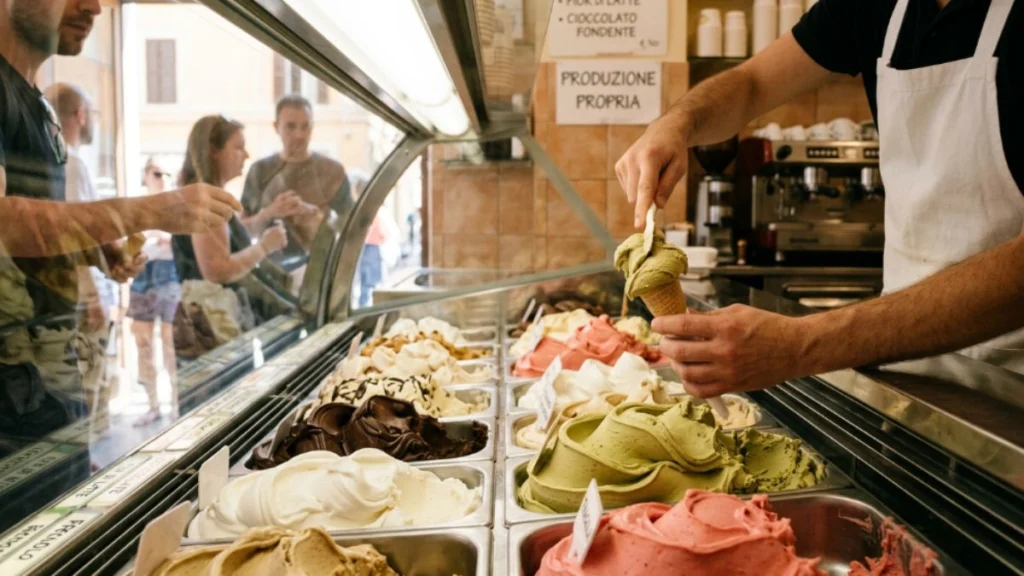
While the broader history of ice cream followed the arc from aristocratic luxury to industrial commodity, Italy maintained a separate and parallel tradition that prioritized craft, quality, and regional identity over mass production. This tradition — the tradition of artisan gelato — is the one that most directly informs how we think about frozen desserts at Mio Gelatto.
The Gelatiere as Artisan
In Italian culture, the gelatiere — the gelato maker — is a skilled artisan in the same sense as a pastry chef or a winemaker. The craft requires years of training, a deep understanding of ingredients and their behavior at different temperatures, and a sensitivity to seasonal availability. Traditional gelaterias in Italy change their menus with the seasons, featuring strawberry gelato when local strawberries are at their peak and setting it aside when they are not. This relationship with seasonality is entirely foreign to industrial ice cream production.
The Italian Gelato Schools
Italy has several dedicated schools for professional gelato making, the most prestigious of which is the Carpigiani Gelato University in Bologna. Founded in 2003, it has trained thousands of artisan gelato makers from over 100 countries. The existence of an internationally respected educational institution dedicated entirely to gelato — with a curriculum covering food science, flavor theory, business management, and artisan technique — speaks to the seriousness with which Italy treats this tradition.
Gelato’s Global Expansion
Italian gelato began its most significant international expansion in the second half of the 20th century, as Italian emigration carried artisan gelato culture to Argentina, Brazil, Australia, and eventually the United States. American cities with large Italian-American communities — New York, Boston, San Francisco, Chicago — developed genuine gelato traditions years before the broader American market discovered the product.
The global interest in authentic Italian food that grew dramatically from the 1990s onward brought gelato to mainstream American awareness. Today, artisan gelato shops operate in every major American city, and the distinction between authentic Italian-style gelato and American-style ice cream is widely understood by consumers in a way that was not true a generation ago.
| Type | Origin | Base | Fat Content | Defining Character |
| Gelato | Italy | Whole milk | 4–8% | Dense, silky, intensely flavored |
| Ice Cream | France/England | Heavy cream | 10–18% | Light, airy, rich |
| Sorbet | Arabia/Italy | Water + fruit | 0% | Bright, fresh, dairy-free |
| Sherbet | USA | Milk + fruit | 1–2% | Lighter than ice cream, fruity |
| Granita | Sicily, Italy | Water + sugar | 0% | Crystalline, coarse, refreshing |
💡 Practical Tip: When choosing between gelato and ice cream at a specialty shop, look at the serving temperature and texture rather than just the label. Authentic gelato should be soft enough to spread with a flat spatula, not scooped with a round ice cream scoop. If a shop uses round scoops for its gelato, it is likely storing and serving the product at ice cream temperatures — which changes the texture significantly.
How Italy Shaped the Modern Understanding of Frozen Desserts
The Italian contribution to the global history of ice cream extends far beyond gelato itself. Italy gave the world the vocabulary, the standards, and the cultural framework through which we understand quality in frozen desserts — distinctions between dairy and non-dairy preparations, the importance of fresh and seasonal ingredients, the role of the artisan maker, and the idea that a frozen dessert can be a vehicle for cultural identity and regional pride.
The Italian DOP and IGP designation systems — which protect the geographical and traditional integrity of food products like Parmigiano-Reggiano and Prosciutto di Parma — have begun to be applied to gelato as well, with ongoing efforts to establish official designations for specific regional gelato traditions. This reflects a deeply Italian conviction that food is not merely a commodity but a form of cultural heritage deserving the same protection as any other artifact of civilization.
For American consumers and home cooks who have developed an interest in authentic Italian food, understanding this context transforms the way you approach gelato — not as an exotic foreign version of ice cream, but as the product of a separate and in many ways older tradition, with its own standards, its own history, and its own reasons for being the way it is.
The history of ice cream, in its fullest telling, is ultimately the history of human ingenuity and the universal desire to find pleasure in simple things. Ice, fruit, milk, and sugar — transformed by centuries of cultural exchange into one of the world’s most beloved categories of food. Italy’s role in that story is not incidental. It is central.
A Story That Still Continues
The history of ice cream is, at its heart, a story about human connection — the way food travels across cultures, absorbs new influences, and carries the memory of every place it has been. From the snow houses of ancient China to the royal banquets of Renaissance Florence, from the public cafes of 17th-century Paris to the gelaterie lining the streets of modern Italian cities, frozen desserts have always been more than just something cold and sweet to eat.
The key takeaways from this journey: the history of ice cream spans at least two thousand years and multiple civilizations. Italy’s contribution — from Sicilian granita to Florentine gelato — is the most consequential in shaping the frozen desserts we know today. The artisan gelato tradition represents a living continuation of that history, prioritizing craft and quality in a way that industrial production never can. And understanding where a food comes from always makes it taste better.
The next time you sit with a cup of pistachio gelato or a bowl of fior di latte, you are participating in a tradition that connects you to every culture that ever found pleasure in cold and sweet. That is not a small thing.
KNOW MORE: The History Behind Tiramisu: Italy’s Most Beloved Dessert
Frequently Asked Questions About The Origin of Ice Cream
Who actually invented ice cream?
No single person or culture invented ice cream — it developed independently across multiple civilizations over thousands of years. The Chinese consumed flavored ice as early as 200 BC, the Arab world developed sharbat traditions by the 7th century AD, and cream-based frozen desserts emerged in Renaissance Italy in the 16th century. The modern concept of ice cream as we know it today is the product of all these traditions converging in Europe and then spreading globally.
Did Marco Polo really bring ice cream from China to Italy?
This is one of the most persistent myths in food history, and food historians generally reject it. There is no credible documentary evidence that Marco Polo introduced frozen dessert techniques to Italy. The story appears to have originated in a 1930s American advertisement and was repeated until it became accepted as fact. The Italian frozen dessert tradition developed through documented channels — Arab influence in Sicily and the culinary innovations of Renaissance Florence — without any demonstrated Chinese connection.
When did ice cream become popular in the United States?
Ice cream was present in American colonial life from the 1740s, enjoyed by the wealthy and by historical figures including George Washington and Thomas Jefferson. It became a truly popular food for all Americans in the mid-19th century, when Jacob Fussell established the first commercial ice cream factory in Baltimore in 1851, dramatically reducing prices. The ice cream cone, invented or popularized at the 1904 St. Louis World’s Fair, accelerated mass adoption further.
What is the difference between ice cream and gelato historically?
Gelato and ice cream developed from the same Renaissance Italian roots but diverged significantly. Italian gelato maintained an artisan, milk-based, low-air tradition focused on intense flavor. French and English ice cream evolved toward heavier cream bases, higher air content, and eventually industrial production. These two traditions have remained distinct, with gelato representing the older and arguably more refined lineage — closer in spirit to the original frozen desserts of Renaissance Florence.
What was the first ice cream flavor?
The earliest documented flavors were not flavors in the modern sense — they were the natural tastes of fruit juices, honey, or spices added to ice or snow. The first cream-based frozen desserts in Renaissance Italy were flavored with ingredients like orange flower water, mace, cinnamon, and citrus zest. Vanilla became dominant in European and American ice cream from the 18th century onward, partly because of Thomas Jefferson’s documented enthusiasm for vanilla ice cream prepared in the French style.
Is gelato healthier than ice cream?
Gelato contains significantly less fat than American ice cream — 4 to 8% versus 10 to 18% — because it uses whole milk rather than heavy cream as its primary base. It also contains less air, making it denser and more satisfying per serving. However, gelato is not a low-calorie food, and sugar content is comparable to or higher than standard ice cream. Whether gelato is the right choice depends entirely on individual dietary needs and preferences.
Where can I find authentic Italian gelato in the United States?
Authentic artisan gelato is now available in most major American cities, particularly in neighborhoods with Italian-American heritage and in cities with vibrant food cultures like New York, San Francisco, Chicago, and Boston. Look for shops that display gelato in covered metal containers rather than high-piled, brightly colored mounds — the covered presentation preserves temperature and texture correctly. Authentic gelato is dense, not fluffy, and served with a flat spatula rather than a round scoop.

Mary Ciss is a food writer and Italian gastronomy enthusiast with a passion for authentic recipes, culinary history, and the stories behind every dish. Through Mio Gelatto, she explores the real flavors of Italy — from centuries-old gelato traditions to the hidden trattorias that locals love. For Mary, every recipe is a journey.