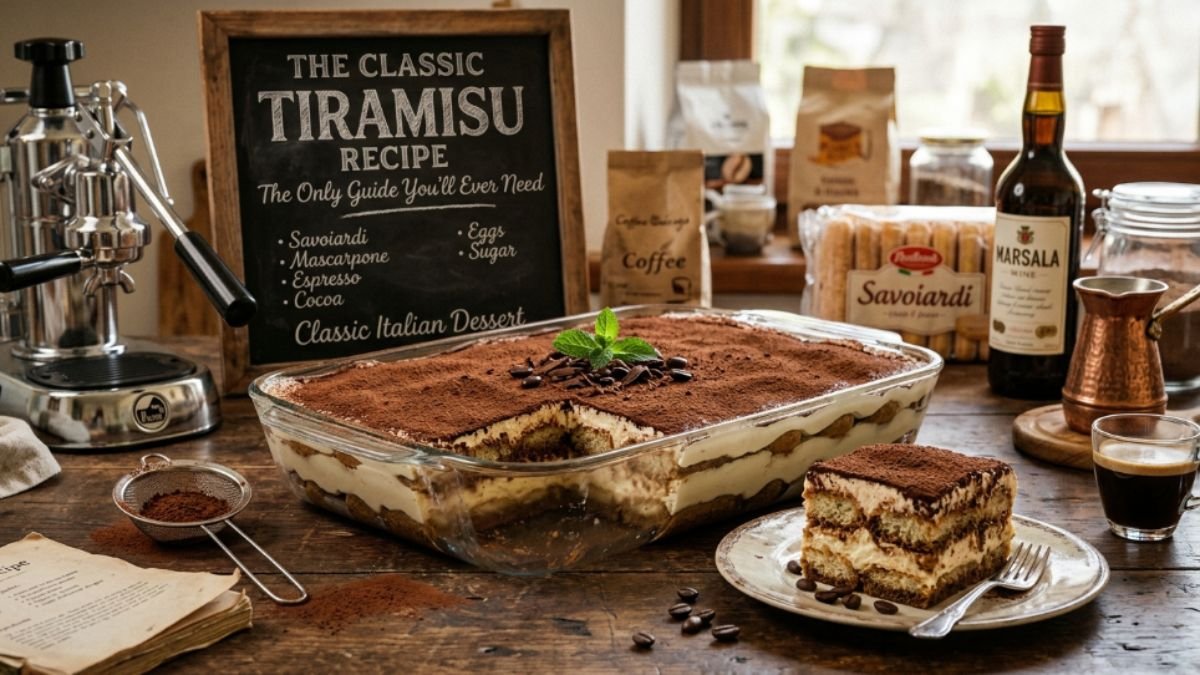
The Classic Tiramisu Recipe: The Only Guide You’ll Ever Need
Few desserts carry the weight of a place the way tiramisu does. Order it in a restaurant in Treviso — the small city in the Veneto region widely credited as its birthplace — and what arrives at the table is nothing like the dense, over-sweetened slabs served in countless American Italian restaurants. The real thing is airy, delicate, intensely flavored with espresso, and finished with a generous snowfall of bitter cocoa. It disappears in a few spoonfuls and leaves you wanting another.
According to data from the National Restaurant Association, Italian cuisine consistently ranks among the top three most popular food categories in the United States, and tiramisu regularly appears on lists of the most-ordered desserts nationwide. Americans have a genuine love for this dessert — which makes it all the more worth learning to make correctly.
We have spent years testing this recipe, visiting the trattorias and pasticcerie of the Veneto, and working through every variable: the ratio of mascarpone to egg, the strength of the espresso, the length of time the Savoiardi should soak, and whether the dessert is better after four hours or twenty-four. The version we share here is the result of all of that accumulated experience. It is the one we return to every time, without exception.
By the end of this guide, you will know how to make a tiramisu that is authentic, structurally sound, and deeply flavorful — one that will become the most requested dessert you ever bring to a table.
The History Behind Tiramisu: Why Authenticity Matters
Understanding where tiramisu comes from is not just culinary trivia. It directly informs why the recipe works the way it does and why substitutions — however well-intentioned — so often produce inferior results.
The most widely documented origin traces tiramisu to the restaurant Le Beccherie in Treviso, where it appeared on the menu in the early 1970s. Created by pastry chef Roberto Linguanotto alongside restaurateur Ada Campeol, the dessert was designed as a restorative — a light, energizing end to a meal. The name itself means “pick me up” in Italian, a reference to the stimulating combination of espresso and sugar.
Why the Original Formula Has Endured
The original recipe is built on a small number of high-quality ingredients in careful proportion: egg yolks, sugar, mascarpone, espresso-soaked Savoiardi biscuits, and cocoa powder. There is no heavy cream in the classic version. No gelatin. No alcohol in the foundational recipe, though a splash of Marsala wine became a common addition in later decades.
Each component plays a specific structural and flavor role. Remove or replace any one of them and the balance shifts. Heavy cream, for example, adds richness but dilutes the characteristic density and slight tang of mascarpone. Pre-made sponge cake lacks the structural integrity of authentic Savoiardi and turns the dessert soggy. Instant espresso powder produces a flat, one-dimensional coffee flavor.
👉 For a deeper look at the cultural context and the full story of how this dessert traveled from a single Treviso restaurant to become one of the most recognized Italian exports in the world, we cover it in detail in our dedicated piece on The History Behind Tiramisu.
Essential Ingredients: What to Buy and Why
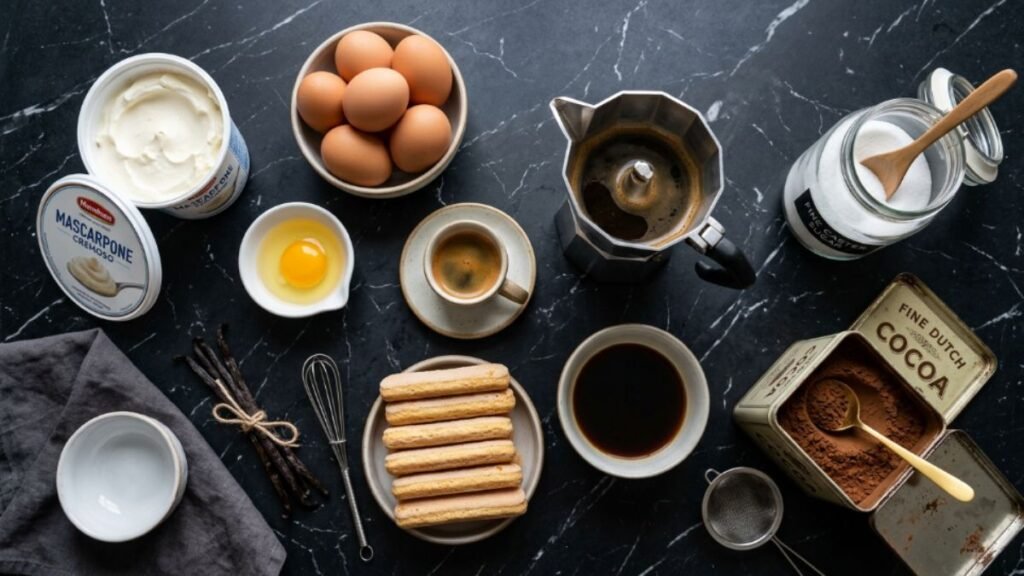
The quality of a tiramisu is almost entirely determined by the quality of its ingredients. This is not a recipe where technique can compensate for mediocre products.
Mascarpone
Mascarpone is the foundation of the cream layer. It is a fresh Italian cheese made from heavy cream — not a substitute for cream cheese, ricotta, or crème fraîche. Its flavor is mild, slightly sweet, and rich with a very fine, almost spreadable texture. American cream cheese is tangier and firmer; using it produces a noticeably different result.
Look for Italian-imported mascarpone when possible. Several reliable brands are consistently available online and in specialty stores.
Savoiardi (Ladyfinger Biscuits)
Savoiardi are the dry, finger-shaped biscuits that form the structural base of tiramisu. They are engineered to absorb liquid quickly without completely disintegrating — a property that generic ladyfingers do not reliably share. Italian-made Savoiardi have a specific dryness and a light crumb that American ladyfingers often lack.
👉 Vicenzi Savoiardi Ladyfingers
Espresso
The coffee layer must be strong. A properly pulled espresso or a moka pot brew is the minimum standard. Drip coffee is too diluted and produces a weak, watery flavor in the finished dessert. If you do not have an espresso machine, a stovetop moka pot is the most affordable and reliable alternative.
Eggs
Use the freshest large eggs available. This recipe uses raw egg yolks, which means egg quality and freshness matter both for flavor and for safety. We address the raw egg question directly in the FAQ section below.
Cocoa Powder
Use unsweetened Dutch-process cocoa powder for the final dusting. Dutch-process has a deeper color and a smoother, less acidic flavor than natural cocoa — it is the standard in Italian pasticcerie and makes a visible difference in both appearance and taste.
Equipment You Will Need
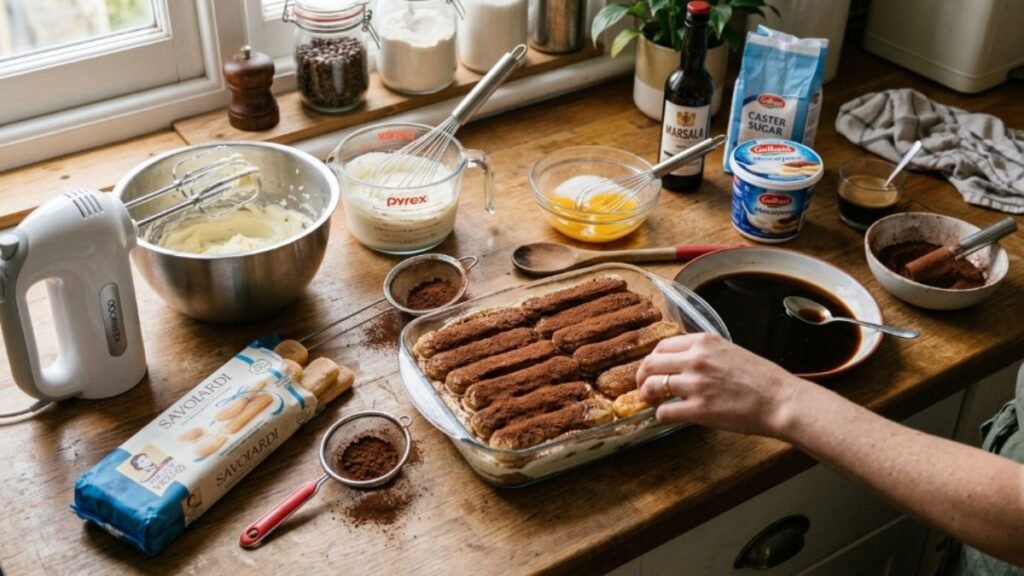
You do not need specialized equipment to make excellent tiramisu. What you do need:
- A hand mixer or stand mixer (for whipping the egg yolks and folding the cream)
- A rectangular baking dish, approximately 9×13 inches or 8×8 inches for a taller version
- Two mixing bowls
- A shallow dish wide enough to dip the Savoiardi
- A fine-mesh sifter or small strainer for the cocoa dusting
- Plastic wrap for covering during refrigeration
💡 Practical Tip: A glass or ceramic baking dish is preferable to metal for tiramisu. It retains cold temperatures better during serving and allows you to see the layering when you cut into the dessert.
The Classic Tiramisu Recipe: Step by Step
Yield: 8–10 servings Active time: 30 minutes Chilling time: Minimum 4 hours; overnight strongly recommended Difficulty: Intermediate
Ingredients
| Ingredient | Quantity | Notes |
|---|---|---|
| Egg yolks | 6 large | Room temperature, very fresh |
| Granulated sugar | 150g (¾ cup) | Divided: 100g + 50g |
| Mascarpone | 500g (about 2 cups) | Cold, straight from refrigerator |
| Savoiardi (Ladyfingers) | 300g (approx. 40–45 biscuits) | Italian-made preferred |
| Strong espresso | 300ml (1¼ cups) | Cooled to room temperature |
| Marsala wine (optional) | 2 tablespoons | Dry Marsala; skip for alcohol-free version |
| Dutch-process cocoa powder | 3–4 tablespoons | For dusting |
Step 1 — Brew and Cool the Espresso
Prepare the espresso first, as it must be completely cool before you dip the Savoiardi. Hot espresso will make the biscuits disintegrate. If adding Marsala, stir it into the cooled espresso now. Set aside in a shallow dish.
⚠️ Attention: This is the most common mistake in tiramisu — dipping biscuits in warm or hot espresso. The Savoiardi should absorb the liquid but retain their shape. Hot liquid destroys their structure and produces a mushy base.
Step 2 — Whip the Egg Yolks and Sugar
In a large mixing bowl, combine the egg yolks with 100g of sugar. Using a hand mixer or stand mixer, beat on medium-high speed for 4–5 minutes until the mixture becomes pale, thick, and ribbon-like. When you lift the beaters, the mixture should fall in a slow, thick ribbon that holds its shape for a moment before dissolving.
This step is not just about texture — it also partially emulsifies the eggs, which is important for the stability of the final cream.
Step 3 — Incorporate the Mascarpone
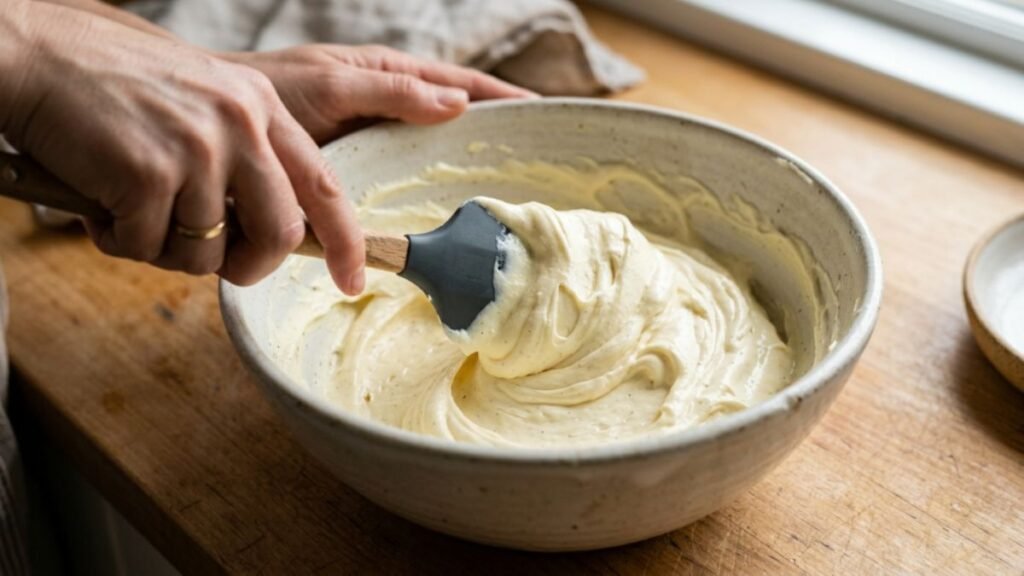
Add the cold mascarpone to the whipped egg mixture all at once. Using a rubber spatula or the mixer on its lowest setting, fold gently until just combined — no streaks visible, but do not overwork it. Overmixing mascarpone causes it to break and become grainy and watery.
The cream at this stage should be thick, smooth, and hold soft peaks.
✓ Best Practice: Keep your mascarpone cold until the moment you add it. Cold mascarpone holds its structure much better during folding and produces a more stable cream layer in the final dessert.
Step 4 — Dip the Savoiardi
Working one at a time, briefly dip each Savoiardi into the cooled espresso. The motion is a quick, two-second submersion — not a long soak. The biscuit should be moistened on the outside but still firm at the core. You will feel the resistance when you pick it up.
Arrange the dipped biscuits in a single layer in the bottom of your baking dish, placing them side by side until the base is completely covered. Trim any biscuits as needed to fill gaps.
Step 5 — Layer and Repeat
Spread exactly half of the mascarpone cream over the first layer of biscuits in an even, generous layer. Smooth with a spatula.
Add a second layer of espresso-dipped Savoiardi on top of the cream, following the same orientation and pattern as the first layer.
Spread the remaining mascarpone cream over the second biscuit layer. Smooth the surface carefully — a clean, even top is what you want here, as it will hold the cocoa dusting.
Step 6 — Refrigerate
Cover the dish tightly with plastic wrap and refrigerate for a minimum of 4 hours. Overnight — 12 to 16 hours — produces a significantly better result. The resting time allows the espresso to finish hydrating the Savoiardi, the cream to set, and the flavors to meld into a unified whole.
Do not skip this step. Tiramisu served immediately after assembly is structurally unstable and the flavors have not had time to develop fully.
Step 7 — Dust and Serve
Immediately before serving, remove the plastic wrap and generously dust the entire surface of the tiramisu with Dutch-process cocoa powder passed through a fine-mesh sifter. The layer should be visible and even — not a trace dusting.
Cut into squares and serve cold.
Common Mistakes and How to Avoid Them
| Mistake | Cause | Fix |
|---|---|---|
| Soggy, collapsing base | Biscuits over-soaked or espresso too hot | Two-second dip in completely cooled espresso |
| Grainy, watery cream | Mascarpone overworked | Fold gently; stop as soon as mixture is smooth |
| Flat coffee flavor | Drip coffee used instead of espresso | Use moka pot or espresso machine |
| Cream too loose to hold shape | Egg yolks under-whipped | Beat 4–5 full minutes until ribbon stage |
| Bitter cocoa top | Cocoa applied too early, absorbs moisture | Dust only immediately before serving |
| Tastes bland the same day | Not rested long enough | Always refrigerate overnight for best result |
Variations Worth Knowing
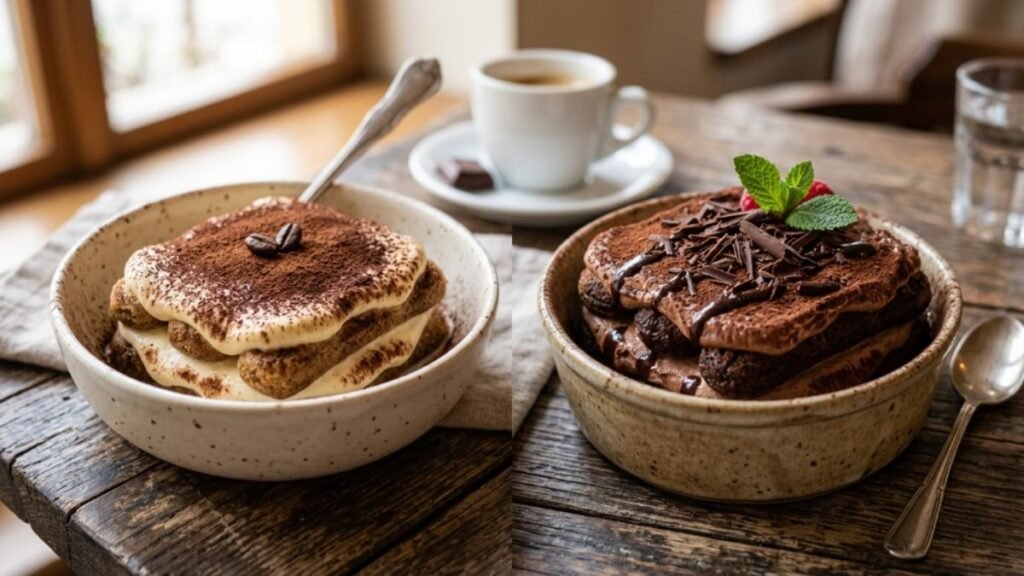
The classic formula should be mastered before variations are explored. Once you have made the foundational recipe successfully two or three times, these adaptations are worth trying.
Alcohol-Free Tiramisu
Simply omit the Marsala. The dessert is fully complete without it — Marsala is an addition that became popular in the 1980s but was not part of the original recipe. If you want a subtle depth of flavor without alcohol, a small splash of pure vanilla extract added to the espresso works beautifully.
Strawberry Tiramisu
Replace the espresso with a syrup made from fresh strawberry juice and a small amount of sugar. Layer fresh sliced strawberries between the cream and biscuit layers. This variation is particularly popular in the spring and summer months.
Individual Tiramisu Cups
Rather than assembling in a baking dish, construct individual portions in wine glasses or wide-mouthed mason jars. Break the Savoiardi into pieces to fit. Ideal for dinner parties — easier to serve and visually striking.
How to Store and Make Ahead
Tiramisu keeps well in the refrigerator for up to 3 days, covered tightly with plastic wrap. The flavor actually improves over the first 24 hours as the components continue to meld.
Tiramisu can also be frozen. Cut into individual portions, wrap each tightly in plastic wrap, and freeze for up to 1 month. Thaw overnight in the refrigerator. Note that the texture will be slightly denser after freezing.
💡 Practical Tip: If making tiramisu for a dinner party, assemble it the day before and refrigerate overnight. Not only does this produce better flavor and texture, it also means the dessert is completely ready before your guests arrive — no last-minute assembly required.
Conclusion
Tiramisu at its best is one of the most satisfying things you can make in a home kitchen. It requires no baking, no special equipment, and no advanced technique — only good ingredients, correct proportions, and the patience to let it rest overnight.
The four things to carry with you from this guide: use real mascarpone, use Italian Savoiardi, cool your espresso completely before dipping, and give the dessert time in the refrigerator before you serve it. These four decisions account for almost all of the difference between a mediocre tiramisu and an exceptional one.
👉 If you want to keep exploring authentic Italian desserts at home, our [Italian dessert at home → internal link to DIY Gelato Recipe] guide is a natural next step — or, if you are thinking about experiencing these flavors in Italy itself, take a look at our guide to The Gelato Route: Best Gelaterias in Italy and How to Visit Them.
Make this recipe once and you will understand why it has traveled from a single restaurant in Treviso to virtually every corner of the world. It earns its reputation.
Frequently Asked Questions
Is it safe to eat raw eggs in tiramisu?
Traditional tiramisu uses uncooked egg yolks, which is standard practice in Italian pasticcerie. The risk can be minimized by using the freshest eggs available — ideally pasteurized eggs, which are now widely available in American supermarkets. If you are serving children, pregnant women, elderly individuals, or anyone immunocompromised, either use pasteurized eggs or make a version where the yolks are tempered over a double boiler to reach 160°F before being whipped.
Can I substitute cream cheese for mascarpone?
Technically, yes — but the result will not taste like tiramisu. Cream cheese is tangier, denser, and has a different fat structure. The flavor profile of the cream layer shifts noticeably. If mascarpone is unavailable locally, it is easy to order online and worth the wait.
How long should I soak the ladyfingers?
Two seconds per biscuit, submerged fully but briefly. The goal is to moisten the outside while keeping the interior firm. If the biscuit feels completely saturated when you pick it up, it has soaked too long. Work quickly and confidently.
Can I make tiramisu without an espresso machine?
Yes. A stovetop moka pot produces espresso-strength coffee and is the traditional method used in most Italian home kitchens. It costs a fraction of an espresso machine and delivers excellent results for this recipe. Strong drip coffee is a last resort and will produce a noticeably weaker flavor.
What is the difference between classic tiramisu and the versions served in American restaurants?
Most American restaurant versions add heavy cream to the mascarpone layer, use pre-made sponge cake instead of Savoiardi, and often reduce the espresso. These changes make the dessert sweeter, denser, and less coffee-forward. The authentic Italian version is lighter, more fragile, and has a pronounced, unapologetic espresso flavor.
How far in advance can I make tiramisu?
Tiramisu is at its best between 12 and 24 hours after assembly. It holds well for up to 3 days in the refrigerator. For best results, add the cocoa dusting only immediately before serving, not during assembly.
Can tiramisu be made without alcohol?
Absolutely. The original recipe from Le Beccherie did not include alcohol. Simply omit the Marsala — the dessert is complete without it. The Marsala adds a subtle nutty sweetness that some people enjoy, but its absence does not compromise the structure or the core flavor of the dessert.

Mary Ciss is a food writer and Italian gastronomy enthusiast with a passion for authentic recipes, culinary history, and the stories behind every dish. Through Mio Gelatto, she explores the real flavors of Italy — from centuries-old gelato traditions to the hidden trattorias that locals love. For Mary, every recipe is a journey.