Best Pasta Makers for Home Cooks in 2026: Top Picks & Buyer’s Guide
There is a particular satisfaction that comes from pulling fresh pasta out of a machine you own, watching the dough thin into translucent sheets before cutting it into ribbons that will cook in three minutes and taste nothing like anything from a box. A good pasta maker is not a gadget that collects dust. For anyone who cooks Italian food seriously at home, it becomes one of the most-used tools in the kitchen.
According to recent consumer data from the kitchen appliance sector, sales of pasta-making machines in the United States grew by over 35 percent between 2020 and 2024, driven in large part by the pandemic-era surge in home cooking that never fully reversed. The market has expanded considerably since then, with options now ranging from simple hand-crank rollers under fifty dollars to motorized, multi-attachment electric machines above four hundred. Choosing the right one requires knowing what you actually need — and what you will realistically use.
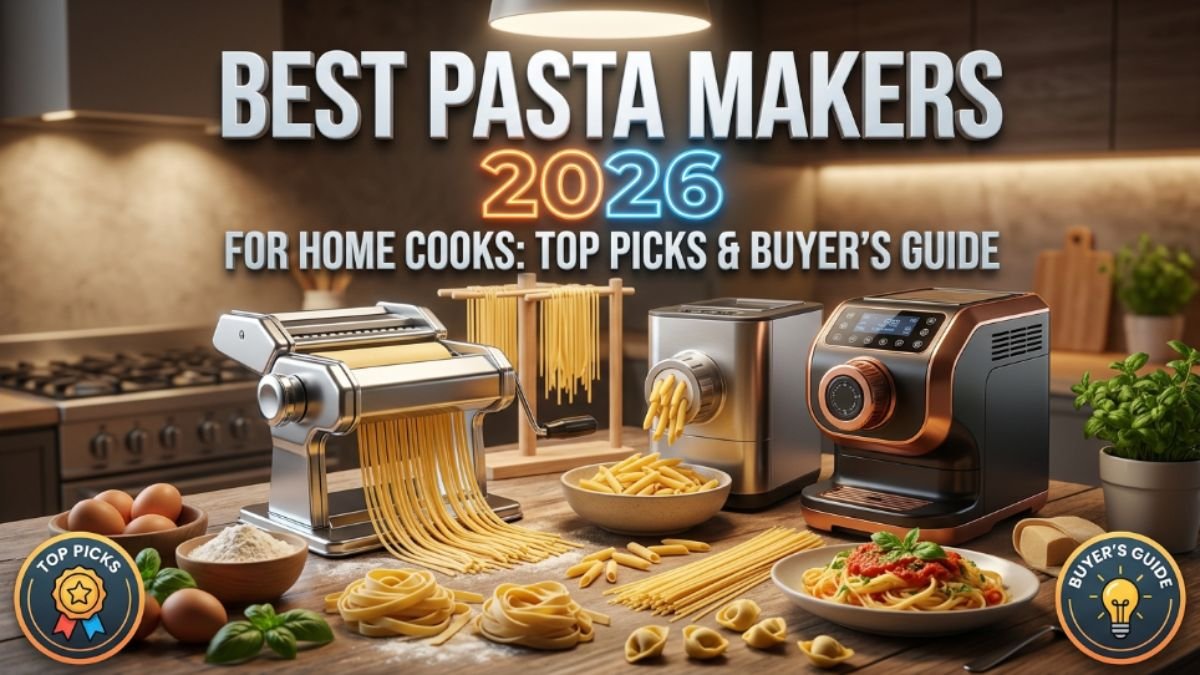
We have spent considerable time working with several of the most popular models available in 2026, making everything from thin sheets for lasagne and tortellini to tagliatelle, pappardelle, and tonnarelli. We evaluated each machine on build quality, ease of use, consistency of output, and long-term durability. The results follow, organized by category so you can match the recommendation to your actual cooking habits and budget.
Whether you are making pasta once a week for two or batch-cooking for a family every Sunday, this guide will help you identify the best pasta maker for your kitchen, avoid the common purchasing mistakes, and understand exactly what you are paying for at each price point.
A pasta maker opens the door to the full range of Italian regional pasta traditions. If you want to put your new machine to work immediately, our authentic Italian pasta recipes guide covers the classics by region — from Bolognese tagliatelle to Roman tonnarelli — with techniques that work in a home kitchen.
Why Fresh Pasta Justifies the Investment
The case for making pasta at home is not about pretension. It is about the fact that fresh pasta made from good eggs and 00 flour is a genuinely different product from dried pasta, with a texture, flavor, and cooking time that cannot be replicated by anything from a supermarket shelf. Dried pasta has its place — it is ideal for long-cooked dishes, hearty sauces, and weeknight cooking. Fresh pasta is for dishes where the noodle itself is the point.
Classic preparations that depend entirely on the quality of fresh pasta include tagliatelle al ragu bolognese, pappardelle with wild boar sauce, tonnarelli cacio e pepe, and any filled pasta — tortellini, ravioli, and cappellacci. In each of these, the pasta is not a vessel. It is a co-equal ingredient. Dried pasta produces an acceptable version of these dishes. Fresh pasta produces the real one.
The Economics of Fresh Pasta at Home
A pasta maker that lasts ten years — and most good ones do — costs less per use than most kitchen subscriptions or restaurant meals. At a realistic frequency of twice per month, a machine purchased for one hundred and fifty dollars costs under one dollar per use by its second year. The flour and egg cost per serving of homemade fresh pasta typically runs between forty and sixty cents. The comparison with restaurant pasta pricing in American cities is not close.
💡 Practical Tip: The best pasta dough for most machines uses a ratio of 100g of 00 flour per large egg. For a richer, more yellow dough — common in Emilia-Romagna — substitute one whole egg per two servings with two egg yolks. The dough will be stiffer but the final pasta will have a noticeably silkier texture.
Manual vs. Electric: Which Type of Pasta Maker Is Right for You
The first decision any buyer faces is whether to choose a manual hand-crank pasta maker or an electric model. Each has genuine strengths, and the right answer depends entirely on how you cook.
Manual Pasta Makers
Manual pasta makers — also called pasta rollers or pasta machines — operate with a hand crank that drives two steel rollers. The cook feeds dough through the rollers and adjusts the gap between passes to progressively thin the sheet. Most manual machines also include one or two cutting attachments for spaghetti and tagliatelle widths.
The advantages of manual machines are significant: they are inexpensive, virtually indestructible, easy to clean, and give the cook precise tactile control over the dough. The disadvantages are equally real: using one effectively requires two hands, meaning someone needs to feed the dough while someone else cranks — or you need to clamp it to a surface and develop the somewhat awkward single-person technique. They are also limited to flat sheets and cutting shapes; extruded forms like rigatoni, penne, or fusilli require an extruder, which manual machines cannot do.
Electric Pasta Makers
Electric pasta makers fall into two subcategories: motorized attachments for stand mixers (which roll and cut but do not extrude) and standalone electric extruders (which push dough through shaped dies to create tubular and shaped pastas). The motorized attachment category is dominated by KitchenAid’s pasta roller set, which turns any KitchenAid stand mixer into a hands-free pasta rolling station. The extruder category includes machines from Philips, Kenwood, and others that can produce a wider variety of shapes.
Electric machines trade control for convenience. They are significantly faster for large batches, free up both hands, and the motorized models produce very consistent sheet thickness. The tradeoff is cost, complexity, and in some cases cleaning time.
⚠️ Attention: Electric pasta extruders excel at short shapes like rigatoni and fusilli but typically produce flat sheets that are less consistent than manual rollers. If your priority is lasagne sheets, tagliatelle, and pappardelle, a manual machine or motorized roller attachment will almost always outperform a standalone extruder on sheet quality.
The Best Pasta Makers of 2026: Our Top Picks by Category
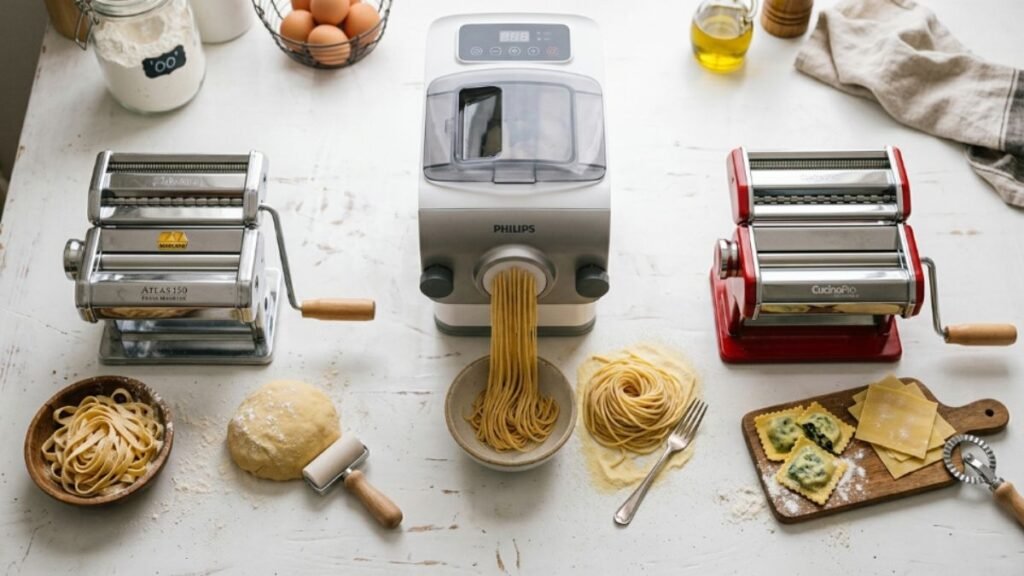
Best Overall Manual Pasta Maker: Marcato Atlas 150
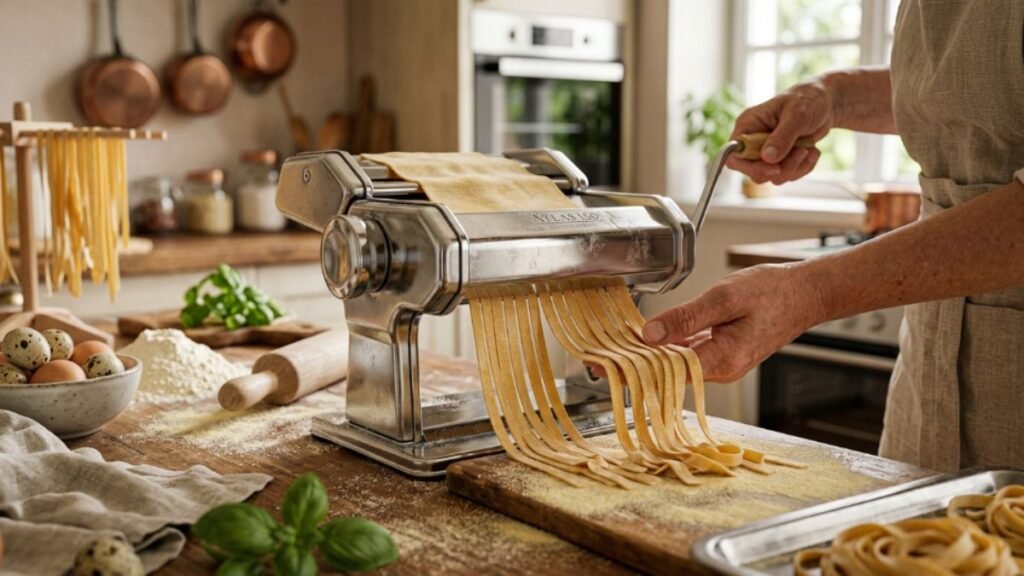
The Marcato Atlas 150 has been the reference standard for manual pasta makers for decades, and nothing produced in 2026 has meaningfully displaced it. Made in Italy from chrome-plated steel, it rolls dough to nine thickness settings between 0.6mm and 4.8mm, and the included attachments cut both spaghetti (2mm) and tagliatelle (6.5mm) with clean, consistent results.
What distinguishes the Atlas 150 from cheaper alternatives is the precision of the rollers. The gap increments are consistent and repeatable, which matters when you are thinning dough to sheets 2 and 1 settings for ravioli — any inconsistency produces pasta that tears or seals unevenly. The build quality is such that properly maintained units last for twenty years without performance degradation.
- 9 thickness settings
- Produces sheets up to 150mm wide
- Clamps to any counter edge up to 60mm thick
- Dishwasher-safe attachments (body should be hand-wiped only)
- Additional cutting attachments sold separately: fettuccine, pappardelle, lasagne, and more
Best Budget Manual Pasta Maker: Imperia Pasta Machine
The Imperia is the other Italian-made classic, and at its price point it represents the best value in the manual category. It uses the same basic roller-and-crank mechanism as the Marcato, with a slightly different feel that some cooks prefer — the rollers have a marginally more forgiving tension, which beginners often find easier to work with on their first few batches.
The Imperia is available in both a chrome and a stainless version. The stainless model costs more but is significantly more durable over time. The chrome version is an excellent entry point for a first pasta machine. Both include spaghetti and tagliatelle cutting attachments.
Best Motorized Attachment: KitchenAid Pasta Roller & Cutter Set
For anyone who already owns a KitchenAid stand mixer, the pasta roller and cutter attachment set transforms it into a hands-free pasta rolling station that is genuinely faster and more consistent than hand-cranking. The motorized power drive runs the rollers at a controlled speed, freeing both hands to guide the dough sheet through.
The set includes a roller with eight thickness settings and two cutting attachments — spaghetti and fettuccine. Optional accessories add linguine and lasagne cutting widths. The sheet quality at settings 6 and 7 (the two thinnest) is excellent and consistent across the full width, which matters for ravioli and pasta that needs to be cut by hand into irregular shapes.
- Hands-free operation — no second person needed
- 8 thickness settings
- Attaches and detaches in under 10 seconds
- Works with all KitchenAid tilt-head and bowl-lift models
- Stainless steel rollers — no seasoning or oiling required
Best Electric Extruder: Philips Pasta & Noodle Maker Plus
The Philips pasta extruder occupies a different category from everything above. Rather than rolling flat sheets, it mixes and extrudes fresh dough through interchangeable dies to produce shaped and tubular pastas — spaghetti, penne, fettuccine, lasagne sheets, and more, depending on which dies are installed. The machine mixes the dough internally from flour and liquid, which means you add ingredients and press a button.
For cooks who want rigatoni, penne, and other extruded shapes in fresh pasta form, this is the only realistic home option. The output quality is good, though not quite as silky as hand-rolled sheet pasta. The main limitation is cleaning: the dies and internal components require careful washing, and some shapes (particularly the smaller extruded ones) trap dough that dries and becomes difficult to remove if not cleaned immediately after use.
Best Professional-Grade Manual Machine: Marcato Atlas 150 Wellness
The Wellness is Marcato’s premium variant of the Atlas 150, with rollers coated in a food-safe material that the company developed to be completely non-stick without requiring any flour dusting. The practical effect is that the dough moves through the rollers with less resistance, which reduces tearing on very thin settings and makes the machine significantly easier to use with higher-hydration doughs. For cooks who make pasta several times per week, the Wellness justifies its higher price through noticeably easier daily use.
Best Pasta Maker Comparison: All Models at a Glance
The table below summarizes the key specifications and ideal use case for each recommended model.
| Model | Type | Price Range | Best For | Sheet Width | Shapes |
| Marcato Atlas 150 | Manual | $70–$90 | Most home cooks | 150mm | Flat only |
| Imperia Pasta Machine | Manual | $50–$70 | Beginners / budget | 150mm | Flat only |
| KitchenAid Set | Motorized | $170–$200 | KitchenAid owners | 150mm | Flat only |
| Philips Plus | Electric extruder | $180–$230 | Short shapes & ease | N/A | Multiple dies |
| Atlas 150 Wellness | Manual (premium) | $100–$130 | Frequent use, pro results | 150mm | Flat only |
What to Look for When Buying a Pasta Maker: The Key Criteria
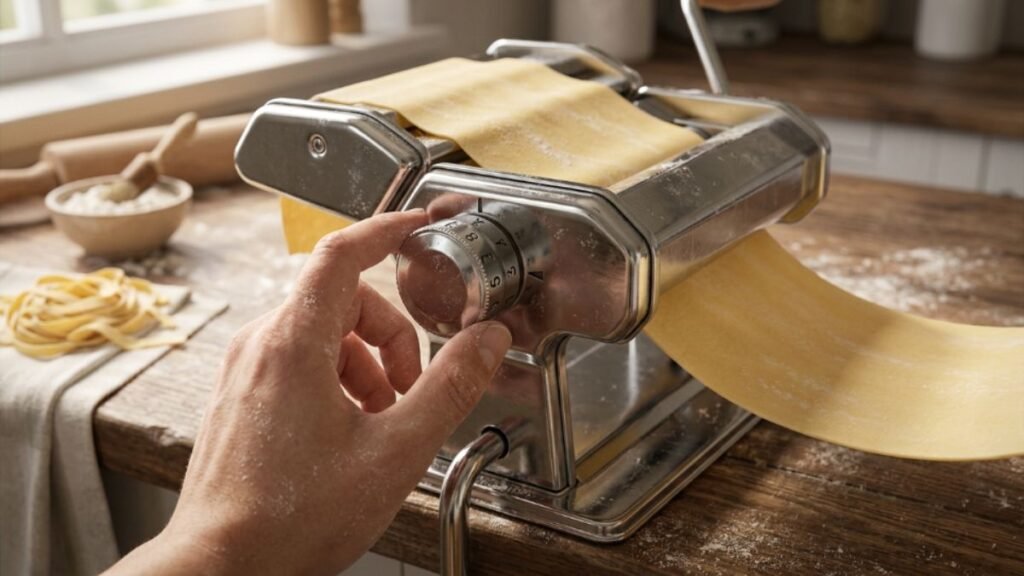
Beyond the manual versus electric decision, several specific criteria separate a pasta maker that works well for years from one that frustrates within months. These are the factors we weight most heavily in our evaluations.
Roller Material and Precision
Chrome-plated steel is the standard for manual pasta machines. It is durable, easy to clean with a dry brush, and produces consistent results. The precision of the gap between rollers is what matters most — cheap machines use looser tolerances that produce uneven sheets. Authentic Italian-made machines (Marcato and Imperia are both manufactured in Italy) are held to tighter standards than most imports.
Thickness Settings and Range
A minimum of six to eight distinct thickness settings is required for versatility. Fewer than six limits your range — you cannot thin dough sufficiently for delicate filled pastas, and you cannot keep enough thickness for rustic hand-cut shapes like pappardelle. Nine settings, as found on the Atlas 150, covers essentially every practical need.
Cutting Attachment Compatibility
Most pasta makers include two cutting attachments with purchase. The more important consideration is whether additional attachments are available from the same manufacturer. Marcato sells over a dozen additional cutters for the Atlas platform. This expandability extends the machine’s useful range significantly without requiring a new purchase.
Cleaning and Maintenance
Manual machines with steel rollers should never be submerged in water or run through a dishwasher — moisture causes rust and damages the internal mechanism. They are cleaned with a stiff pastry brush to remove dried dough and occasionally wiped with a food-safe mineral oil. This sounds like a limitation but in practice takes less than two minutes. Electric machines require more involved cleaning of parts and dies.
✓ Best Practice: Always run a small test piece of dough through a new machine before using it on your main batch. New rollers sometimes leave a slight metallic residue on the first pass. Discard the test piece and the machine is ready to use.
How to Use a Manual Pasta Maker: A Beginner’s Walkthrough
The mechanics of a manual pasta maker are straightforward, but a few specific techniques make a significant difference in the outcome. This walkthrough assumes you are using the Marcato Atlas 150 or any equivalent manual roller machine.
- Prepare your dough and let it rest for at least 30 minutes wrapped in plastic at room temperature. Rested dough is more pliable and tears far less during rolling.
- Set the machine to its widest setting (setting 1 on most machines). Cut your dough into portions roughly the size of a small egg. Flatten each portion with the heel of your hand before feeding.
- Feed the dough through setting 1 twice, folding it in thirds between passes like a letter. This laminating step develops the gluten structure and produces a smooth, even sheet.
- Increase the setting by one increment and feed the dough through once. Continue increasing the setting one step at a time, passing the dough through once at each setting, until you reach the target thickness for your chosen pasta shape.
- Lay the finished sheet on a lightly floured surface or hang it over a drying rack. Work with one portion at a time — sheets left too long on a floured surface dry out and crack.
- Attach the appropriate cutting rollers and feed the sheet through. Catch the cut pasta with one hand as it emerges and toss it gently with flour to prevent sticking.
- Cook immediately for the best texture, or dry on a rack for 30 minutes before refrigerating. Fresh pasta cooks in two to three minutes in well-salted boiling water.
Fresh pasta made at home changes the outcome of certain dishes entirely. Tonnarelli — the thick, square-cut Roman noodle — is one of them, and it is the pasta traditionally used in cacio e pepe. It also works beautifully in our carbonara recipe, where the extra texture of a hand-rolled noodle holds the egg sauce in a way dried spaghetti simply cannot match.
Which Pasta Shapes Can You Make at Home — and With What Machine
One of the most common questions from first-time buyers is whether a given machine can make the shapes they most want to cook. The answer depends on whether you need flat, rolled shapes or extruded ones.
Shapes Achievable With a Standard Manual Roller
- Tagliatelle and fettuccine — using the included 6–7mm cutting attachment
- Spaghetti and spaghettini — using the included 2mm cutting attachment
- Pappardelle — cut by hand from a sheet at setting 4–5, approximately 2.5–3cm wide
- Lasagne sheets — rolled to setting 5–6, cut to size by hand
- Ravioli and tortellini — rolled to setting 7–8, filled and sealed by hand
- Tonnarelli and cacio e pepe pasta — rolled to 2mm thickness and cut with a knife into square-section strands
Shapes That Require an Extruder
- Rigatoni, penne, and ziti — require a tubular die
- Fusilli and rotini — require a spiral die
- Bucatini — requires a tubular die with a central pin
- Orecchiette — technically hand-shaped, no machine needed
Understanding which shapes belong to which regions adds a layer of intention to everything you make. Our authentic Italian pasta recipes guide pairs each shape with its traditional sauce and regional origin, so your pasta choices start to tell a story rather than follow a random pattern.
Essential Accessories to Buy Alongside Your Pasta Maker
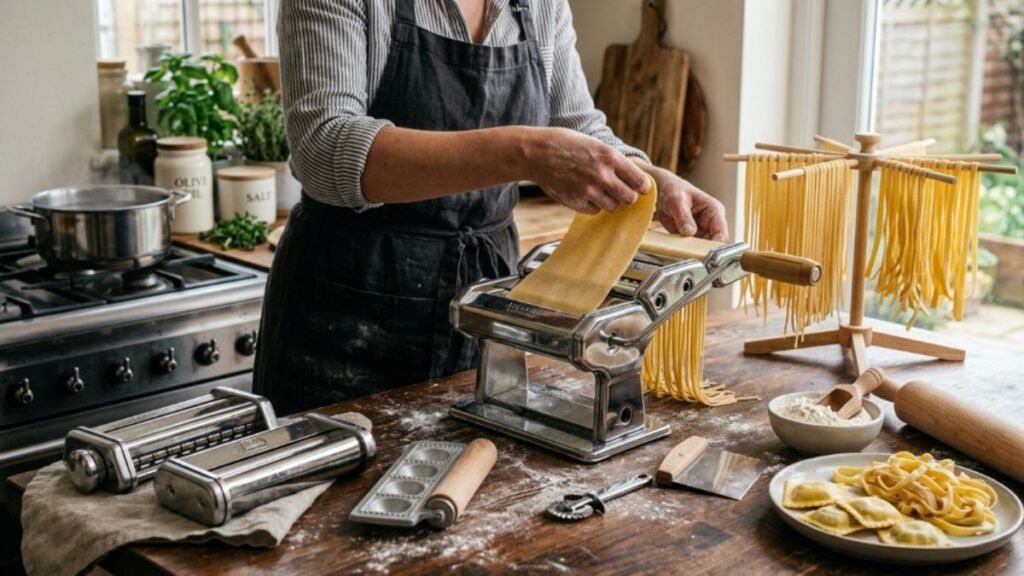
A pasta machine alone is not enough for a fully functional pasta-making setup. These accessories are either necessary for good results or make the process significantly more enjoyable.
Pasta Drying Rack
Fresh pasta sheets need to rest after rolling and cut pasta needs to dry slightly before cooking to prevent sticking. A collapsible wooden or stainless drying rack that accommodates multiple portions simultaneously is the single most useful additional purchase. Look for a rack with enough dowels or arms to hang several batches at once if you are cooking for more than two people.
Bench Scraper
A metal bench scraper is indispensable for dividing dough, lifting delicate pasta sheets off a work surface, and cleaning flour from your counter. At under fifteen dollars, it returns its value within the first use.
00 Flour and Semolina
Italian 00 flour (doppio zero) is milled to a much finer consistency than all-purpose flour, and it produces a smoother, more elastic dough that runs through a machine with less tearing. It is now carried by most well-stocked American supermarkets and is essential for consistent results. Fine semolina flour is used for dusting — it does not absorb into the pasta the way 00 flour does and keeps cut pasta separated more effectively.
Digital Kitchen Scale
Pasta dough is one of those preparations where weight measurements are meaningfully more accurate than volume measurements. A digital scale removes all guesswork from the flour-to-egg ratio and ensures consistent dough every time. Any scale accurate to one gram is sufficient.
Final Thoughts
The best pasta maker for you is the one that matches how you actually cook. If you make pasta once or twice a month, want flat shapes and long cuts, and prefer to keep things simple and affordable, the Marcato Atlas 150 is the correct answer and has been for decades. If you own a KitchenAid and want to make the process genuinely hands-free, the motorized attachment set is the most practical upgrade available. If you want to make rigatoni and penne at home, the Philips extruder is the only machine in this guide that can do it.
What all of these machines have in common is that they produce fresh pasta that is categorically better than anything you can buy dried or even refrigerated at a supermarket. The investment pays for itself quickly, and the skill involved is largely in the dough — which, once learned, takes fifteen minutes of hands-on work and thirty minutes of resting before you ever clamp the machine to the counter.
Start with the Atlas 150 and a good batch of 00 flour and eggs. Make tagliatelle. Eat it the same day. From that point forward, the machine will earn its place on your counter every time.
Have a pasta maker you love that is not on this list? Or questions about choosing between two models? Leave a comment below — we read everything and update this guide regularly based on reader experience.
Frequently Asked Questions
What is the best pasta maker for beginners?
The Marcato Atlas 150 is the best starting point for most beginners. It is mechanically simple, extremely durable, produces excellent results from the first use, and costs between seventy and ninety dollars. The learning curve is not in the machine itself — it is in understanding how pasta dough should feel at different stages of rolling, which comes after two or three practice sessions. The Imperia is a close second at a slightly lower price point.
Do I need a pasta maker to make fresh pasta at home?
No — pasta can be rolled by hand with a long rolling pin (a mattarello), which is how it was made for centuries before machines existed. Hand-rolling produces excellent results but requires more physical effort and practice to achieve consistent, thin sheets. A pasta machine dramatically reduces the time and physical effort required and produces far more consistent results, especially at the thinner settings needed for filled pasta. For most home cooks, the machine is worth the investment.
How do I clean a manual pasta maker?
Never submerge a manual pasta maker in water or wash it in a dishwasher. Moisture causes the internal mechanism to rust. After each use, allow any remaining dough to dry completely, then remove it with a stiff pastry brush or a toothpick for narrower spaces. Wipe the exterior with a dry cloth. For the cutting attachments, the same dry cleaning approach applies. Store in a dry environment. A properly maintained manual machine will last for decades without any loss of performance.
Can I make pasta without eggs using a pasta machine?
Yes. Southern Italian pasta traditions make extensive use of eggless dough — water and semolina flour, or water and 00 flour — for shapes like orecchiette, busiate, and certain regional spaghetti. The texture is chewier and more robust than egg pasta and pairs well with hearty sauces. This dough is slightly less pliable than egg dough in a machine, so you should start at the widest setting and progress slowly. Adding a teaspoon of olive oil to the dough helps.
What thickness setting should I use for different pasta shapes?
On a 9-setting machine where 1 is thickest and 9 is thinnest: settings 5 to 6 are standard for tagliatelle, fettuccine, and pappardelle. Settings 7 to 8 are used for ravioli and tortellini, where you want enough thinness for the pasta to seal and cook through without being doughy. Setting 6 works well for lasagne. Spaghetti requires setting 5 to 6 before running through the cutting attachment. For most cuts, setting 7 is the practical limit for a beginner — thinner than that requires more experience to handle without tearing.
Is an electric pasta maker worth the extra cost?
If you already own a KitchenAid stand mixer, the pasta roller attachment is worth every dollar — it is faster, hands-free, and produces excellent sheets. If you do not own a stand mixer, a standalone electric extruder like the Philips is worth it specifically if you want tubular and shaped pastas like penne and rigatoni, which a manual machine cannot produce. For long flat pasta only, a manual machine outperforms most standalone electric machines on sheet quality at a fraction of the cost.
How long does homemade fresh pasta last?
Fresh pasta that has been cut and lightly dried can be refrigerated for up to two days in an airtight container with a light dusting of semolina flour to prevent sticking. For longer storage, freeze it directly on a baking sheet until solid, then transfer to a freezer bag — it will keep for up to three months. Cook from frozen without thawing, adding thirty seconds to the cooking time. Fresh pasta that has been shaped into nests (tagliatelle, for example) freezes particularly well and holds its shape through the freeze-thaw cycle.

Mary Ciss is a food writer and Italian gastronomy enthusiast with a passion for authentic recipes, culinary history, and the stories behind every dish. Through Mio Gelatto, she explores the real flavors of Italy — from centuries-old gelato traditions to the hidden trattorias that locals love. For Mary, every recipe is a journey.